- BY Kevin Barry BSc(Hons) MRICS
- POSTED IN Latest News
- WITH 0 COMMENTS
- PERMALINK
- STANDARD POST TYPE
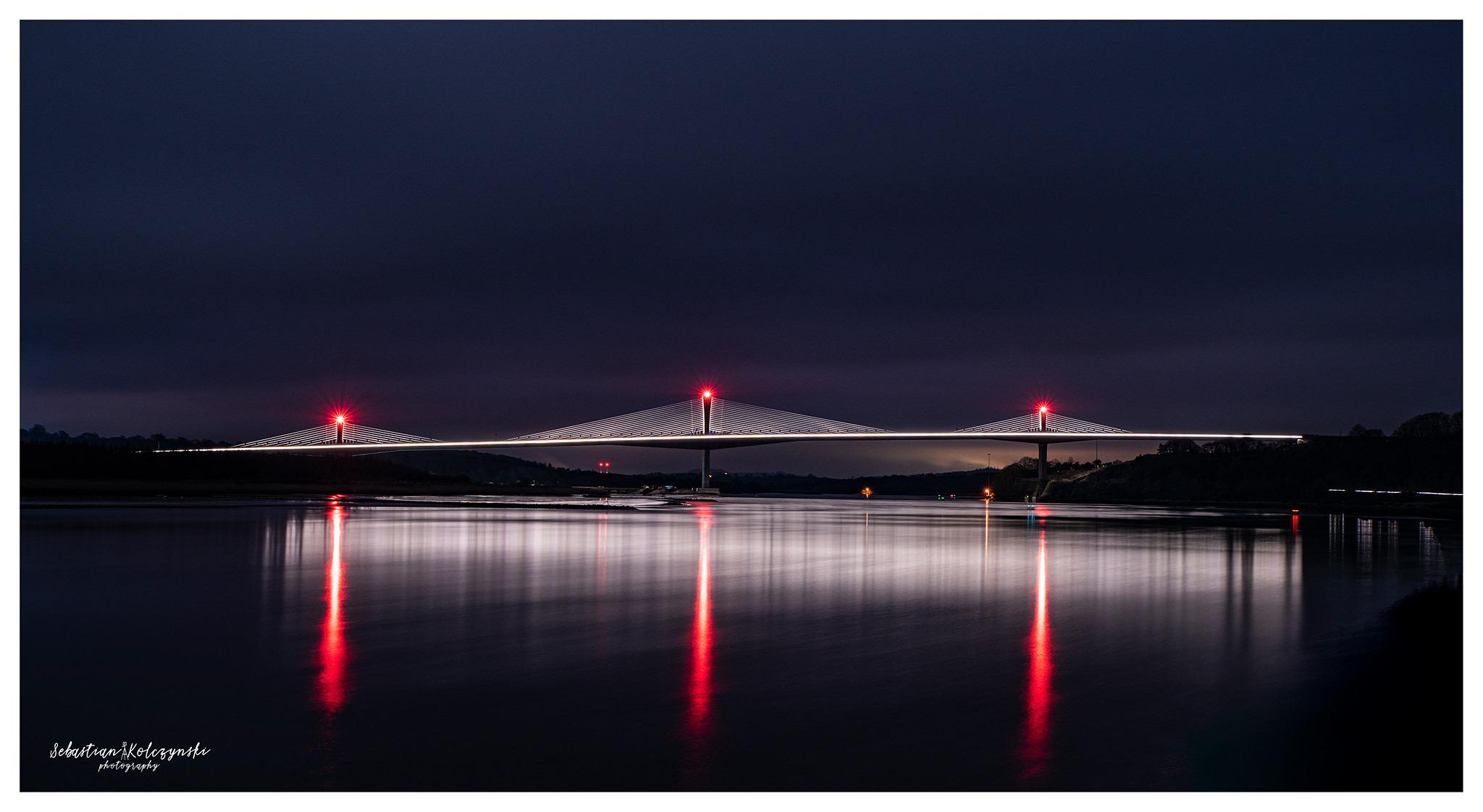
Why a Bridge Matters: What a Major Economic Report Tells Us About Our Region
Understanding the economics behind the Strangford Lough Bridge
The Report Everyone’s Talking About
In December 2025, Ireland’s leading economic research organization (the ESRI) published a major study comparing economic performance across Ireland and Northern Ireland. While it might sound like dry reading, this report tells an important story about our region – and helps explain why a bridge across Strangford Lough could be a game-changer for ordinary families.
Let me break down what they found, and what it means for us.
The Productivity Problem: Working Hard But Getting Less
What the experts found: Northern Ireland’s economic output per worker is consistently lower than the Republic of Ireland. The Republic produces 8% more value per hour worked than the UK average, while we lag behind.
What this means in plain English: Even though people work just as hard here, our economy generates less wealth per person. It’s like running on a treadmill – lots of effort, but not getting very far.
What it looks like locally:
- Ards & North Down has the second-lowest productivity in all of Northern Ireland
- Newry, Mourne & Down ranks seventh-lowest
- Both areas produce far less economic value per worker than Belfast
Why should you care? Lower productivity means lower wages, fewer job opportunities, and less money circulating in local communities. It affects everything from house prices to the quality of local services.
The Wage Gap: Why Your Paycheck Doesn’t Go As Far
The shocking truth: If you work in Ards & North Down, you earn the lowest median wage in Northern Ireland – just £450.10 per week. That’s almost £80 less than the Northern Ireland average, and a whopping £147 less per week than someone working in Belfast.
Do the math:
- That’s £4,160 less per year than the NI average
- Over a 40-year career, that’s £166,400 less lifetime earnings
- For a two-income household, that’s over £330,000 less to raise a family, buy a home, or save for retirement
Newry, Mourne & Down isn’t much better at £481.60 per week – still £47 below the Northern Ireland average.
The ferry factor: Many people in Ards & North Down commute to Belfast for better-paying jobs. There’s a £50 per week difference between what people who live in the area earn versus what people who work in the area earn. The current ferry crossing makes this commute difficult, time-consuming, and unreliable.
The Education Paradox: Qualified But Underpaid
Here’s something that doesn’t make sense at first glance:
Both areas have highly educated populations:
- Ards & North Down: Third-highest rate of university graduates (44.8%)
- Newry, Mourne & Down: Fourth-highest (41%)
Yet they have the worst economic outcomes.
What’s going on? Having educated people isn’t enough if they can’t access good jobs. The ESRI report confirms what local families already know: you need more than qualifications to succeed economically. You need:
- Good infrastructure connecting you to job opportunities
- Businesses that can grow and export
- Access to wider markets and customers
The current situation: Talented, educated people are either:
- Commuting long distances (adding 2-3 hours to their workday)
- Moving away entirely
- Accepting lower-paying local jobs that don’t match their skills
A permanent crossing would unlock this trapped potential.
The Export Gap: Selling to the World
Newry, Mourne & Down has the highest export rate in Northern Ireland at 24% – nearly a quarter of business sales go abroad.
Ards & North Down has the lowest export rate at just 13%.
Why the 11 percentage point gap? Geography and connectivity. Newry, Mourne & Down sits on the border with direct access to the Republic of Ireland and European markets. Upper Ards sits at the end of a peninsula, isolated by a ferry that operates limited hours and fills up quickly.
What businesses tell us:
- “I can’t guarantee delivery times because of the ferry”
- “Customers won’t wait – they go elsewhere”
- “I’ve lost contracts because of transport unreliability”
The ESRI report specifically identifies cross-border trade as a major growth opportunity. A permanent crossing would let Ards Peninsula businesses compete on equal terms.
Employment Rates: Working Hard, Getting Nowhere
The good news: Both areas have relatively high employment rates:
- Newry, Mourne & Down: 78.8% (second-best in NI)
- Ards & North Down: 75.5% (sixth)
The problem: People are working, but they’re not earning well. High employment + low wages + low productivity = struggling families.
What the ESRI report says: You can’t solve economic problems just by getting more people into jobs. The jobs need to be good jobs – well-paid, secure, with opportunities for advancement.
The crossing connection: Better connectivity means:
- Businesses can attract skilled workers from a wider area
- People can access better job opportunities
- Companies can grow, allowing them to pay better wages
- Competition for workers drives up wages naturally
The Commuter Trap
The hidden cost of poor connectivity:
Thousands of people living in Ards & North Down commute to Belfast for work. This means:
- 2-4 hours added to their workday (driving around via Comber/Newtownards or waiting for ferries)
- £3,000-5,000 per year in extra fuel and vehicle costs
- Less time with family – children, aging parents, community involvement
- Stress and exhaustion affecting health and wellbeing
- Money earned in Belfast, spent in Belfast instead of supporting local businesses
The social cost: The ESRI report talks about “labour market connectivity” – but for real families, this means:
- Missing your child’s school play because you’re stuck in traffic
- Paying for childcare you wouldn’t otherwise need
- Not being able to care for elderly parents
- Feeling like a stranger in your own community because you’re never there
A permanent crossing could cut commute times by 60-90 minutes each way, giving people back 10-15 hours per week to spend with family and in their local community.
The Business Stranglehold: R&D and Innovation
What is R&D (Research & Development)? It’s the money businesses invest in developing new products, improving processes, and innovating. Higher R&D spending generally leads to higher-value jobs and economic growth.
How do our areas perform?
- Ards & North Down: 0.5% of output – second-lowest in NI
- Newry, Mourne & Down: 1% – fifth-lowest
- Belfast: 2.1% – highest
Why businesses don’t invest here: They tell us:
- “Our market is too small and isolated”
- “We can’t attract specialist staff who don’t want to commute”
- “Transport costs eat up our margins”
- “We’re competing with one hand tied behind our backs”
The ESRI perspective: The report emphasizes that productivity growth requires investment in both “human capital” (education and skills) and “physical capital” (infrastructure, connectivity, facilities). We have the human capital. We’re missing the physical capital.
The Entrepreneurship Puzzle
Here’s something interesting:
Ards & North Down has the highest rate of people starting businesses in all of Northern Ireland – 13% compared to a 9.2% average.
But these businesses aren’t growing into major employers or high-wage companies.
Why not?
- Limited access to markets
- Can’t attract investment due to location
- Struggle to recruit specialist staff
- High transport costs
- Cannot scale up effectively
It’s like planting seeds in poor soil – lots of activity, but nothing grows properly.
Newry, Mourne & Down has much lower entrepreneurship rates (6%), but because of better connectivity to cross-border markets, businesses that do start up there have better chances of success.
What the ESRI Report Really Tells Us
The Economic and Social Research Institute isn’t just any think tank – it’s Ireland’s most respected economic research body, funded by government departments and completely independent. When they publish findings, policymakers listen.
Their key messages that apply to us:
1. Infrastructure Drives Growth, Not Vice Versa
You don’t wait for an area to become prosperous before building infrastructure. You build infrastructure to create prosperity. The Cleddau Bridge in Wales is the perfect example – zero traffic growth over 50 years while using a ferry, then 20-fold traffic growth after building the bridge.
2. Regional Imbalance Hurts Everyone
When some areas fall behind, the entire economy suffers. Resources are wasted, talent is squandered, and social problems emerge that cost far more than infrastructure investment would have.
3. Multi-Dimensional Solutions Required
You can’t solve economic problems with just one thing. Education alone won’t work. Jobs alone won’t work. You need education + infrastructure + business investment + market access all working together.
4. All-Island Cooperation Makes Sense
The report was commissioned by Ireland’s Shared Island Unit specifically to identify opportunities for cooperation. Cross-border infrastructure like the Strangford Lough Bridge is exactly what they’re talking about.
5. Productivity is About Opportunity, Not Effort
Our low productivity isn’t because people don’t work hard. It’s because the economic structure doesn’t allow hard work to translate into high output. Change the structure (build the bridge), and productivity improves.
The Ireland Connection: The €2 Billion Opportunity
Here’s something most people don’t know:
The Irish Government recently doubled its Shared Island Fund to €2 billion. This money is specifically for projects that benefit both sides of the border.
The ESRI report was commissioned by this exact same Shared Island Unit to identify where cooperation makes economic sense.
What this means for us:
- The Strangford Lough Bridge qualifies for this funding
- The Irish Government has a proven track record (€102 million for Narrow Water Bridge proposal)
- Economic research supports the strategic case
- Political will exists on both sides of the border
The precedent: When Wales built the Cleddau Bridge to replace their ferry, they experienced transformational economic growth. The ferry that replaced it? That’s our MV Portaferry – they literally gave us their old ferry when they built the bridge in 1975, and we used it until 2000.
Wales saw the future. It’s time we did too.
What This Means for Your Family
Let’s get personal. If you live in Ards Peninsula or Lecale/Mourne area, here’s what the ESRI findings mean for you:
For Parents:
- More time with children (10-15 hours per week less commuting)
- Better job opportunities without having to move away
- More money (closing even half the wage gap means £2,000+ more per year)
- Stronger communities (people actually around to volunteer, attend events, support local businesses)
For Young People:
- Ability to stay in your hometown and still access good careers
- Starting salaries comparable to Belfast without Belfast house prices
- Growing local businesses offering real career progression
- Social life that doesn’t require driving hours to meet friends
For Business Owners:
- Access to 100,000+ potential customers on the other side of the lough
- Reliable transport for deliveries and supplies
- Ability to recruit from a wider area
- Lower transport costs improving your margins
- Realistic export opportunities
For Retirees:
- Adult children can afford to stay nearby (not forced to move for work)
- Better property values (connectivity increases house prices)
- More grandparent time (children aren’t commuting their lives away)
- Stronger local economy supporting better services and amenities
The Bottom Line: What Economics Research Tells Us
The ESRI report, published in December 2025, provides independent, expert analysis that confirms what local people have known for years:
Our region is economically disadvantaged because of poor connectivity, not because of lack of effort, education, or talent.
The report identifies that:
- Northern Ireland needs infrastructure investment to boost productivity
- Regional imbalances require targeted intervention
- All-island cooperation offers significant opportunities
- Education alone cannot overcome structural barriers
- Peripheral regions need connectivity to realize their potential
The Strangford Lough Bridge addresses every single one of these points.
Frequently Asked Questions
“Can we really afford it?”
The better question is: Can we afford NOT to build it?
- Every year we delay costs families £2,000-4,000 in lost wages
- Economic output foregone runs into tens of millions annually
- Young people leaving permanently represent lost future tax revenue
- The Irish Shared Island Fund provides co-funding opportunity
- Proper cost estimates (£225-411 million) are far lower than DfI’s inflated figures
- Over 60 years, the economic benefits would be 10-20 times the construction cost
“Won’t it just benefit commuters?”
No. The ESRI research shows connectivity benefits include:
- Local business growth and export opportunities
- Inward investment attraction
- Tourism development
- Property value increases
- Service delivery improvements (ambulances, fire services)
- Educational access
- Social and family connections
“What about the environment?”
- Current situation forces long detours (30-40 miles extra per trip)
- Modern bridge would be more efficient than ferry operations
- Reduced congestion in surrounding areas
- Enables economic prosperity needed to fund green transition
- Ireland’s Shared Island Fund prioritizes sustainable development
“Hasn’t this been rejected before?”
Previous rejections were based on:
- Inflated cost estimates (DfI’s £650m vs realistic £225-411m)
- Flawed demand assessments (ignored suppressed demand and avoidance behavior)
- Same officials who run the ferry blocking alternative studies (conflict of interest)
- No consideration of Shared Island funding opportunities
The ESRI report provides fresh, independent evidence supporting reconsideration.
What You Can Do
The research is clear. The economics stack up. The funding opportunity exists. What’s missing is political will.
- Share this post – Help your neighbours understand what’s at stake
- Contact your MLAs – All parties now support this project; hold them accountable
- Support the campaign – Visit www.strangfordloughcrossing.org
- Talk to business groups – Local economic development depends on this
- Engage with councils – Both Ards & North Down and Newry, Mourne & Down councils support the project
The Choice
The ESRI report, the Sub-Regional Economic Plan, and decades of local experience all point to the same conclusion:
Without transformational infrastructure investment, our region will continue falling further behind.
We can have educated, hard-working people earning below-average wages in below-average jobs while commuting hours every day…
Or we can build a bridge and unlock the economic potential that’s been trapped on this peninsula for generations.
The research is done. The evidence is clear. The funding opportunities exist.
It’s time to build the bridge.
For more information, detailed economic analysis, and campaign updates, visit www.strangfordloughcrossing.org
References: ESRI Survey and Statistical Report Series Number 134 (December 2025), Department for Economy Sub-Regional Economic Plan Technical Annex (2024), Northern Ireland Census 2021 data