
- BY Kevin Barry BSc(Hons) MRICS
- POSTED IN Latest News
- WITH 0 COMMENTS
- PERMALINK
- STANDARD POST TYPE
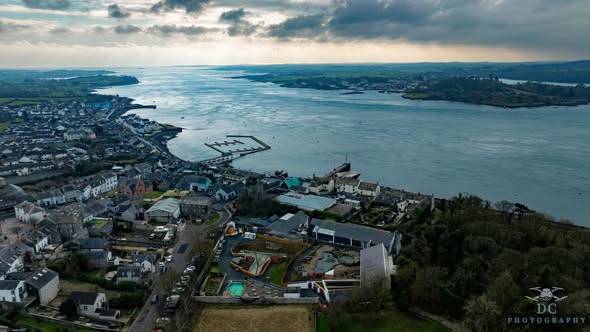
The unique selling point of the Strangford Lough Crossing (SLC) is that it is not just “a bridge”, but Europe’s first climate‑positive heritage crossing: a fixed link in one of the most protected marine landscapes in Europe whose very permission is tied to cutting carbon, restoring nature and helping coastal communities to thrive again – not simply moving traffic faster.[1][2][3][4][5][6]
A crossing that must heal what it touches
Strangford Lough is already famous for its beauty and its protections. It is an Area of Outstanding Natural Beauty (AONB) wrapped around an internationally important marine system: a Marine Conservation Zone (MCZ), Special Area of Conservation (SAC), Special Protection Area (SPA) for birds, Ramsar wetland, Area of Special Scientific Interest (ASSI) and part of a UNESCO‑recognised geopark.[1][4][5][6][7][8] Few coastlines anywhere carry so many overlapping designations.
Yet despite all those labels, local partners admit that the Lough and its communities still face “a damaged balance between land, sea and communities”.[1] Habitats are fragmented or degraded in places; blue‑carbon systems such as saltmarsh and eelgrass beds are vulnerable; and people in Portaferry, Strangford, the Ards Peninsula and Lecale live with low wages, fragile access to jobs and services, and coastal roads that are increasingly exposed to storms and erosion.[1][2][9][10][11][12]
Today, crossing the Narrows means relying on an ageing diesel ferry inside the MCZ and SAC, or driving 60–75 kilometres around the Lough on roads that themselves suffer from climate‑driven disruption.[1][13][2][9][14] That pattern carries a hidden environmental cost: high per‑journey emissions, recurring disturbance and works at ferry slips, congestion and idling at the terminals, and extra traffic pressing on vulnerable coastlines.[1][13][2][9]
Against that backdrop, the central question is no longer “bridge or no bridge?” but “which future – continued diesel ferry and long detours, a fixed crossing, or something else – best meets our legal duties on climate, nature and community wellbeing?”[1][9][3][4][5]
SLC’s answer is distinctive: it is designed, from the outset, as a condition‑based crossing. It only goes ahead if it can be shown to:
- Cut whole‑life greenhouse‑gas emissions compared with carrying on with the ferry and long detours.
- Deliver measurable net ecological gain against the Lough’s own Management Plan and Environmental Outcomes.
- Repair, rather than deepen, the economic and social imbalance faced by its coastal communities.[1][2][3][4][5][10]
Climate‑positive: built to pass the Climate Change Act test
Northern Ireland’s Climate Change Act 2022 sets a legally binding net‑zero pathway and requires all public bodies to consider climate targets when exercising their functions.[15][3] Recent High Court findings on the A5 have underlined that major transport projects can be challenged or halted if they do not demonstrate whole‑life carbon compatibility and a robust approach to alternatives and mitigation.[15][3]
Most road schemes now find themselves on the back foot: they struggle to prove that extra capacity does not mean extra emissions. SLC is unusual because its starting point is different. Its main comparison is not “no road” but “continuing to operate and, in time, renew a diesel ferry and maintain a long, climate‑vulnerable detour route around the Lough”.[1][13][2][9]
Quintin QS’s SLC work, and related analysis of vehicles that currently choose not to use the ferry, show that a completed A2 coastal route could cut journey distances by tens of kilometres for many trips, reduce exposure to storm‑damaged roads, and save around £2m a year in public subsidy while improving reliability.[2][9][11][16][14] When these shorter routes are combined with a firm, time‑bound commitment to retire (or radically scale down) the diesel ferry once the crossing is operational, the result is a rare thing in transport: a fixed link that can plausibly reduce total emissions compared to the “do‑minimum”.[1][13][2][9][3]
Under the Climate Change Act 2022, SLC’s climate‑positive USP rests on four pillars:
- Whole‑life carbon discipline – treating construction emissions, operational traffic, the ferry counterfactual and energy use as one integrated carbon budget, and designing the scheme to pay that construction “debt” back over its lifetime.[9][15][3]
- Ferry‑retirement carbon and disturbance budget – explicitly modelling and then banking the emissions and ecological disturbance avoided by ending decades of diesel ferry operation and associated infrastructure works inside the MPA.[1][13][2][9]
- Demand management and mode shift – embedding bus priority, active‑travel infrastructure and, if needed, a tolling structure that favours high‑occupancy and zero‑emission vehicles, so that traffic growth is constrained and emissions per trip fall.[2][17][18]
- Monitoring and adaptive management – committing to measure real‑world carbon performance and to trigger additional mitigation (e.g., further ferry cutbacks, traffic management, extra habitat work) if the promised climate benefits are not delivered.[17][15][3]
In simple terms: this is not a “we hope it’s greener” project; it is a crossing that only passes if it demonstrably helps Northern Ireland meet its climate law, using the A5’s failings as a checklist to avoid.[15][3]
Net ecological gain: delivering Strangford’s own plan
Strangford Lough’s designations come with conservation objectives and management documents that are well‑known to DAERA, NIEA and local partners.[4][5] The Strangford and Lecale AONB partnership’s “Environmental Outcomes” and “Environment Actions and Targets” set out a clear vision: create nature networks; expand and buffer priority habitats; improve degraded sites; build climate‑resilient blue‑carbon systems; and connect people more strongly to the landscape.[5][19]
The uncomfortable truth is that, despite all the designations, many of these ambitions remain under‑funded and only partially delivered.[1][4][5][20] SLC’s second unique selling point is that it offers to change that – not by watering down protections, but by treating the crossing as a delivery vehicle for the existing Management Plan, not a rival to it.
That means:
- Mapping crossing options and designs against the MCZ/SAC/SPA features and objectives from the start, and discarding any alignment that cannot avoid or effectively mitigate risks to key habitats, flows and species.[4][21][22][23]
- Building a net‑gain package that is explicitly aligned to the Management Plan and Environmental Outcomes: eelgrass bed restoration, saltmarsh expansion to counter “coastal squeeze”, improved bird roost and feeding habitat, and catchment work on nutrients and water quality highlighted by the Strangford Lough Ecological Change Investigation (SLECI).[1][5][24][25][19]
- Funding long‑term ecological monitoring – much as the SeaGen turbine did in the Narrows – with an independent science panel and community/NGO liaison group overseeing adaptive management.[26][27][28][20]
The SeaGen tidal energy project showed that it is possible to deploy major marine infrastructure in the Narrows under a rigorous Environmental Monitoring Programme and still reach a conclusion of “no likely significant impact” on site integrity after mitigation.[26][27][28] SLC’s ecological USP is to take that model further: tying the crossing’s very consent to a measurable improvement in priority habitats and species compared to the ferry‑and‑detour baseline.
Put simply: SLC only proceeds if it can prove that, within 10–15 years, the Lough is in better ecological shape with the crossing than it would have been without it.[4][5][25][20]
Energy generation: cautious, proven, and subordinate to ecology
Energy generation around the Narrows is not a new idea. SeaGen was one of the world’s first grid‑connected tidal turbines, and the QUB test site at Ballyhenry Bay has a DAERA marine licence with tight conditions and monitoring.[26][27][28][29] Those experiences provide an evidence base and a warning: clever engineering is possible here, but only if ecology and hydrodynamics lead.
SLC’s approach to energy is therefore deliberately modest and tightly controlled:
- Any energy element – whether small‑scale solar on bridge structures or micro‑scale tidal units informed by SeaGen data – must sit under the ecological and hydrodynamic constraints identified in the Habitats Regulations Assessment and marine licensing process.[2][9][26][27][28][29]
- Energy generation is treated as a co‑benefit for powering the crossing itself (lighting, sensors, EV charging) rather than as a primary objective, making it easier to shut down or remove if monitoring shows unacceptable impacts.[2][9][26][28]
- The SeaGen model of adaptive management – real‑time monitoring, operational curtailment during sensitive periods, clear stop‑work triggers – is written into any energy licence conditions from the outset.[26][27][28][29]
This is part of the same USP: SLC shows how to integrate modest renewable generation into a protected seascape on ecology’s terms, rather than trying to turn the Narrows into an energy park.
Healing communities: infrastructure that gives more than it takes
For people who live in and around Strangford Lough, the debate about crossings and ferries is not abstract. It is about whether your son can reliably get to college or work on the other side; whether your elderly relative can reach hospital in a storm; whether visitors will actually reach your business outside the summer season.[1][2][9][10][11][14]
The Ards Peninsula and Lecale coast sit near Belfast and Dublin yet remain structurally disadvantaged, with low median wages, peripherality and shrinking services.[1][2][10][11] National and local tourism bodies emphasise Strangford Lough as a key attraction, but access is fragile and seasonal, and some of the most scenic coastal roads are also some of the most vulnerable.[30][14][6][7]
SLC’s social USP is that it seeks to heal that imbalance without sacrificing what makes the area special:
- It completes the A2 coastal route, turning the Narrows from a barrier into a link and making “the other side” part of everyday life for work, education, healthcare and social visits.[2][9][14]
- It does this via a corridor that is designed to be more than tarmac: a vantage point over the Lough, an iconic walking and cycling route, and a way for residents and visitors to re‑connect with the seascape in a controlled, low‑impact way.[2][5][14][6][7]
- It couples access improvements with visible investment in habitats and shoreline quality, so local pride is tied not just to a structure but to a healthier Lough.[1][4][5][19]
Unlike many road schemes that bypass or hollow out local towns, SLC is explicitly framed as a way to support Portaferry, Strangford and surrounding communities by making them easier to reach – while ensuring that increased access is channelled into low‑carbon modes and nature‑based tourism.[1][2][5][10][14]
A test‑bed for better environmental governance
Northern Ireland’s environmental governance has been under intense scrutiny. The Review of Environmental Governance, debates over an independent Environmental Protection Agency (EPA) and critical assessments from the Office for Environmental Protection (OEP) about Marine Protected Area implementation all point to a system that must do better at turning designations into real outcomes.[31][20]
Here again, SLC is being positioned differently from “business as usual”. Rather than trying to slip through the gaps, it offers itself as a test‑bed for the new, higher bar that DAERA, NIEA, DfI and others will have to meet anyway:
- It expects a full, court‑proof Habitats Regulations Assessment that considers in‑combination effects and alternatives in a way that learns from the A5 and A6 cases, not repeats their weaknesses.[15][32][33][34][23]
- It anticipates strict marine licences modelled on existing DAERA practice in Strangford Lough – with precise geographic limits, seasonal restrictions, comprehensive conditions and an open Marine Licensing Public Register.[35][29][36][22][37][38]
- It invites independent scientific oversight and community liaison structures, similar to or stronger than those used for SeaGen, to ensure transparency and adaptive management.[26][27][28][31][20]
If SLC proceeds on these terms, it gives regulators and government a “flagship success story”: proof that even in one of the UK’s most sensitive coastal MPAs, it is possible to design, consent and build a strategic link that improves the climate and ecological balance sheet rather than worsening it.[39][3][4][5][20]
Bringing it together: why this USP matters
For residents, SLC’s unique selling point is a straightforward bargain: better, more reliable access in exchange for a binding promise that the Lough’s nature will be repaired, not sacrificed.[1][2][4][5]
For environmental voices, it is a rare opportunity to turn a major infrastructure proposal into a lever for delivering Strangford’s existing Management Plan, Environmental Outcomes and climate commitments, under conditions they help shape.[1][3][4][5][19]
For policy‑makers and regulators, it is a chance to demonstrate – in a single, high‑profile project – that net‑zero, nature recovery and regional balance can be pursued together, in a way that stands up to the most critical scrutiny at home and abroad.[2][15][3][4][5][10][20]
In the end, that is what makes SLC uniquely sellable: it is not asking people to choose between climate, nature and community, but insisting that they rise or fall together – and writing that insistence into the DNA of the project.
Sources
- https://www.quintinqs.com/strangford-lough-healing-a-damaged-balance-between-land-sea-and-communities/
- https://www.quintinqs.com/strangford-lough-crossing-2/
- https://www.quintinqs.com/ni-climate-change-act-2022-slc-v-a5/
- https://strangfordlough.org/landscape-heritage/strangford-lough-marine-protected-area/
- https://strangfordlough.org/environmental-outcomes/
- https://www.visitardsandnorthdown.com/explore/area-of-outstanding-natural-beauty/strangford-lough
- https://www.visitmournemountains.co.uk/things-to-do/strangford-lough-p818891
- https://strangfordlough.org
- https://www.quintinqs.com/transport-over-and-around-strangford-lough/
- https://www.quintinqs.com/strangford-lough-crossing-2/28th-january-2025-dfe-sub-regional-economic-plan-slc/
- https://www.quintinqs.com/analysis-of-vehicles-which-do-not-use-ferry/
- https://www.facebook.com/nationaltrustbelfast/posts/update-cregagh-glen-closure-️following-storm-chandra-damage-earlier-this-year-cr/1312381717592399/
- https://www.nidirect.gov.uk/articles/strangford-ferry-timetable
- https://nimtf.org/2020/05/21/strangford/
- https://www.quintinqs.com/question-shall-the-strangford-lough-crossing-clear-the-high-bar-of-the-climate-change-act-ni-2022-when-compared-to-projects-such-as-the-a5/
- https://www.quintinqs.com/correction-of-an-accounting-error-made-in-1961-and-repeated-ever-since/
- https://www.quintinqs.com/strangford-lough-crossing-2/26th-june-2025-note-for-dfi-minister-liz-kimmins/
- https://www.quintinqs.com/strangford-lough-crossing-2/24th-june-2025-how-strangford-lough-crossing-slc-fits-with-ni-transport-strategy-2035-consultation-draft/
- https://strangfordlough.org/environment-actions-and-targets/
- https://www.theoep.org.uk/sites/default/files/investigations-files/Correction Slip.pdf
- https://strangfordlough.org/landscape-heritage/strangford-lough-marine-protected-area/strangford-lough-mpa/
- https://www.daera-ni.gov.uk/articles/marine-licensing
- https://www.infrastructure-ni.gov.uk/articles/a6-londonderry-dungiven-dualling-habitats-regulations-assessment-hra
- https://library2.nics.gov.uk/pdf/dard/2010/DZSD.pdf
- https://pure.qub.ac.uk/en/publications/strangford-lough-ecological-change-investigation-sleci/
- https://tethys.pnnl.gov/publications/decommissioning-seagen-tidal-turbine-strangford-lough-northern-ireland-environmental
- https://www.offshorewind.biz/2012/01/17/tidal-turbine-in-strangford-lough-environmentally-friendly-uk/
- https://tethys.pnnl.gov/project-sites/strangford-lough-mct-seagen
- https://www.daera-ni.gov.uk/publications/marine-licence-ml2021011-ballyhenry-bay-strangford-lough
- https://www.theirishroadtrip.com/strangford-lough/
- https://www.quintinqs.com/an-independent-environmental-protection-agency-epa-for-ni/
- https://www.opr.ie/wp-content/uploads/2021/03/9729-Office-of-the-Planning-Regulator-Appropriate-Assessment-Screening-booklet-15.pdf
- https://www.ipi.ie/sites/default/files/accordion-files/ipipresentation_aacontextoverview_gc_apr20.pdf
- https://monaghan.ie/planning/wp-content/uploads/sites/4/2019/04/Appropriate-Assessment.pdf
- https://www.daera-ni.gov.uk/publications/marine-construction-licence-ml2023038-strangford-lough-national-trust
- https://www.daera-ni.gov.uk/articles/marine-licensing-public-register
- https://www.daera-ni.gov.uk/sites/default/files/2026-01/ML2025032 – Final Licence.PDF
- https://www.daera-ni.gov.uk/publications/marine-licence-ml2021014-castle-ward-bay-strangford
- https://www.quintinqs.com/blog-2/