- BY Kevin Barry BSc(Hons) MRICS
- POSTED IN Latest News
- WITH 0 COMMENTS
- PERMALINK
- STANDARD POST TYPE
Beyond May 2027: Hope, With a Price Tag
Why a £250,000 study could unlock the Ards Peninsula and Newry, Mourne and Down, whatever the future holds
On the steps of Downing Street on 20 July 2026, the new Prime Minister, Andy Burnham, called it “the moment we bring back hope”. He promised to carry power “into every postcode in the land”.
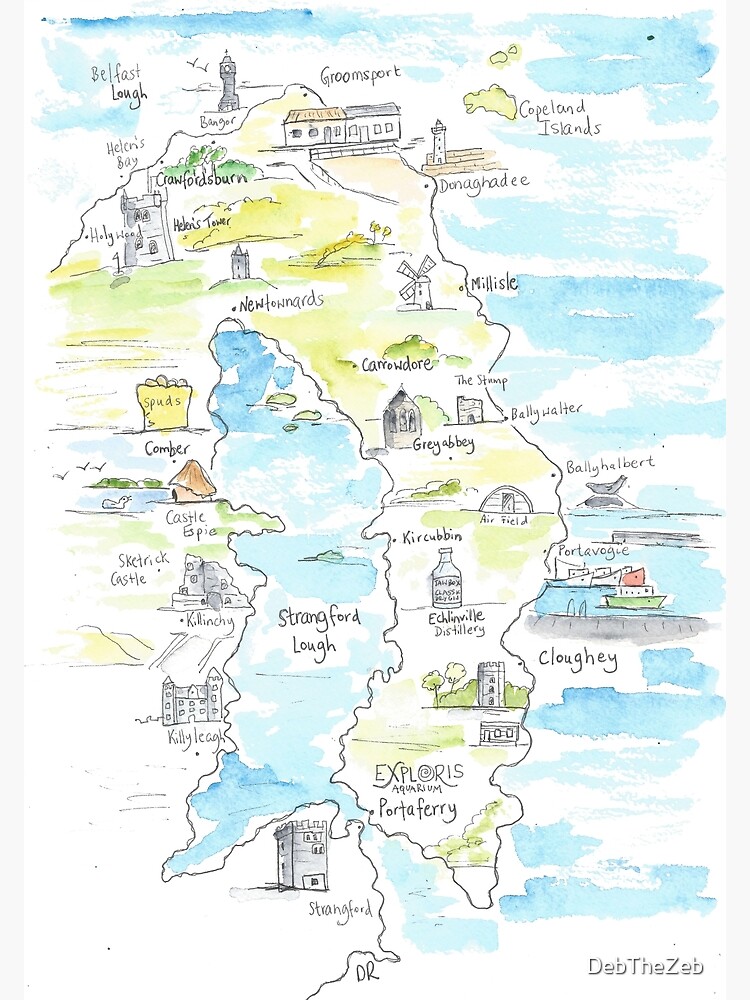
Portaferry and Strangford are two of those postcodes. They face each other across the Strangford Narrows, in two different council areas, linked only by the ferry. This is the moment to change that, and it starts with something small, cheap and honest: a feasibility study.
One ask. Not a bridge. A study.
We are asking the Minister for Infrastructure, Liz Kimmins MLA, to commission an independent feasibility study into a fixed bridge across the Strangford Narrows.
Not a promise to build. A test of whether a tolled crossing could pay its own way.
Specialist industry advice puts the cost at £250,000 to £500,000. The ferry’s net subsidy is £2,090,000 a year (DfI FOI response DFI-2024-0366). On those figures, the whole study costs between six and twelve weeks of ferry subsidy.
Ask it like a budget airline would
Picture the boss of a low-fares airline walking into a government meeting. No interest in reasons why not. Just five questions:
- What does it cost to find out? £250,000 to £500,000.
- What does doing nothing cost? £2.09 million a year, every year. And the Department holds no recorded business case for replacing the ferries (DfI FOI response DFI/2026-0415, 5 August 2026).
- Who pays? The idea to test is the user, through a toll, not the ratepayer.
- Where’s the demand? Around 29,050 vehicles a day on the three main counted roads around the Lough (DfI traffic counts 2023: A20 Kircubbin, A22 Comber, A7 Quoile).
- What’s the price quote based on? In February 2026 the Minister mentioned “around £300 million and potentially more”. By May 2026 it was “in excess of £500 million” (Assembly Official Report, 3 February 2026, Vol. 188 No 2; 11 May 2026, Vol. 193 No 4). No workings have been published for either figure.
No airline cancels a route on an unpriced quote. Neither should government.
The Minister’s own words
From the official record:
- “If there is good support and a strong economic case for it, why not?” (Hansard, 3 February 2026)
- “It would be remiss of me to say that we are not looking at the issue.” (Hansard, 11 May 2026)
- “I am now giving consideration to this issue.” (Letter to Ards and North Down Borough Council, ref. COR-0360-2026, 6 July 2026)
Good support? Both councils have backed a fixed crossing. Strong economic case? That is exactly what a study would establish.
Wealth, not rates
Two council areas face each other across the Narrows. Both are near the bottom of Northern Ireland’s table for wages paid by local workplaces:
- Ards and North Down: £450.10 a week, the lowest of all 11 councils
- Newry, Mourne and Down: £481.60 a week, ninth of 11
- Northern Ireland average: £528.90
(Department for the Economy, Sub-Regional Economic Plan Technical Annex, October 2024)
Yet Ards and North Down has the highest rate of new entrepreneurs in Northern Ireland, and Newry, Mourne and Down is its top exporting district. One side has the start-ups. The other has the export know-how. Between them, a stretch of water crossed only by the ferry timetable.
Local businesses already know how to fund what makes them money. Under the Business Improvement Districts Act (Northern Ireland) 2013, traders vote to pay a levy for improvements they value. In March 2026, Newry BID won a third term with 92% voting yes (newry.ie, 13 March 2026). On 8 October 2026, Bangor Chamber of Commerce and a Bangor BID Steering Group made deputations to Ards and North Down Borough Council.
A tolled crossing applies the same idea at a bigger scale: the people who use it pay for it. That means growing the economy rather than raising the rates. Whether that model actually works here is, again, what a study is for.
Resilience for the Peninsula
The Peninsula is a long finger of land, with coastal roads and a ferry at its tip.
- Storm Bram caused about £650,000 of damage to coastal defences in County Down (Hansard, 3 February 2026).
- To be fair to the ferry service, the Minister reported that at least one ferry was available for 99.82% of scheduled sailings in 2025-26 (Hansard, 11 May 2026).
But available sailings are not the same as night-time access, emergency access or capacity for growth. A study should test all three.
A case that works under any constitutional future
The constitutional question is now part of mainstream debate. Under the Northern Ireland Act 1998, the Secretary of State must call a border poll if it appears likely a majority would vote for a united Ireland.
We take no side on that. Our point is simpler: the crossing makes sense either way.
- If Northern Ireland stays in the UK, the Executive can fund the study.
- If voters ever chose a united Ireland, a connected Ards and Lecale coast would be an asset to an all-island economy.
- Right now, the Irish Government’s Shared Island Fund is a €2 billion commitment to 2035, and it is paying for Narrow Water Bridge (Department of the Taoiseach, NDP Review 2025, Shared Island Sectoral Investment Plan).
The Department of the Taoiseach told us that any cross-border co-operation would be considered once a proposal goes through “relevant feasibility and development stages” (letter ref. DOT-TM25-11858-2025, 16 September 2025).
No study, no co-funding conversation. The study is the key that fits every lock.
Let ambition lead the plans
The Department says the crossing should come through its transport plans. Yet its own Eastern Transport Plan says planning “is no longer focused on attempting to predict the future”. It promises a “vision and validate” approach: agree the vision first, then test it.
The vision is already agreed, by both councils and across parties. Now validate it.
There is a gap, too. The Eastern Transport Plan covers Ards and North Down, but not Newry, Mourne and Down. A bridge between two councils is being left to two separate plans, each of which sees only half of it.
From “false hope” to real hope
In 2024 an internal DfI memo advised against a study partly to avoid giving “false hope” to elected representatives (FOI DFI-2024-0412).
At Labour’s 2026 conference the Prime Minister spoke of putting power in people’s hands so places can set their own ambitions. The Peninsula has set its ambition. The answer to “false hope” isn’t no hope. It’s hope backed by evidence.
Picture the young person from Portaferry taking a job in Downpatrick. The Strangford café owner whose trade grows with the visitors. The carer, the haulier and the paramedic planning their day around their lives, not a timetable. A study will tell us how much of that is real.
What you can do before May 2027
The next Assembly election is on 6 May 2027.
- Ask every candidate in Strangford and South Down one question: will you back commissioning the feasibility study within the new Executive’s first 100 days?
- Share this post with your local traders, your chamber and your council.
- Follow the campaign at www.strangfordloughcrossing.org
Not a bridge on a promise. A study on a budget. Hope, with the numbers to back it.
Sources: Assembly Official Report (Hansard), 3 February 2026 (Vol. 188, No 2) and 11 May 2026 (Vol. 193, No 4); Minister for Infrastructure letter COR-0360-2026, 6 July 2026; DfI FOI responses DFI-2024-0366, DFI-2024-0412 and DFI/2026-0415; DfI traffic count data 2012 and 2023; DfE Sub-Regional Economic Plan Technical Annex, October 2024; Ards and North Down Borough Council Place and Prosperity Committee papers, 8 October 2026; Business Improvement Districts Act (Northern Ireland) 2013; Northern Ireland Act 1998, Schedule 1; Department of the Taoiseach, NDP Review 2025 Shared Island Sectoral Investment Plan and letter DOT-TM25-11858-2025; DfI Eastern Transport Plan 2035 webpage; Prime Minister’s speech, GOV.UK, 20 July 2026; newry.ie, 13 March 2026.