- BY Kevin Barry BSc(Hons) MRICS
- POSTED IN Latest News
- WITH 0 COMMENTS
- PERMALINK
- STANDARD POST TYPE
Ards Peninsula: The Cost of Standing Still (2026–2036)
Why this is no longer just a transport issue — but an economic and school survival issue
Executive summary (read this first)
Over the next 10 years, doing nothing on connectivity will cost the Ards Peninsula £1.0bn–£2.15bn — and could trigger the loss or weakening of up to a third of local primary schools.
This is not a distant risk. It is a slow, compounding decline already visible in:
- commuting patterns
- investment decisions
- school enrolment trends
1. The Peninsula Problem — structurally constrained


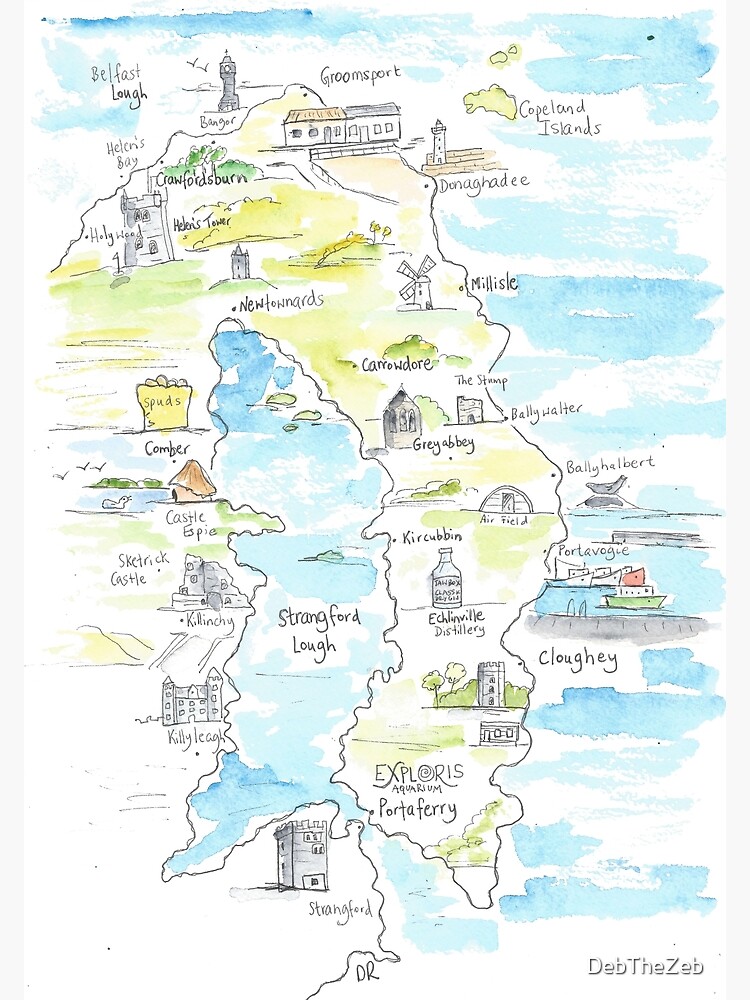
The Ards Peninsula is effectively a transport cul-de-sac:
- One dominant land access route via Newtownards
- A capacity-limited ferry across Strangford Lough
- No fixed crossing to unlock two-way flow
In economic terms, this creates:
A permanent accessibility penalty
And that penalty compounds over time.
2. The Top 10 Impacts Over the Next Decade
1. Structural economic underperformance
- Businesses avoid constrained locations
- Lower wages and fewer opportunities
Impact: £250m–£400m
2. Labour market constriction
- Limited access to jobs across the Lough
- Smaller talent pool for employers
Impact: £160m–£300m
3. School viability crisis (now a top-tier issue)


This is where the issue becomes tangible for families.
Under the Education Authority (Northern Ireland) model:
- Small primary schools become vulnerable below ~100 pupils
What happens over 10 years:
- 10–25% drop in pupil numbers
- 8–15 primary schools under pressure
- 2–5 closures or mergers likely
Post-primary pressure also builds:
- Portaferry College
- Glastry College
Impact: £45m–£160m
Once a school goes, it rarely comes back — and the community weakens immediately.
4. Transport inefficiency and lost time


- Ferry delays
- Long detours
- Daily productivity loss
Impact: £180m–£350m
5. Housing market suppression
- Area fails to function as a commuter belt
- Demand remains artificially low
Impact: £200m–£500m
6. Demographic drift (accelerated by school loss)


- Young families leave or don’t settle
- Population ages
Impact: £50m–£150m
7. Public service access declines
- Slower access to hospitals, emergency services
- Reduced service efficiency
Impact: £20m–£40m
8. Infrastructure investment bypasses the area
- Capital funding flows to better-connected regions
Impact: £50m–£150m
9. Tourism underperformance
- Accessibility limits visitor numbers
Impact: £20m–£60m
10. SME productivity drag
- Higher transport costs
- Limited ability to scale
Impact: £20m–£75m
3. The Compounding Loop (This is the real risk)
This is not 10 separate problems — it is one system failure:
Step 1
Poor connectivity limits jobs
Step 2
Families choose to live elsewhere
Step 3
School enrolment falls
Step 4
Schools close or weaken
Step 5
Area becomes less attractive
Step 6
Repeat — with greater impact
This is how regions decline — gradually, then permanently.
4. The Education Trigger (Why this changes everything)
Transport inefficiency can be tolerated.
Economic underperformance can be debated.
But:
School closures are immediate, visible, and political.
Even a loss of:
- 10–20 pupils
can push a small school into viability risk.
5. The True Cost of Doing Nothing
Over 10 years:
£1.0bn – £2.15bn lost
That is:
- Equivalent to a major infrastructure investment
- But delivers no improvement — only decline
6. What This Means in Plain Terms
If nothing changes:
- Fewer jobs
- Fewer families
- Fewer pupils
- Fewer schools
- Less investment
And ultimately:
A gradual hollowing-out of the Ards Peninsula
7. Final Word
This is not about ambition.
It is not even about a bridge.
It is about removing a structural barrier that is already costing the region — every single year.
Closing line (for sharing):
“Standing still is not neutral — it is costing up to £200 million per year and putting local schools at risk.”