
- BY Kevin Barry BSc(Hons) MRICS
- POSTED IN Latest News
- WITH 0 COMMENTS
- PERMALINK
- STANDARD POST TYPE
HANSARD ADJOURNMENT DEBATE – 25 NOVEMBER 2025- Traffic Flows in Newtownards
COMPREHENSIVE ANALYSIS:
Technical Engineering Context and Traffic Demand Evidence
Document Reference: Official Report (Hansard), Tuesday 25 November 2025, Volume 185, No 2, Pages 59-66 Debate Topic: Traffic Flow in Newtownards
Technical References:
- Wesley Johnston’s “The Narrows Bridge (Strangford Lough Crossing)” – https://www.wesleyjohnston.com/roads/strangfordloughbridge.html (Johnston operates the NI Roads website as an unofficial, independent resource documenting Northern Ireland’s road network)
- Kevin Barry’s “How Many of the 29,000 Daily Journeys Would Actually Use a Strangford Bridge?” – https://www.quintinqs.com/throttle-pipe-strangford/
DEBATE CONTEXT AND PARTICIPANTS
How the Debate Came About
The Adjournment Debate on “Traffic Flow in Newtownards” was secured by Miss Michelle McIlveen MLA (DUP, Strangford) for Tuesday 25 November 2025. Under Assembly procedures, an Adjournment debate allows an MLA to raise a matter of concern for ministerial response at the end of business. Miss McIlveen used this mechanism to highlight traffic congestion issues affecting Newtownards and the wider Ards Peninsula, seeking solutions from the Minister for Infrastructure.
The debate took place in the Chamber with Mr Deputy Speaker (Dr Steve Aiken MLA) in the Chair.
Participants and Speaking Order
1. Miss Michelle McIlveen MLA (DUP, Strangford) – Debate Proposer
- Secured the debate
- Delivered opening 15-minute contribution
- Represents Strangford constituency including Newtownards
- Outlined multiple traffic issues and proposed solutions
2. Ms Kellie Armstrong MLA (Alliance, Strangford)
- Represents same constituency as Miss McIlveen
- Spoke for approximately 5 minutes
- Bluntly raised concerns about specific infrastructure proposals, without evidence, namely Portaferry to Strangford Bridge. Made good impression in front of Minister, not.
3. Mr Harry Harvey MLA (DUP, Strangford)
- Third Strangford constituency representative participating
- DUP colleague of Miss McIlveen
- Spoke briefly supporting various improvements
4. Mr John Stewart MLA (UUP)
- Non-Strangford representative participating
- Focused on incomplete ring road and park-and-ride facilities
- Did not address Strangford Lough Crossing
5. Mr Justin McNulty MLA (SDLP, Newry and Armagh)
- Represents adjacent constituency
- Provided regional perspective on traffic issues
- Made strongest call for Strangford Lough Crossing action
6. Ms Liz Kimmins MLA (Sinn Féin) – Minister for Infrastructure
- Responded to all issues raised
- Provided departmental position on various proposals
- Brief response on Strangford Lough Crossing
Debate Scope
While the debate covered multiple Newtownards traffic issues including:
- Incomplete ring road
- Park-and-ride facilities and timelines
- Speed limits on specific roads
- Bloomfield Road improvements
- Various junction and roundabout concerns
This analysis focuses exclusively on comments relating to the proposed Strangford Lough Crossing (bridge or alternative fixed crossing between Portaferry and Strangford), which was raised by three MLAs and addressed briefly by the Minister.
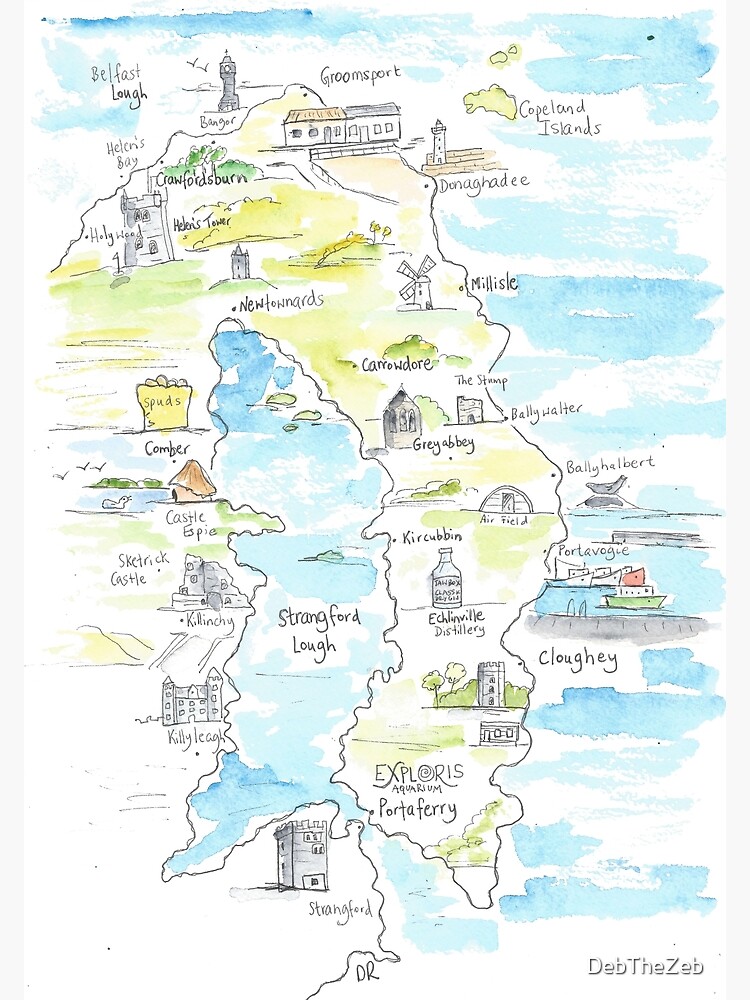
Proposed Strangford Lough Crossing (bridge or alternative fixed crossing between Portaferry and Strangford), which was raised by three MLAs and addressed briefly by the Minister.
Significance
The debate is significant because:
- Three MLAs from two parties (DUP and SDLP) explicitly called for action on the crossing
- One MLA (Alliance) raised concerns about village integration
- Cross-constituency support demonstrated (Strangford and Newry & Armagh representatives)
- Ministerial response provided first on-record Assembly position
- Official Hansard record creates accountability benchmark for future engagement
EXECUTIVE SUMMARY
TECHNICAL CONTEXT: The proposed crossing at “The Narrows” (550 metres at narrowest point between Portaferry and Strangford) would be one of Northern Ireland’s most significant infrastructure projects, requiring a cable-stayed structure with central span significantly longer than Foyle Bridge’s 234m.
TRAFFIC DEMAND REALITY: Analysis of DfI’s published AADT (Average Annual Daily Traffic) data reveals ~29,000 vehicles/day on roads feeding The Narrows, with only ~650 vehicles/day (2-3%) currently using the ferry. This represents massive suppressed demand – 97-98% of corridor traffic is forced into 47-mile/76km detours. A fixed crossing could realistically capture 10-25% of corridor traffic (3,500-8,000 vehicles/day) based on time savings of 45-60 minutes per crossing.
HANSARD DEBATE POSITIONS:
SUPPORT (3 MLAs):
- Miss Michelle McIlveen MLA (DUP, Strangford) – Requested feasibility study
- Mr Harry Harvey MLA (DUP, Strangford) – Supported exploration of bridge
- Mr Justin McNulty MLA (SDLP, Newry and Armagh) – Strongest call: urged “fixed Strangford crossing” to address “unsuitable bottleneck system”
CONCERNS RAISED (1 MLA):
- Ms Kellie Armstrong MLA (Alliance, Strangford) – Raised important concerns about village integration, specifically that approach roads and bridge location must ensure Portaferry and Strangford villages remain accessible and integrated, not bypassed
MINISTER’S RESPONSE:
- Ms Liz Kimmins MLA (Sinn Féin) stated unfamiliarity with bridge proposal, acknowledged “difference of opinion on that, so we will leave that for another time”,
KEY FINDING: Armstrong’s concerns about village integration are legitimate design considerations that underscore the need for comprehensive feasibility study examining multiple routing options and approach road designs. It is unclear whether she opposes the bridge concept entirely or specifically the risk of poor routing that bypasses villages – her focus on ensuring villages remain integrated suggests the latter interpretation may be more accurate.
PART 1: TECHNICAL AND TRAFFIC CONTEXT
1A. Engineering Reality (Johnston’s Independent Analysis)
About the Source: Wesley Johnston operates the NI Roads website (https://www.wesleyjohnston.com/roads/) as an unofficial, independent resource documenting Northern Ireland’s road network. His analysis provides objective technical assessment of infrastructure proposals without political affiliation.
The Narrows Characteristics:
- Minimum 550 metres crossing distance at narrowest point
- Relatively deep channel requiring cable-stayed structure
- No pillars possible more than few dozen metres from shore
- Central span significantly longer than Foyle Bridge (234m)
- Height requirement to clear shipping
- Slope/geology of seabed creates foundation challenges
- Estimated cost: ~£300m (2025 prices)
Comparable Structures:
- Foyle Bridge, Derry: 866m total, 234m central span, 3m water depth for piers
- Rose Fitzgerald Kennedy Bridge, Ireland: 887m, €230m/£190m (2020), similar tidal waterway
- Isle of Skye Bridge, Scotland: 300m main span serving ~10,000 population
Current Ferry System:
- Operating since at least 16th century
- Costs DfI ~£1.5m annually (income ~£1m annually)
- 500,000 passengers annually (Johnston’s figure)
- ~650 vehicles/day (Barry’s analysis of DfI data)
- 8-minute crossing vs 76km/47-mile road alternative taking over 1 hour
- Vulnerable to fog and strong wind cancellations
1B. Traffic Demand Reality (Barry’s DfI AADT Analysis)
THE CRITICAL “THROTTLE PIPE” FINDING:
Analysis of DfI’s published traffic count data reveals massive suppressed demand:
Three Key Count Points on Roads Feeding The Narrows:
- A20 at Kircubbin (Portaferry Road, Ards Peninsula):
- ~7,000-7,500 vehicles/day
- A22 at Comber (Comber-Killyleagh Road):
- ~9,000-9,500 vehicles/day
- A7 at Quoile Bridge, outside Downpatrick:
- ~12,000-13,000 vehicles/day (upward trend)
TOTAL CORRIDOR TRAFFIC: ≈29,000 vehicles/day moving along cross-peninsula corridor on three main arms leading to/from The Narrows
Ferry Usage: ~650 vehicles/day actually crossing The Narrows via ferry
The Significant Statistic: Only 2-3% of corridor traffic uses the “direct” A2 link across The Narrows 97-98% are forced round the long way
What This Indicates:
Current ferry capacity and service characteristics (fares, wait times, operating hours, weather cancellations) constrain usage to a small fraction of potential demand. The 29,000 vehicles/day on surrounding roads suggest substantial latent demand for cross-lough connectivity.
1C. Realistic Bridge Usage Projections
Time Savings Analysis:
47-mile detour currently required:
- Driving time: 45-60 minutes
- Fuel cost: £4-5 each way for typical car
- Time value: £6-10/hour × 0.75-1 hour = £4.50-10.00
- Total cost of detour: £8-15 per crossing
Fixed crossing:
- Crossing time: 10-15 minutes including approaches
- Even with £3-4 toll, users save £5-12 per crossing
- Plus: 24/7 reliability (no fog/wind cancellations)
- Plus: no queue uncertainty
Conservative Bridge Usage Scenarios:
“Bridge-Relevant” Traffic Pool: Not all 29,000 vehicles would benefit from bridge – some are purely local trips not crossing lough.
Conservative catchment assumptions:
- 40% of A7 Quoile and A20 Kircubbin traffic
- 20-30% of A22 Comber traffic
Bridge-relevant pool: ~10,000-15,000 vehicles/day
Diversion Rate Scenarios:

Applying modest diversion rates from transport economics:

Scenario   Diversion %    Daily Vehicles      Annual Revenue (at ferry pricing)
Low        30%            ~3,500              £3.5m
Central    50%            ~5,800              £5.8m
High       70%            ~8,000              £8.0m
These represent existing traffic currently using longer routes.
Comparators – What Happens When You Remove a Bottleneck:
- Skye Bridge: Traffic rose significantly above background growth even with tolls; rose further when tolls removed
- Corran Narrows (Scotland): Fixed link planning assumes multiples of ferry traffic due to time/reliability benefits
- Severn Crossings: When tolls scrapped (2018), traffic jumped ~33% within few years
1D. Financial Implications for Bridge Viability
Ferry Operating Costs (Annual):
- £1.5m subsidy from DfI
- Eliminated with bridge
Bridge Toll Revenue (Variable Based on Usage):
At current ferry levels (~650 vehicles/day):
- ~£1m annually (Johnston’s baseline figure)
- Small compared to £300m construction cost
At realistic bridge usage (3,500-8,000 vehicles/day based on corridor analysis):
- £3.5m-£8.0m annually
- Makes tolling potentially viable as partial cost recovery
- 10-20 year payback on construction finance possible with toll revenue
- Plus ferry subsidy savings (£1.5m annually)
Combined Annual Benefit:
- Toll revenue: £3.5m-£8.0m
- Ferry savings: £1.5m
- Total: £5.0m-£9.5m annually
This significantly improves the financial case for the infrastructure investment, especially with:
- Shared Island Fund co-funding potential
- Strategic infrastructure designation
- Economic development benefits
- Social infrastructure justification (like Isle of Skye Bridge)
PART 2: DETAILED HANSARD DEBATE ANALYSIS
2.1 MISS MICHELLE McILVEEN MLA (DUP, STRANGFORD) – SUPPORTIVE
Context: Secured debate, delivered opening 15-minute contribution
Bridge Comment (Page 62):
“A feasibility study on having a bridge between Portaferry and Strangford”
Analysis:
McIlveen’s feasibility study request is the appropriate next step given:
- Engineering complexity (550m cable-stayed structure required)
- Traffic demand questions requiring professional modeling
- Financial viability assessment needed (toll revenue scenarios)
- Village integration design challenges (Armstrong’s concerns)
- Multiple routing options requiring evaluation
- Environmental considerations
Her professional approach (feasibility study rather than immediate construction commitment) demonstrates understanding of project scale while advancing the concept systematically through proper assessment channels.
2.2 MS KELLIE ARMSTRONG MLA (ALLIANCE, STRANGFORD) – CONCERNS RAISED
Context: Alliance Party MLA for Strangford, ~5 minutes on traffic issues
Complete Statement on Bridge (Page 62):
“The one thing that I do not agree with is the idea of a bridge from Portaferry to Strangford because of the connectivity implications and the destructive impact that it would have on both villages. The villages would end overnight because the bridge would not be where the ferry currently crosses. We all know that taking a road away from those villages means that they will die on the vine as time moves on.“
CAREFUL ANALYSIS OF ARMSTRONG’S POSITION
Key Question: Is Armstrong Opposing the Bridge Concept or Poor Bridge Design?
Her statement focuses on:
- “Bridge would not be where ferry currently crosses” – location/routing concern
- “Taking a road away from villages” – integration/access concern
- “Villages would end” – outcome to avoid through proper design
Interpretation Options:
Option A: Fundamental Opposition
- Opposes any bridge regardless of design
- Believes ferry system intrinsically better for villages
Option B: Design-Focused Concerns (More likely given her specific language)
- Concerned about bridge location bypassing villages
- Wants approach roads to integrate with village centers
- Seeks assurance villages will be on primary routes, not bypassed
- Opposes poor design, not necessarily concept itself
Her Language Suggests Option B:
- Specific focus on “where” bridge would be
- Concern about “taking road away” (implies road could instead go through)
- Emphasis on connectivity and access – issues addressable through design
TECHNICAL REALITY OF HER CONCERNS
Armstrong’s Core Observation:
“The bridge would not be where the ferry currently crosses”
Engineering Context:
Johnston’s analysis shows optimal bridge location at narrowest point (550m) with ~1km approach roads on both sides connecting via new roundabouts to existing network.
Armstrong Correctly Identifies a Real Design Challenge:
Engineering optimal (shortest span at narrowest point = lowest cost) may not align perfectly with current ferry terminals in village centers.
This creates genuine design considerations:
- How do approach roads connect to existing villages?
- Will traffic naturally flow through villages or bypass them?
- How to ensure villages remain integrated, not isolated?
- What junction/roundabout designs preserve village accessibility?
These Are Legitimate Professional Questions Requiring Feasibility Study to Answer
TRAFFIC CONTEXT FOR VILLAGE INTEGRATION
Current Situation:
- Ferry: 650 vehicles/day through villages
- Capacity constraints limit visitor/customer numbers
- Operating hours restrict evening economy
- Weather cancellations isolate villages unpredictably
Potential with Proper Bridge Design:
- 3,500-8,000 vehicles/day (5-12× current levels)
- 24/7 all-weather accessibility
- Approach roads can be designed through villages
- Roundabouts can direct traffic into village centers
- Multiple village access points possible
Armstrong’s Concern is Valid: Poor Design Could Harm Villages
But Proper Design Could Dramatically Benefit Villages:
- Massive increase in potential customers (5-12×)
- Reliable access year-round
- No capacity constraints
- Better workforce accessibility
- Enhanced tourism potential
CLEDDAU BRIDGE PRECEDENT DIRECTLY ADDRESSES ARMSTRONG’S CONCERNS
Pembroke Dock and Neyland (Wales):
- Similar-sized communities to Portaferry/Strangford
- Connected by Cleddau Bridge (1975) replacing ferry
- Bridge approaches designed through town centers
- Both communities thrived post-bridge
- No “village death” occurred
- Economic development enhanced
- Bridge became regional landmark and asset
This Precedent Demonstrates Armstrong’s Concerns Are Addressable Through Proper Design
WHAT ARMSTRONG’S POSITION MEANS FOR PROJECT
If Option A (Fundamental Opposition):
- Represents genuine local dissent requiring address
- Political challenge to overcome
- Community consultation critical
If Option B (Design-Focused Concerns – More Likely):
- Validates need for comprehensive feasibility study
- Demonstrates why multiple design options must be examined
- Shows village integration must be explicit design requirement
- Could potentially be converted to conditional support if design addresses concerns
Armstrong’s Statement Strengthens Case for Proper Feasibility Study:
Her concerns demonstrate exactly why:
- Professional engineering analysis required
- Multiple routing options must be evaluated
- Village integration cannot be afterthought – must be core requirement
- Community consultation essential
- Precedent analysis (Cleddau) must inform design
- Cannot proceed without systematic professional assessment
Not a Reason to Abandon Project:
Rather, evidence that proper feasibility study examining village-integrated design options is essential next step.
Recommended Engagement Approach:
- Request meeting with Ms Armstrong to understand concerns in depth
- Present Cleddau Bridge case study of successful village integration
- Demonstrate multiple approach road design options
- Show how villages can be on primary routes, not bypassed
- Invite her participation in design process to ensure village protection
- Position her as valuable advocate ensuring proper community integration
Key Message: “Ms Armstrong’s concerns about ensuring villages remain integrated and accessible underscore why a comprehensive feasibility study examining multiple design options is essential – precisely to ensure any crossing enhances rather than harms our villages through professional design and community consultation.”
2.3 MR HARRY HARVEY MLA (DUP, STRANGFORD) – SUPPORTIVE
Context: DUP colleague of McIlveen, represents Strangford
Bridge Comment (Page 63):
“We must see the road network improvements that will support transport resilience for the future, and I trust that the Minister will act for the benefit of Newtownards. I also look forward to her exploration of the idea of a Strangford/Portaferry bridge.“
Analysis:
Harvey’s “transport resilience” framing directly addresses current system vulnerabilities:
Current Ferry Vulnerabilities:
- Fog cancellations force entire region into detours
- Wind cancellations isolate Ards Peninsula
- Mechanical failures create unpredictable disruption
- Capacity limits constrain economic activity
Bridge Resilience Benefits:
- 24/7 all-weather operation
- Emergency services reliability
- Elimination of 47-mile detour dependency
- Capacity for realistic demand levels
Harvey recognizes £300m+ investment must be justified on strategic infrastructure grounds (resilience, connectivity, economic development) rather than current artificially constrained ferry traffic levels.
2.4 MR JUSTIN McNULTY MLA (SDLP, NEWRY AND ARMAGH) – STRONGLY SUPPORTIVE
Context: Represents Newry and Armagh (not Strangford) – cross-constituency support significant
Complete Statement (Pages 64-65):
“I stress that the problems are not restricted or unique to Newtownards but are felt across the North. The current mess with traffic flow is the result of policy inaction from the Department for Infrastructure. The Minister often refers to ‘British austerity’ — Sinn Féin’s favourite term — binding her Department’s capacity to undertake projects, but issues such as traffic flow and road safety are the direct responsibility of her Department. The responsibilities and failures of Departments in the North cannot continue to be blamed on Westminster, especially not by so-called republicans. The Assembly has a duty to serve the people who live here, ensuring that roads are built to make for safe and efficient communities. I urge the Minister for Infrastructure to take up her responsibility and explore traffic flow solutions such as having a fixed Strangford crossing to distribute traffic more evenly, instead of having the current, unsuitable bottleneck system.“
Analysis:
McNulty’s “Unsuitable Bottleneck System” – Supported by Traffic Data:
DfI traffic counts document bottleneck:
- 29,000 vehicles/day corridor traffic
- Only 650 vehicles/day (2-3%) able to use direct crossing
- 97-98% forced into extended detours
- Single point of failure for regional connectivity
“Fixed Strangford Crossing” – Most technically appropriate terminology:
- “Fixed” = permanent infrastructure (vs variable ferry)
- “Crossing” = technology-neutral (bridge, tunnel, or other solution)
- Emphasizes permanence and reliability
“Distribute Traffic More Evenly”:
Recognizes regional traffic distribution challenge:
- Current system artificially constrains natural traffic patterns
- Forces unnatural concentration on detour routes
- Fixed crossing would enable organic distribution based on actual origins/destinations
Referenced Councillor Joe Boyle (SDLP):
- “Mile-and-a-half tailbacks starting at 7:00 am”
- Evidence of congestion at ferry access
- Newtownards traffic impacts from system constraints
Strategic Positioning:
McNulty framed as regional infrastructure priority rather than local amenity:
- Multiple council areas affected
- Ministerial accountability emphasis
- Evidence-based advocacy
Shared Island Fund Context:
McNulty’s SDLP advocacy particularly valuable:
- Cross-party support (DUP+SDLP) essential for Shared Island funding applications
- All-island connectivity benefits
- Cross-community backing demonstrates broad support
2.5 MS LIZ KIMMINS MLA – MINISTER FOR INFRASTRUCTURE (SINN FÉIN)
Minister’s Response (Pages 65-66):
“I have made loads of notes here because many specific issues were raised. The bridge to Portaferry is not one that I am familiar with. There is obviously a difference of opinion on that, so we will leave that for another time.“
ANALYSIS OF MINISTERIAL RESPONSE
Understanding “Unfamiliarity” in Context:
Ministers typically rely on departmental briefings for technical details like traffic count data and project analysis. The Minister’s statement of unfamiliarity likely reflects:
- No specific briefing prepared for this Adjournment debate topic
- Traffic data analysis requiring specialist interpretation by officials
- Reliance on departmental processes to surface relevant evidence
- Bridge mentioned briefly among many other traffic issues in debate
What This Suggests About Departmental Processes:
- Officials have not brought forward comprehensive traffic analysis to Minister
- No active departmental consideration of proposal currently
- Gap between community advocacy and departmental briefing systems
- Need for formal engagement to ensure evidence reaches decision-makers properly
“Difference of Opinion” Acknowledgment:
Minister recognizes diversity of views:
- 3 MLAs supportive (DUP, SDLP)
- 1 MLA raised concerns (Alliance – village integration focused)
- Acknowledges topic is not straightforward or unanimous
What “difference of opinion” likely refers to:
- Design approach and village integration challenges (Armstrong’s concerns)
- Balance between engineering optimal and community optimal routing
- Village vs. regional connectivity priorities
- Not necessarily whether any crossing should ever be considered
“Leave for Another Time”:
Minister’s deferral without specific commitment:
- No timeline provided
- No action commitment
- No acknowledgment of traffic data
- No recognition of funding opportunities
- No engagement with evidence base
Contrast in Ministerial Engagement:
Minister was constructive and detailed on:
- Park-and-ride business case timelines (spring 2026)
- Speed limit reviews
- Transport planning philosophy
- Site meeting commitments with MLAs
More brief on The Narrows Bridge:
- No substantive engagement
- No follow-up proposed
- Deferred indefinitely
Possible Interpretations:
- Lack of Briefing: Officials haven’t prepared Minister on this topic
- Complexity: Recognizes Armstrong’s concerns require careful consideration
- Resource Constraints: Cannot commit to new major projects without existing priorities resolved
- Political Sensitivity: Cross-community infrastructure proposals require careful handling
- Awaiting Formal Proposal: Expects structured proposal through proper departmental channels
Shared Island Fund Context:
Independent roads analyst Wesley Johnston noted: “While it is highly unlikely that the Northern Ireland Executive could/would commit to a bridge here, it is possible that other sources of money, such as the Shared Island Fund, could be brought to bear”
Potential Path Forward:
Minister’s deferral is not necessarily rejection – may simply reflect:
- Need for proper departmental assessment process
- Requirement for formal feasibility study proposal
- Recognition of legitimate concerns requiring resolution
- Appropriate caution on major infrastructure commitments
Recommended Response:
Rather than confronting Minister’s unfamiliarity, more productive to:
- Submit formal briefing with traffic data analysis
- Request ministerial meeting to present evidence
- Engage departmental officials with structured proposal
- Commission independent feasibility study to provide professional basis for consideration
- Demonstrate how Armstrong’s concerns can be addressed through design
PART 3: STRATEGIC ASSESSMENT
3.1 Traffic Data Provides Strong Evidence Base
DfI’s Published Traffic Counts Show:
- 29,000 vehicles/day on roads feeding The Narrows
- Only 2-3% using direct crossing via ferry
- Substantial latent demand for improved cross-lough connectivity
- Realistic bridge usage: 3,500-8,000 vehicles/day (10-25% of corridor)
- Time savings: 45-60 minutes per crossing
- Cost savings: £8-15 per crossing (even with toll)
This Evidence Base Should Inform Any Feasibility Study
3.2 Financial Viability Significantly Improved
Realistic Usage Scenarios Transform Economics:
- £3.5m-£8.0m annual toll revenue potential (vs £1m at ferry levels)
- £1.5m annual ferry subsidy savings
- Total: £5.0m-£9.5m annual benefit
- Creates viable case for infrastructure investment
- Toll revenue becomes meaningful contribution to costs
Combined with Shared Island Fund Co-Funding Potential:
- Irish Government interest in cross-border connectivity
- Precedent from other infrastructure projects
- Cross-party support facilitates applications
3.3 Armstrong’s Village Concerns Require Serious Address
Her Position (Whether Fundamental Opposition or Design-Focused):
- Raises legitimate village integration questions
- Reflects genuine local concerns about community impacts
- Cannot be dismissed or ignored
Proper Response:
- Comprehensive feasibility study must include village impact assessment
- Multiple design options examining village integration
- Cleddau Bridge precedent analysis essential
- Community consultation with village businesses and residents
- Design principles ensuring villages on primary routes, not bypassed
Armstrong’s Concerns Validate Need for Professional Study:
- Shows why rushed decision-making inappropriate
- Demonstrates complexity requiring systematic assessment
- Proves community consultation essential component
3.4 Path Forward Requires Structured Approach
Rather Than:
- Confronting Minister’s unfamiliarity
- Dismissing Armstrong’s village concerns
- Assuming project obviousness
More Productive Strategy:
- Commission professional feasibility study
- Present traffic data analysis through proper channels
- Engage directly with Armstrong on design options
- Submit formal ministerial briefing
- Pursue Shared Island Fund preliminary discussions
- Demonstrate how legitimate concerns can be addressed
PART 4: CONCLUSION AND PATH FORWARD
The Case for Feasibility Study is Strong
Engineering: Challenging but achievable (Johnston’s analysis)
Traffic Demand: Substantial latent demand documented in DfI’s own data (29,000 vehicles/day corridor)
Financial Viability: Significantly improved with realistic usage scenarios (£5-9.5m annual benefit potential)
Political Support: Cross-party (DUP+SDLP), cross-community potential
Legitimate Concerns: Village integration requires careful design (Armstrong’s focus)
The Path Forward is Clear
Not:
- Whether any crossing should ever be considered
- Whether demand exists (traffic data confirms it does)
- Whether Minister must immediately commit
But:
- Commissioning comprehensive feasibility study
- Examining multiple design options
- Addressing village integration systematically
- Engaging community through proper consultation
- Presenting evidence through appropriate channels
- Pursuing Shared Island Fund opportunities
Armstrong’s Concerns Are Addressable
Whether she opposes the bridge concept fundamentally or specifically the risk of poor design, her concerns about village integration:
- Are legitimate and require serious attention
- Can be addressed through proper feasibility study
- Strengthen rather than weaken the case for professional assessment
- Demonstrate exactly why systematic study essential
Minister’s Position Can Be Engaged Constructively
Rather than confronting unfamiliarity:
- Provide proper briefing through departmental channels
- Present evidence in professional format
- Propose appropriate next steps (feasibility study)
- Acknowledge complexity requiring careful consideration
- Work within established processes
The Evidence Speaks for Itself
29,000 vehicles/day on surrounding roads 650 vehicles/day using current crossing 97-98% forced into lengthy detours
This is not advocacy – it is DfI’s own published traffic count data.
The question is not whether to proceed immediately with construction, but whether this evidence base warrants investment in comprehensive feasibility study to properly assess options, costs, benefits, and community impacts through professional engineering and economic analysis.
The answer, based on cross-party political support, substantial traffic data, and improved financial viability, appears to be yes.
Independent Feasibility Study Using UK TAG Framework
What is TAG?
TAG (Transport Analysis Guidance) is the UK Department for Transport’s official framework for transport project appraisal. It provides standardized methodologies for economic appraisal, traffic forecasting, environmental assessment, and value-for-money evaluation. DfI uses TAG for major transport schemes, and TAG compliance is typically required for Shared Island Fund applications.
Why External TAG-Compliant Study is Essential:
- Credibility: Industry-standard methodology accepted by DfI, funding bodies, and both governments
- Objectivity: Independent professional assessment removes perception of bias
- Comprehensiveness: Covers economic, environmental, social, and financial aspects
- Funding Eligibility: Required for Shared Island Fund and other major funding sources
- Resource Efficiency: External consultants enable assessment without diverting DfI internal resources
TAG Study Would Deliver:
- Economic appraisal including benefit-cost ratio and traffic demand modeling
- Environmental impact assessment (air quality, emissions, biodiversity, landscape)
- Social impact analysis including village-level effects and accessibility improvements
- Multiple design and routing options evaluation (addressing Armstrong’s village integration concerns)
- Financial viability assessment including realistic toll revenue scenarios (£3.5m-£8.0m annually)
- Strategic case demonstrating policy alignment
- Deliverability and risk assessment including consenting requirements
- Funding strategy with Shared Island Fund application preparation
Indicative Costs and Phasing:
- Phase 1 (Preliminary feasibility): £150,000-£250,000
- Phase 2 (Full business case): £500,000-£750,000
- Potential funding: Shared Island Fund co-funding, DfI allocation, phased approach
This would provide the professional, evidence-based foundation required for informed decision-making by Ministers, MLAs, and funding bodies, using the same rigorous methodology applied to all major UK transport infrastructure projects.
Sources:
- Official Report (Hansard), Northern Ireland Assembly, 25 November 2025, Volume 185, No 2, Pages 59-66
- Wesley Johnston’s “The Narrows Bridge (Strangford Lough Crossing)” – https://www.wesleyjohnston.com/roads/strangfordloughbridge.html Note: Wesley Johnston operates the NI Roads website as an independent, unofficial resource documenting Northern Ireland’s road network. His analysis is objective technical assessment without political affiliation.
- Kevin Barry’s “How Many of the 29,000 Daily Journeys Would Actually Use a Strangford Bridge?” – https://www.quintinqs.com/throttle-pipe-strangford/
- DfI AADT Traffic Count Data (various years, publicly available)