
- BY Kevin Barry BSc(Hons) MRICS
- POSTED IN Latest News
- WITH 0 COMMENTS
- PERMALINK
- STANDARD POST TYPE
When the Evidence Comes to You: What a New Climate Report Means for the Strangford Lough Crossing
1 April 2026
There are moments in any long campaign when the external world catches up with arguments you have been making quietly for years. This is one of those moments. Our climate knows no borders.
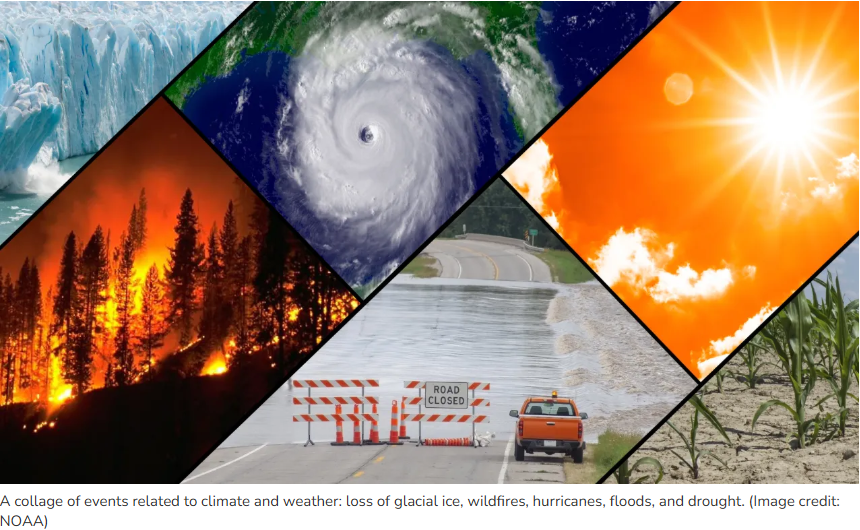
On 1 April 2026, RTÉ News Environment Correspondent George Lee reported the findings of the Climate Change Advisory Council in an article titled “Climate Change Exposing Vulnerabilities in Critical Infrastructure.” The Council is an independent statutory body. Its findings are not the views of a campaign or a politician. They represent the settled, evidenced judgement of Ireland’s principal advisory authority on climate.
The Council’s conclusion is direct: climate change is already having measurable impacts in Ireland, with growing risks for communities, infrastructure, essential services and the economy. It is calling for urgent investment in climate resilience and long-term planning, warning that without action, the risks will continue to grow. Professor Peter Thorne, Chair of the Council’s Adaptation Committee, put it plainly: “We must shift from reacting to extreme weather events to anticipating and preparing for them.”
Read that again. Anticipating. Preparing. Not reacting after the damage is done.
Anyone who travelled the A20 Portaferry Road during Storm Bram in December 2025, or during Storm Chandra earlier this year, will not need the Climate Change Advisory Council to explain what infrastructure vulnerability looks like in practice. They lived it. A bus of schoolchildren was stranded with floodwaters reported at two to three feet in depth. Dozens of cars were abandoned. The coastguard attended the scene. At the same time, the ferry crossing between Portaferry and Strangford — the only alternative when the A20 is impassable — was itself subject to disruption, as it routinely is during precisely the severe weather events that also close the road.
The Northern Ireland Assembly was already on record about this. At the Adjournment debate of 3 February 2026 (Hansard Vol. 188, No. 2), Members from across parties placed these specific events before the Minister for Infrastructure. MLA Matthew O’Toole noted that storm disruption to the A20 frequently coincides with ferry disruption, removing both transport options simultaneously. MLA Harry Harvey called directly for strategic investment to ensure the road could withstand coastal forces. MLA Michelle McIlveen went further, stating that “fundamentally different transport solutions” — including a fixed crossing — must be examined as part of any serious resilience strategy for the area.
That Assembly record now sits alongside the Climate Change Advisory Council’s national finding. They are pointing in the same direction.
There is a further detail the public has a right to know. The Department for Infrastructure’s own internal documents, released under the Freedom of Information Act (DFI-2025-0054), confirm that the Strangford Ferry is “currently vulnerable due to vacancies,” with specialist crew training taking approximately six months to complete. The ferry, in other words, is not a resilient fallback. It is itself an acknowledged operational vulnerability. When the road closes and the ferry is undermanned or weather-affected, the Ards Peninsula has no reliable transport corridor at all.
This is not a matter of inconvenience. It is a matter of infrastructure governance. The Climate Change Advisory Council has now told both jurisdictions on this island that the era of reactive patching is over. Sustained investment, coordinated policy, and long-term planning are required.
The Strangford Lough Crossing Campaign has asked for one thing: an independent feasibility study, estimated to cost between £750,000 and £1 million, to examine whether a fixed crossing between Portaferry and Strangford is viable. Not a commitment to build a bridge. A study. The kind of forward-looking, evidence-based planning the Climate Change Advisory Council is now calling for at national level.
The Council’s report also has direct relevance to the Irish Government’s Shared Island Fund, which has been doubled to EUR 2 billion through 2035. The Narrow Water Bridge, currently under construction by BAM Ireland at a cost of EUR 102 million, establishes the co-funding precedent for cross-border infrastructure on this island. A feasibility study into a fixed Strangford Lough crossing fits squarely within the framework the Irish Government itself has created.
The Strangford Lough Crossing Campaign will be drawing the Climate Change Advisory Council’s findings to the attention of Minister Liz Kimmins MLA, the Department for Infrastructure, and the Shared Island Unit in the coming days. The evidence is no longer coming only from local communities and professional analysis. It is coming from Ireland’s own statutory advisory council.
The question for government is simple: if not now, when?
Kevin Barry BSc(Hons) MRICS Campaign Lead, Strangford Lough Crossing Campaign www.strangfordloughcrossing.org mail@kevinbarryqs.com
Sources:
George Lee, “Climate Change Exposing Vulnerabilities in Critical Infrastructure,” RTÉ News, 1 April 2026. www.rte.ie/news/ireland/2026/0401/1566184-climate-weather-ireland/
Northern Ireland Assembly, Adjournment Debate — A20 Portaferry Road / Strangford Lough Crossing, 3 February 2026, Hansard Vol. 188, No. 2.
Department for Infrastructure, FOI Disclosure DFI-2025-0054 (Strangford Ferry operational vulnerability).
Department for Infrastructure, FOI Disclosure DFI-2024-0366 (Strangford Ferry subsidy and income data).
Climate Change Advisory Council, Annual Review Report 2026 (as reported by George Lee, RTÉ News, 1 April 2026).