
- BY Kevin Barry BSc(Hons) MRICS
- POSTED IN Latest News
- WITH 0 COMMENTS
- PERMALINK
- STANDARD POST TYPE
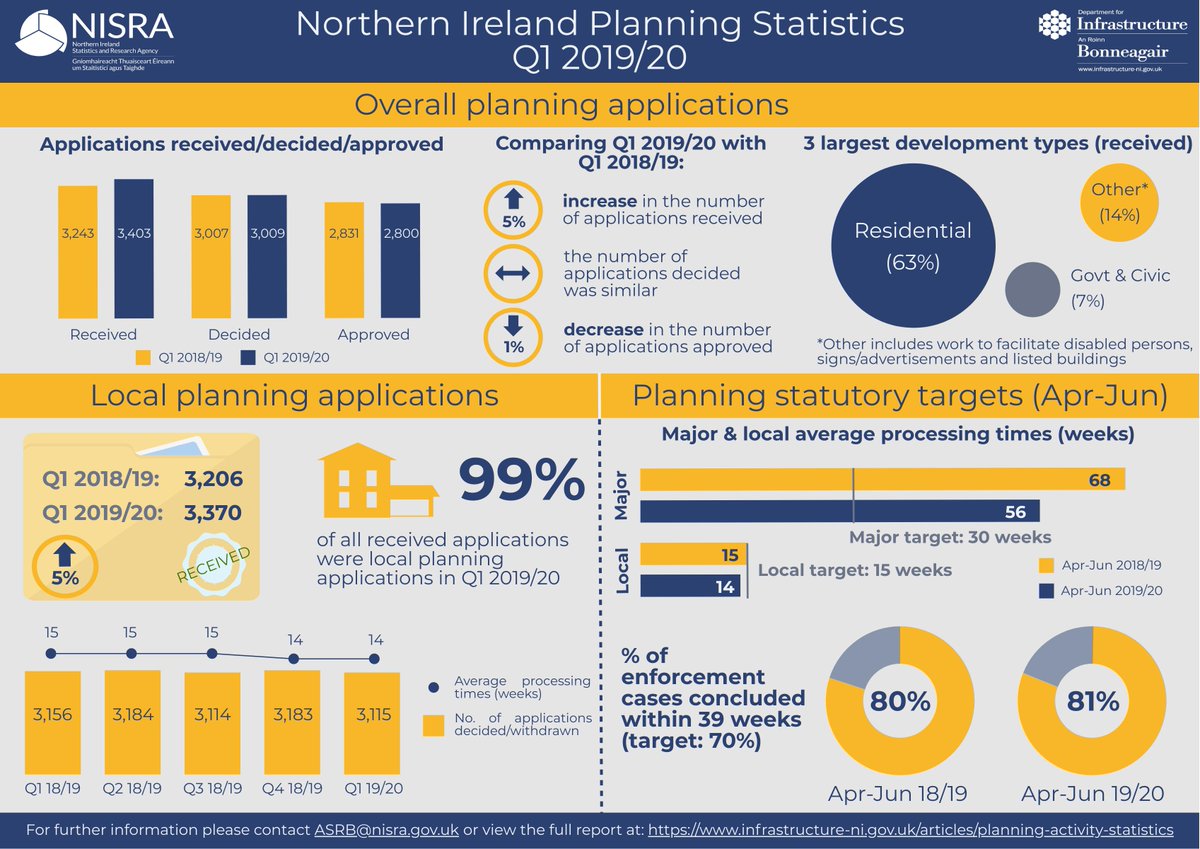
Northern Ireland’s planning system is widely viewed as underperforming, with statutory consultees a major pinch‑point, but delays and “crisis” symptoms arise from several interacting structural and cultural problems rather than one villain.
1. What “crisis” looks like
Key symptoms repeatedly flagged in formal reviews and political debate include:
- Very long determination times for major and regionally significant applications (frequently measured in years rather than months).
- Low clearance rates and large backlogs at both council and DfI level, undermining investment confidence.
- Developers having to redesign schemes multiple times to satisfy changing or late consultee advice (roads, rivers, NIEA, NI Water, HED, SES, etc.).
- High‑profile schemes (housing, renewables, agri‑units, strategic roads, major stadia) becoming quasi‑political sagas, with the planning process seen as opaque, inconsistent, or prone to legal challenge.
That “crisis” narrative is reinforced by the Audit Office, Assembly research and professional bodies, all of which describe a system that is not delivering timely, predictable decisions 10 years after reform.
2. Role of statutory consultees (and how fair the blame is)
Statutory consultees are legally required to give specialist input (roads, rivers/flooding, NIEA, NI Water, HED, DAERA/SES, etc.) within 21 days or a longer agreed period, but performance has been patchy and highly variable between bodies and application types.
- Official monitoring shows that while roughly three‑quarters of all statutory responses meet agreed timescales, performance is much worse for major and regionally significant applications (for 2023/24 only about 55% of majors and 27% of regionally significant consultations were on time).
- DfI Roads, DAERA/NIEA, NI Water, DfI Rivers and HED collectively account for the bulk of consultations; DfI Roads alone attracts around 45% of all requests, with DAERA EMF/NIEA 18%, NI Water 14%, DfI Rivers 11% and DfC/HED 11%.
- The Department explicitly acknowledges that statutory consultee response times “have been considered as one of the main causes of delay in planning applications over the years”, while stressing they are not the only cause.
In sectors like intensive agriculture, DAERA and Shared Environmental Services have attracted particular criticism, for example over ammonia screening thresholds around designated sites and the resulting effective moratorium on many farm applications. SES told MLAs that some applications that meet DAERA’s own protocol cannot safely be signed off because the underlying guidance is out of date, leading to additional referrals back to DAERA and long periods with no response.
So: statutory consultees are genuinely a systemic drag in certain categories (especially complex, environmental‑risk projects), but they are also often operating with outdated strategies, weak central policy (e.g. delayed River Basin Management Plan, incomplete ammonia strategy) and legal duties that push them toward caution.
3. Structural and process issues (beyond consultees)
Several “design flaws” in the post‑2015 regime contribute to crisis‑level performance:
- Split responsibilities and weak central steering: 11 councils handle most development management, while DfI retains regionally significant schemes, transport policy and oversight. The NIAO found gaps in leadership and monitoring, with nobody fully accountable for end‑to‑end system performance.
- Under‑resourcing and skills gaps in council planning teams and consultee bodies, especially for specialist disciplines (hydrology, environmental assessment, heritage).
- Complex legislation and case law (Climate Act, habitats regulations, human‑rights challenges) that raise the evidential bar without always being matched by clearer guidance or templates; this drives risk‑averse behaviours and repeated requests for further information.
- Fragmented guidance: each consultee publishes its own technical guidance, with planners and applicants left to reconcile sometimes divergent expectations; DfI has had to create a Planning Forum and monitoring regime partly to try to standardise practice.
The Audit Office flagged deficiencies in monitoring, responsiveness and accountability, warning that if not addressed they pose “significant risks to the future delivery of services” in planning.
4. Projects, sectors and “gossip themes”
While you’ll have your own case‑by‑case war stories, several recurring patterns run through major projects and corridor talk:
- Regionally significant schemes (roads, energy, major urban redevelopment): these rely heavily on DfI Roads, Rivers and NIEA sign‑off and have the poorest on‑time consultee performance rates; developers often complain that each round of consultee comment generates new issues and design iterations.
- Large housing and mixed‑use schemes: NI Water capacity constraints, flood‑risk objections and roads concerns (access, junction capacity, active travel) frequently interact, leading to long stalemates while councils try to broker a deliverable package.
- Agri‑intensive projects: DAERA/SES ammonia and habitats advice has, in practice, stalled many proposals within designated zones; Assembly evidence sessions record councillors and applicants directly blaming that advice stream for “blocking” rural development.
- Renewables and grid‑heavy projects: environmental constraints (landscape, habitats, species) plus grid infrastructure impacts require multiple consultees; the risk of legal challenge creates a “better safe than sorry” culture, increasing requests for further information and second opinions.
The consistent “gossip” thread across these is that any application needing multiple consultee clearances faces unpredictable timescales and a high risk of procedural missteps later being exploited in court, which in turn feeds ultra‑defensive behaviour at officer level.
5. Ranking the main issues
Using the formal evidence and the informal narrative, a rough hierarchy of problems looks like this:
- System design and accountability gap – The fragmented, post‑reform institutional set‑up (11 councils, DfI, multiple statutory bodies) lacks a single owner for throughput and quality, which lets delays and inconsistent practice persist without strong corrective levers.
- Resource and capacity constraints in councils and consultees – Chronic understaffing, recruitment challenges and limited specialist expertise drive slow and variable response times, particularly on major and complex schemes.
- Statutory consultee performance and culture – Measured response times, especially for majors and regionally significant cases, are poor; in sensitive sectors, DAERA/SES, NIEA, DfI Rivers and NI Water operate under strong environmental and legal constraints, amplifying risk‑aversion and delay.
- Outdated or incomplete environmental and infrastructure strategies – The lack or lateness of key frameworks (ammonia strategy, River Basin Management Plan, long‑term water/wastewater investment plans) forces consultees to “hold the line” via individual applications, rather than rely on clear, upstream policy.
- Process complexity and legal risk – High judicial‑review exposure and evolving climate and environmental duties lead to extensive information requests, repeated consultation cycles and cautious recommendations, making the whole system feel sluggish and defensive.
- Data and digital limitations – While the Planning Portal now supports performance monitoring, official reports warn that data is still “management information” rather than robust statistics, limiting transparency and precise targeting of reforms.
O’Dowd and now Kimmins have positioned the Planning Improvement Programme, the Planning Forum, tighter monitoring of consultees and tweaks to procedures (e.g. changes to pre‑determination hearings and pre‑application consultation) as partial fixes, but the evidence suggests they nibble at the edges unless resourcing, strategy gaps and accountability are tackled together.
Issue log: cause, impact, lever
| Issue | Root cause | Impact on projects | Main levers |
|---|---|---|---|
| Fragmented accountability | Split between 11 councils, DfI and multiple consultees; weak performance governance. | No one “owns” end‑to‑end throughput; drift and backlog on complex/strategic schemes. | Legislative tweaks to Planning Act; stronger ministerial direction; formal performance framework. |
| Under‑resourcing & skills gaps | Chronic vacancies and limited specialist staff in councils and consultees. | Slow processing, poor pre‑app, over‑use of holding objections and RFIs. | Fee reform and ring‑fencing; workforce plan; shared specialist teams. |
| Statutory consultee delay & culture | High caseload, weak service standards for majors/regionals, high legal risk. | Long waits for DAERA, Rivers, NIEA, NI Water, HED; repeated redesign; higher JR exposure. | Binding SLAs with escalation; joint guidance; data‑driven monitoring via PIP. |
| Outdated/incomplete strategies | Slow ammonia strategy, RBMP and infra plans; weak upstream policy. | Consultees “hold the line” application‑by‑application; de facto moratoria in sensitive areas. | Fast‑track key environmental and infrastructure plans; align with Climate Act duties. |
| Complex, risk‑averse process | Heavy legislative load and case law; fear of JR. | Over‑cautious advice, multiple consultation rounds, long decision letters. | Standardised templates; clearer proportionality rules; training on lawful risk‑taking. |
| Patchy digital & data | Portal data still “management info”, not robust statistics. | Hard to target fixes or benchmark councils/consultees; limited transparency. | Invest in analytics; publish league‑tables; embed KPIs in PIP. |
| Clunky engagement stages | PACC/PDH rules sometimes add delay without much value. | Late issues emerging, duplication with committee scrutiny. | New 2025 regulations: smarter PACC, discretionary PDHs; refine further as needed. |
Action plan: “vast improvement” in 3 layers
A. System‑level reforms (ownership, funding, strategy)
- Create a single performance owner
- Use the Planning Improvement Programme to designate DfI (via Minister/Chief Planner) as system‑wide performance lead, with a formal duty to set and monitor standards for councils and consultees.
- Back this with an updated Memorandum of Understanding and performance framework agreed with SOLACE and each statutory consultee.
- Link funding to performance
- Implement and maintain the 2025 planning fee uplift, explicitly hypothecating additional income to planning and consultee capacity (planners, ecologists, hydrologists, heritage specialists).
- Develop a three‑year workforce and capacity plan for planning authorities and key consultees, with clear headcount and skills targets and annual reporting to the Assembly Infrastructure Committee.
- Fast‑track key environmental and infrastructure frameworks
- Put the ammonia strategy, River Basin Management Plan updates and long‑term water/wastewater investment plans onto a time‑bound Executive delivery list, with cross‑departmental accountability.
- Explicitly align these with Climate Change Act duties, so consultees can rely on plan‑level mitigation rather than reconstructing climate and habitats arguments application by application.
B. Process and consultee‑focused changes
- Hard‑wire statutory consultee service standards
- Convert existing “targets” into binding Service Level Agreements for each consultee category (e.g. 21 days for locals, 35–42 for majors, explicit clock‑stops when further info is genuinely required).
- Build in escalation: persistent under‑performance (e.g. <60% on‑time for majors over two quarters) triggers a joint recovery plan between DfI, the consultee and affected councils.
- Consolidated technical guidance and templates
- Require each major consultee (DfI Roads, Rivers, NIEA, NI Water, HED) to publish concise “how to get to yes” guidance with standard design parameters and information requirements, updated at least every two years.
- Develop standard consultee response templates (clear recommendation, conditions, and reasons) to reduce ambiguity and cut down iterative letter‑writing.
- Strengthen and target pre‑application engagement
- Use the 2025 Planning (Miscellaneous Amendments) Regulations to their full potential: require high‑quality PACC websites and early issue‑resolution for major schemes.
- Formalise “enhanced pre‑app” for strategic projects, with multi‑consultee round‑tables and a jointly signed issues schedule that is then used to discipline later requests.
- Rationalise hearings and committee stages
- Implement the move from mandatory to discretionary pre‑determination hearings, with clear criteria on when a PDH is warranted and when it is disproportionate.
- Issue refreshed guidance to committees on focusing debate on material planning considerations already tested through officer and consultee input, to limit re‑litigation of settled points.
C. Data, culture and project‑level practice
- Build a live performance “dashboard” culture
- Upgrade the planning portal data so quarterly publications become Official Statistics, with breakdowns by council, application type and each main consultee.northernireland.gov+1
- Publish a simple dashboard: average decision times, backlog volumes, and on‑time consultee responses, with RAG ratings and commentary from the Planning Forum.
- Promote lawful, proportionate risk‑taking
- Develop short, practice‑oriented guidance on proportionality in evidence, modelled on JR case law, and embed it through mandatory CPD for planners and key consultee officers.
- Encourage use of robust conditions and phased approvals where residual risks can be controlled post‑consent rather than holding whole schemes in limbo.
- Prioritise strategic and climate‑consistent schemes
- Introduce a prioritisation framework so applications that clearly support net‑zero, regional connectivity, housing supply or regeneration get dedicated case‑management and multi‑consultee “taskforces”.
- Make explicit in guidance that portfolio‑level climate compliance allows some higher‑carbon schemes to proceed where the wider mix of projects (public transport, active travel, renewables) keeps the sector on track.
- Continuous improvement via the Planning Improvement Programme
- Use the PIP as a standing vehicle to test and scale process pilots (e.g. standardised checklists for major roads, renewable energy, large housing) and to lock in successful changes with updated regulations or directions.
- Report annually on PIP outcomes with concrete metrics: reduction in average processing times, improvement in consultee timeliness, and reduction in successful JRs based on procedural flaws.