
- BY Kevin Barry BSc(Hons) MRICS
- POSTED IN Latest News
- WITH 0 COMMENTS
- PERMALINK
- STANDARD POST TYPE
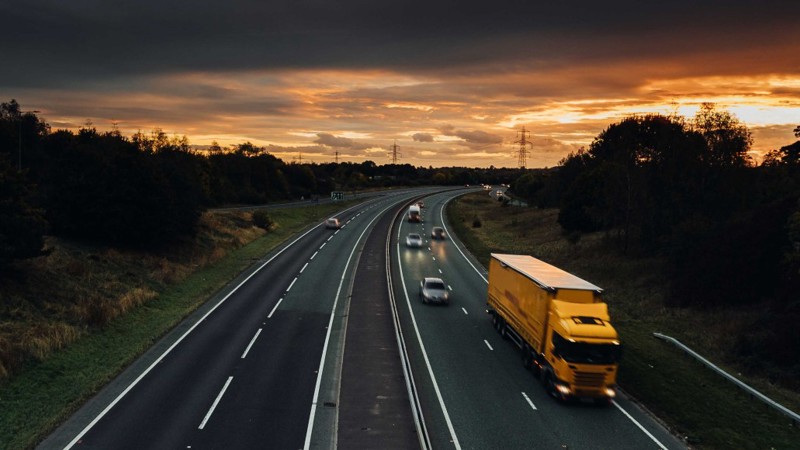
England’s New Road Plan: What It Means For Northern Ireland (Status: Neutral–Slightly Positive)
What RIS3 Is – And Why NI Should Care
The UK Government’s Road Investment Strategy 3 (RIS3) sets out over £27 billion of spending on England’s motorways and major A‑roads from 2026–2031. It does not fund roads in Northern Ireland (those are devolved), but it does shape the main routes NI traffic uses once it lands in Great Britain.
RIS3 explicitly says England’s Strategic Road Network underpins access to ports and borders and “provides the basis for onward connections to Northern Ireland,” so what happens on these routes matters for both hauliers and holidaymakers.
Impacts On Freight And Business Travel
For NI exporters and hauliers, three aspects of RIS3 are especially relevant:
- A66 Northern Trans‑Pennine dualling
- RIS3 funds completing a continuous dual carriageway between the M6 at Penrith and the A1(M) at Scotch Corner.
- The A66 is highlighted as one of the most important road investments in the North of England, critical for freight and for journeys between Scotland and eastern England, with heavy HGV use.
- For traffic linked to NI (via Scottish ports or northern logistics hubs), this reduces bottlenecks and cuts journey time risk across the Pennines.
- Major renewals on core freight corridors (e.g. M6 Lune Gorge)
- RIS3 marks a shift from big new roads to “major renewals and preventative maintenance,” including schemes such as bridge renewals at Lune Gorge on the M6.
- These works aim to keep ageing assets safe and avoid disruptive emergency closures, which is crucial for just‑in‑time NI supply chains moving through GB.
- Small Schemes National Programme in the North
- A programme of smaller junction and capacity schemes will tackle congestion and safety pinch points, with examples including M62 congestion relief between Liverpool, Manchester and Leeds.
- NI hauliers using Liverpool or North‑West England ports stand to benefit from smoother flows and fewer local delays feeding into longer cross‑country runs.
Because the SRN carries over a third of all motor vehicle miles and over two‑thirds of lorry miles in England, even incremental reliability gains translate into real money and time for NI‑linked logistics.
Impacts On Holidaymakers And People Visiting Friends And Family
Everyday travellers from Northern Ireland may never have heard of RIS3, but they feel its outcomes:
- More reliable long‑distance drives
- Routes that many NI families use after the ferry – like the M6 north–south spine and the wider northern motorway/A‑road grid – are targeted for better maintenance, resurfacing and resilience against ageing and extreme weather.
- That should mean fewer surprise closures, less patchy surfacing, and more predictable journey times when driving to visit relatives or go on holiday in England or Scotland.
- Safer major A‑roads and motorways
- A new Safety National Programme focuses on higher‑risk major A‑roads, plus small safety schemes funded through a dedicated safety pot.
- Combined with a wider Road Safety Strategy, the goal is to reduce people killed or seriously injured on the SRN, improving confidence for families using these roads.
- Indirect benefits at ports and gateways
- RIS3 recognises the SRN’s role in serving “international gateways like ports and airports,” so investment is shaped to keep those access routes functioning well.
- For NI passengers arriving into GB, fewer bottlenecks near key ports should make onward travel a bit less stressful, even if the improvements are not branded as “NI connectivity” projects
Overall Status For Northern Ireland: Neutral–Slightly Positive
From a Northern Ireland perspective, RIS3 is best described as neutral–slightly positive:
- It does not invest directly in NI roads or offer a dedicated Irish Sea connectivity package, so local NI infrastructure challenges remain to be tackled separately by Stormont and Westminster.
- It does, however, improve the reliability, safety and resilience of the main English and cross‑Pennine routes that NI freight, business travellers and families depend on once they are in Great Britain.
In short: Northern Ireland is not front‑and‑centre in RIS3, but NI businesses and travellers should see some quiet, cumulative gains in how smoothly their GB journeys run.