
- BY Kevin Barry BSc(Hons) MRICS
- POSTED IN Latest News
- WITH 0 COMMENTS
- PERMALINK
- STANDARD POST TYPE
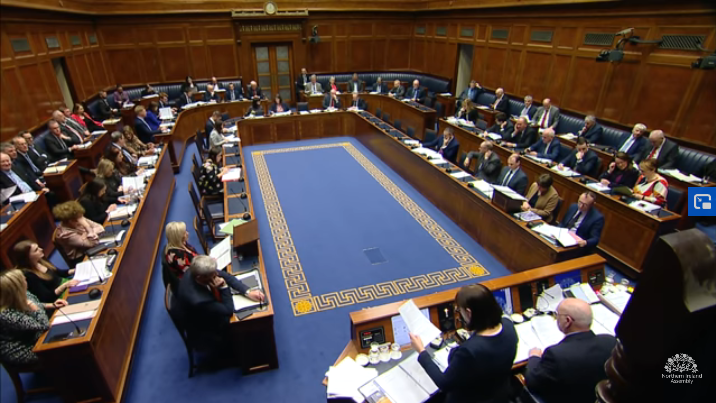
Action Plan: Comprehensive Fiscal Reform for Northern Ireland

Unfortunately, under the current arrangements, local elections before May 2027. Time for strategic delivery.
Immediate Actions (Months 1-3)
1. Establish Fiscal Credibility
Freeze all new spending commitments
- Immediate moratorium on announcements of new programs, initiatives, or expansions
- No exceptions without identified offsetting savings
- Applies to all ministers equally
Implement emergency Budget correction
- Reduce 2026-27 departmental allocations by £113 million to reflect revaluation pause
- Distribute cuts proportionally based on non-earmarked allocations
- No further deferrals to monitoring rounds
Install real-time budget monitoring
- Monthly reporting of actual vs budgeted spend by department
- Public dashboard showing cumulative position
- Automatic triggers for corrective action at 2% variance
Establish independent Accounting Officer authority
- Accounting Officers empowered to refuse ministerial spending directions exceeding budget
- Protected from ministerial override except via formal Executive vote
- Quarterly attestation of departmental budget compliance required
2. Revenue Rationalization
Implement Reval 2026 with mitigation package
- Proceed with revaluation as scheduled (April 2026)
- Implement transitional relief caps matching England/Wales:
- Properties up to £20,000 NAV: 5% cap year 1, 10% year 2, 25% year 3
- Properties £20,001-£100,000: 15% cap year 1, 25% year 2, 40% year 3
- Properties over £100,000: 30% cap year 1, 25% years 2-3
- Fund relief from efficiency savings, not new borrowing
- Expected cost: £40-50 million year 1, declining
Introduce hospitality sector-specific support
- 20% rates relief for hospitality properties (vs 40% in England/Wales – compromise position)
- Capped at £55,000 per business (half England/Wales level)
- Three-year sunset provision requiring renewal
- Cost: approximately £25-30 million annually
Domestic water charges – phased implementation
- Year 1 (2027-28): £200 per household
- Year 2 (2028-29): £400 per household
- Year 3 (2029-30): £600 per household
- Year 4 onwards: £800 per household (England parity)
- Revenue potential: £154m, £307m, £461m, £615m respectively
- Concurrent reduction in Regional Rate by equivalent amount (revenue neutral to households, improves transparency)
Regional Rate reform
- Shift to property value bands (like Council Tax in England) rather than pure proportional NAV
- Progressive structure: lower rates on lower-value properties
- Implement over 2027-29 period alongside water charges
- Eliminates “Rates = rent” ceiling that creates distortions
3. Structural Health Reform (Non-Negotiable)
Immediate efficiency program
- Target: Close 15% efficiency gap with England within 3 years
- Savings target: £300 million by year 3 (approximately £1.16 billion annually)
- Areas:
- Administrative consolidation (6 Trusts to 1-2 by 2028)
- Procurement (join England/Scotland frameworks)
- Estate rationalization (reduce £1.4 billion estate by 20%)
- Workforce productivity (match England staffing ratios)
Establish Health Transformation Fund
- £150 million over 3 years from borrowing headroom
- Available only for invest-to-save projects with independently verified business cases
- Gated releases tied to achievement of efficiency milestones
- Not available for recurrent spending
Introduce activity-based commissioning
- Move from block grants to payment-per-episode (like England NHS)
- Transparency on cost per procedure, waiting times, outcomes
- Phase in over 2 years starting with elective procedures
- Creates internal competitive pressure for efficiency
Mandatory regional service consolidation
- Single tertiary care provider (complex surgery, cancer, cardiac)
- Single emergency department network (close smaller A&Es, upgrade ambulance)
- Single imaging and diagnostics service
- Population of 1.9 million cannot sustain duplicate specialist services
Health Minister accountability framework
- Published efficiency targets with monthly progress reporting
- Independent verification of claimed savings
- Automatic allocation reduction if targets missed (50% of shortfall)
- No access to monitoring round additional funds without verified efficiency progress
Strategic Reforms (Months 3-12)
4. Fiscal Framework with Teeth
Legislate binding fiscal rules
- Balanced budget requirement (no overspend permitted)
- Maximum 3% year-on-year real-terms departmental growth
- Borrowing restricted to capital investment only
- Reserve fund minimum 2% of Resource DEL (currently zero)
Multi-year departmental ceilings
- Firm 3-year allocations (not “draft” or “indicative”)
- Protected from in-year reallocation except by 80% Executive vote
- Allows genuine long-term planning and investment
Eliminate monitoring round system
- No in-year reallocations except genuine emergencies
- “Emergency” defined as unforeseen external shock, not budget mismanagement
- June/October/January monitoring rounds abolished
- Prevents gaming and undisciplined budgeting
Introduce forecast reconciliation requirement
- Departments must explain variance between forecast and outturn
- Persistent over-bidding or poor forecasting triggers budget penalties
- Creates incentive for honest budget requests
5. Expenditure Reform
Conduct zero-based spending review
- Every program justify existence from zero
- No “baseline plus” approach
- Completed within 12 months
- Target: Identify £500 million of low-value spending
Priority areas for reduction/elimination:
Super-parity policies review:
- Welfare mitigations: Reduce from £47.3m to £25m (maintain only severe hardship cases)
- Free prescriptions: Introduce £9.90 charge matching England (exemptions for vulnerable) – raises ~£45m
- Concessionary travel: Means-test or reduce off-peak discount – saves ~£15m
- Lower tuition fees: Increase to England levels phased over 3 years – saves ~£80m
- Total potential: £190 million annually
Agricultural support rationalization:
- Current: £332.5 million earmarked (highest earmarking at 57.8% of DAERA budget)
- Review all schemes for value-for-money
- Shift from unconditional payments to environmental outcomes
- Target: 15% efficiency saving = £50 million
Derating relief reform:
- Industrial derating costs £44.1 million annually
- Provides 100% relief to manufacturing – unsustainable
- Reduce to 50% relief (matching historical levels)
- Saves: £22 million
Eliminate low-value grants and schemes:
- Comprehensive review of all <£5m programs
- Estimated 200+ micro-schemes across departments
- High administrative overhead, low impact
- Target consolidation/elimination: £75 million
6. Programme for Government with Prioritization
Mandatory rank-ordering of priorities
- Not aspirational “everything is important” list
- Explicit trade-offs: “We will prioritize X over Y”
- Quantified outcomes attached to each priority
- Funding aligned to top 5 priorities only
Outcome-based budgeting
- Departments funded based on measurable outcomes, not inputs
- Public reporting of outcome achievement quarterly
- Budget consequences for persistent non-delivery
Service reduction/elimination schedule
- Explicit list of services that will be reduced or stopped
- Cannot have credible budget without stating what won’t be done
- Political agreement required before budget finalized
Governance and Accountability Reforms (Months 6-18)
7. Political Accountability Framework
Individual ministerial responsibility for budgets
- Each minister legally accountable for departmental overspend
- Overspend above 1% triggers automatic investigation
- Findings published and minister required to appear before Assembly committee
- Persistent overspend results in loss of monitoring round access
Executive collective responsibility
- Ministers who vote for budget cannot subsequently claim insufficient funding
- Public voting record on all budget decisions
- Ministers who vote against must propose alternative allocations
Assembly scrutiny enhancement
- Finance Committee given 8-week scrutiny period before Executive vote
- Power to summon ministers and Accounting Officers
- Power to commission independent analysis
- Budget cannot proceed without Finance Committee report
8. Transform Budget Process
Three-year binding budgets (not annual)
- Set departmental envelopes for full 3-year period
- Annual budgets eliminated
- Only adjustment: technical changes for pay settlements, inflation
- Provides stability for transformation planning
Bottom-up capital prioritization
- Independent infrastructure commission rank all capital projects
- Scoring based on: economic return, strategic fit, deliverability, risk
- Executive can only fund projects in rank order (no cherry-picking)
- Prevents political preference overriding value-for-money
Publish comprehensive fiscal baseline
- All commitments, pressures, and assumptions transparently documented
- No hidden pressures or optimistic forecasts
- Independent validation by Fiscal Council before publication
9. Tackle Transformation Deficit
Establish Office of Public Sector Transformation
- Independent of departmental control
- CEO-level appointment with direct Executive authority
- Powers to mandate cross-departmental reforms
- £300 million transformation fund over 5 years
Priority transformation programs:
Shared services consolidation:
- Single HR, Finance, Procurement, IT service for entire NICS
- Currently fragmented across departments
- England/Scotland achieved 30-40% savings
- Target: £60 million annual savings by year 3
Digital transformation:
- Online-first service delivery (matching England Gov.UK standards)
- Eliminate paper-based processes
- Integrated data systems across departments
- Target: £40 million savings + improved service quality
Property rationalization:
- Reduce NI government estate from 1,200+ buildings
- Target 25% reduction through consolidation
- Modernize retained buildings (energy efficiency)
- Net savings after investment: £35 million annually
Procurement reform:
- Join England/Scotland procurement frameworks (economies of scale)
- Category management approach (centralized buying)
- SME access improvement (reduce reliance on expensive consultants)
- Target: £100 million annual savings
Long-Term Structural Changes (Months 12-36)
10. Departmental Restructuring
Reduce number of departments from 9 to 6:
- Health & Social Care (unchanged – too large to merge)
- Education & Skills (merge Education + Economy skills functions)
- Economy & Infrastructure (merge Economy + Infrastructure)
- Communities & Justice (merge Communities + Justice)
- Environment & Agriculture (merge DAERA functions)
- Finance & Executive Office (merge DoF + TEO)
Rationale:
- Reduces ministerial overhead
- Eliminates coordination costs
- Forces integration of related functions
- Savings: £25 million annually in senior management
Reduce number of ALBs (Arm’s Length Bodies):
- Current: Over 100 NDPBs, executive agencies, other bodies
- Many have overlapping remits or unclear purpose
- Target: Reduce by 40% through merger/abolition
- Savings: £50 million annually
11. Pay and Workforce Reform
Introduce differential pay settlements:
- Not all departments get same % award
- Link to: productivity improvement, efficiency delivery, budget compliance
- Departments exceeding budget: 0% pay award following year
- Departments meeting efficiency targets: up to 4% award
- Ends automatic parity with England settlements
Workforce planning integration:
- Cannot hire without identified funding within envelope
- Vacancy management used as primary budget tool
- Natural attrition used to achieve workforce reductions
- Target: 5% headcount reduction over 3 years through non-replacement
- Savings: £150 million annually
Reform public sector pensions:
- Increase employee contributions to match England rates
- Phased over 3 years
- Savings to employers: £30 million annually
12. Education Rationalization
School estate consolidation:
- Current: 1,100+ schools for 330,000 pupils (small average size)
- England equivalent population would have ~750 schools
- Target: Reduce to 850 schools over 5 years
- Savings: £80 million annually + improved educational outcomes
End selective transfer (11-plus) system:
- Creates inefficient parallel grammar/non-grammar systems
- Duplicates infrastructure and reduces critical mass
- Comprehensive system more efficient
- Savings: £40 million + equity gains
Shared education acceleration:
- Current: Separate Catholic/Protestant/Integrated sectors
- Duplicate provision in many areas
- Mandatory sharing where pupil numbers don’t justify separate schools
- Savings: £60 million annually
Higher education funding reform:
- Increase tuition fees to England levels (£9,250)
- Currently £4,710 – subsidy costs ~£80m annually
- Student loans available (no upfront cost to students)
- Revenue raised: £80 million redeployed to schools/FE
13. Create Economic Growth Strategy
Infrastructure investment rebalancing:
- Current: Roads absorb disproportionate capital
- Shift to: rail, active travel, digital connectivity
- Economic return analysis required for all projects >£10m
- Independent Business Case Unit approval required
- Review historic/proposed schemes on merit basis and conduct TAG feasibility studies to determine true viability without pre-determined outcomes, namely external independent assessment
Rates relief reform for growth:
- Current small business relief cost: ~£100 million
- Poorly targeted (many recipients not actual small businesses)
- Reform to focus on: new businesses, growth businesses, innovation businesses
- Better outcomes at lower cost
Invest to save programs:
- Energy efficiency retrofit of public buildings
- LED streetlighting (80% energy saving)
- Solar on public buildings
- Upfront cost: £200 million, payback 7-8 years through reduced energy bills
14. Introduce Policy Costings Requirement
All new policies require 5-year costings:
- Independently verified by Department of Finance
- Must identify offsetting savings if net cost positive
- Published before Executive vote
- No exceptions
Manifesto costing requirement:
- All parties’ manifestos independently costed before elections
- Prevents unrealistic promises
- Fiscal Council publishes analysis
- Improves democratic accountability
Political and Constitutional Reforms
15. Budget Agreement Process Reform
Remove ministerial veto on departmental allocations:
- Current system allows any minister to vote against budget
- Creates gridlock and encourages overpromising
- Reform: Budget passes with simple majority (not unanimity)
- Ministers bound by collective responsibility once agreed
Introduce “Budget Lock”:
- Once 3-year budget agreed, cannot be reopened except:
- External shock requiring Emergency Budget (80% vote)
- Technical adjustments (inflation, pay settlements)
- Prevents continuous renegotiation
Ban pre-emptive spending announcements:
- Ministers cannot announce new spending without Executive approval
- Breach results in allocation reduction
- Ends practice of forcing Executive’s hand through public commitments
16. Transparency and Public Engagement
Citizens’ Budget document:
- Plain English version showing:
- Where money comes from
- Where it goes
- What services cost per household
- Trade-offs being made
- Published before consultation
Performance dashboard:
- Real-time public reporting of:
- Budget position
- Service outcomes
- Waiting lists
- Efficiency progress
- Updated monthly, independently verified
Fiscal Council enhanced powers:
- Authority to cost all significant policy proposals
- Public commentary on budget credibility
- Annual report to Assembly (not Executive)
- Protected 5-year appointments
Three-Year Implementation Roadmap
Year 1 (2026-27): Stabilization
Q1 (Apr-Jun 2026):
- Emergency budget correction (revaluation shortfall)
- Real-time monitoring installed
- Health efficiency program commenced
- Zero-based review launched
Q2 (Jul-Sep 2026):
- Fiscal framework legislation introduced
- Water charges legislation prepared
- Department restructuring consultation
- Transformation office established
Q3 (Oct-Dec 2026):
- First quarterly efficiency reporting
- Super-parity review completed
- Agricultural support reform announced
- Budget 2027-29 developed under new rules
Q4 (Jan-Mar 2027):
- Fiscal framework enacted
- 3-year Budget 2027-30 agreed
- Service reduction schedule published
- Year 1 savings verified: Target £200 million
Year 2 (2027-28): Transformation
Q1:
- Water charges introduced (£200/household)
- Reval transitional relief in place
- Shared services consolidation commenced
- School consolidation program started
Q2:
- Department merger completed
- Health Trust consolidation to 3 Trusts
- Property rationalization program commenced
- Digital transformation milestones
Q3:
- ALB reduction program 50% complete
- Procurement reform savings verified
- Workforce reduction through attrition on track
- Mid-term review
Q4:
- Year 2 cumulative savings: Target £450 million
- Programme for Government delivery review
- Budget 2028-31 agreed
- Transformation fund performance audit
Year 3 (2028-29): Sustainability
Q1:
- Water charges increase to £400/household
- Health efficiency gap 66% closed
- School estate consolidation complete
- New performance framework embedded
Q2:
- Comprehensive fiscal sustainability assessment
- Budget compliance confirmed 3 years running
- Health Trust consolidation to 1 Trust finalized
- Outcome-based budgeting fully operational
Q3:
- 3-year transformation review
- Reserve fund established (2% target achieved)
- Persistent efficiency culture verified
- Long-term fiscal sustainability certified
Q4:
- Year 3 total savings achieved: Target £800 million
- Budget 2029-32 agreed
- Wales/Scotland performance parity achieved
- Independent evaluation published
Expected Outcomes After 3 Years
Fiscal Position:
- Balanced budgets achieved 3 consecutive years
- £800 million annual savings embedded
- Reserve fund of £300 million established
- Debt repayment schedule on track
- Regional rates competitive with England/Wales (after water charges offset)
Service Performance:
- Health waiting lists reduced by 40%
- Educational outcomes improved (school consolidation effect)
- Infrastructure investment increased 25% (efficiency dividend)
- Public satisfaction increased (transparency, accountability, delivery)
Governance:
- Budget agreed before fiscal year (3 years running)
- No ministerial dissent or overspending
- Programme for Government delivery confirmed
- Political accountability framework functional
Transformation:
- Digital-first service delivery achieved
- Efficiency gap with England closed
- Public sector workforce reduced 5% (through attrition)
- Productivity increased 15%
Critical Success Factors
1. Political Will:
- Requires cross-party commitment to fiscal discipline
- Individual ministers must accept collective decisions
- Short-term pain for long-term sustainability
2. Protected Implementation Authority:
- Transformation office cannot be undermined by ministerial resistance
- Independent fiscal council must have real teeth
- Accounting Officers must have genuine authority
3. Public Communication:
- Honest about service reductions
- Clear on trade-offs being made
- Transparent about progress
4. Sequencing:
- Quick wins (efficiency) before painful cuts (services)
- Revenue increases (water) phased with rate reductions
- Transformation investment before workforce reduction
5. No Backsliding:
- Monitoring rounds permanently abolished
- Fiscal rules legally binding
- Independent verification mandatory
Conclusion: The Fundamental Choice
Northern Ireland’s fiscal crisis stems from systemic political failure to make choices. The reforms above are comprehensive, evidence-based, and deliverable – but they require something currently absent: political willingness to disappoint some stakeholders in order to achieve fiscal sustainability.
The alternative to reform is continued managed decline: deteriorating services, persistent overspends, Westminster bailouts, and eventual imposed solutions that will be more harsh than self-imposed reform.
Complete authority would allow implementation of these reforms. Current political structures prevent any of them.
That is Northern Ireland’s actual problem – not insufficient funding, but insufficient political will to use available funding effectively and make hard choices about priorities.