- BY Kevin Barry BSc(Hons) MRICS
- POSTED IN Latest News
- WITH 0 COMMENTS
- PERMALINK
- STANDARD POST TYPE
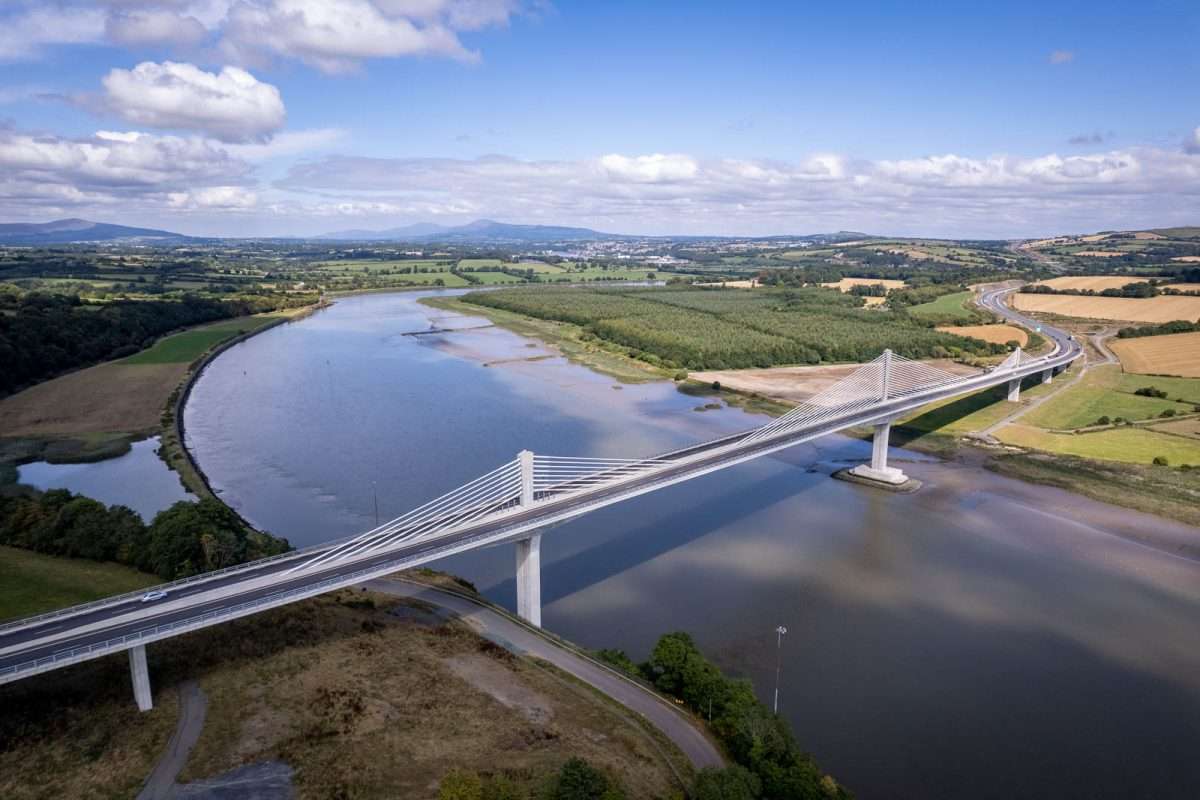
A bridge of hope in a new era
Across the world, leaders are talking about a turning point—a moment when old certainties are fading and free societies must renew their foundations if they want to stay secure, prosperous and confident. For us around Strangford Lough, those foundations are not abstract: they are the roads our children travel to school, the journey times to hospitals and jobs, and the quiet reassurance that this beautiful corner of Ireland is not being left behind.
The Strangford Lough Crossing (SLC) is our chance to respond to this new era in a practical, hopeful way. It is a local project with global logic: investing in resilient, sustainable infrastructure so that ordinary people—on both sides of the Lough—can live better lives, whatever storms the wider world may bring.
Fragile connections, rising risks
The storm damage to the A20 Portaferry Road in February 2026 confirmed what local people have known for years: our current connections are fragile, costly to defend and too easy to break. One bad storm, a damaged road, or a disrupted ferry timetable can turn a short hop across the water into a 75 km, 90‑minute diversion around the Lough.
In an age of more frequent extreme weather, rising costs and mounting pressure on public services, that level of vulnerability is no longer acceptable. It undermines access to healthcare, squeezes already‑low incomes, and chips away at the confidence of communities who feel they are always last in line for basic investment.
A multi‑modal vision for dignity and opportunity
SLC is designed as far more than a strip of tarmac; it is a sustainable transport corridor and a statement of what this region believes about itself. The proposal is for a multi‑modal bridge with road access, dedicated walking and cycling lanes, and integrated marina facilities, completing the A2 coastal route and strengthening links between Ards & North Down and Newry, Mourne & Down.
This vision directly tackles long‑standing imbalances. The Ards Peninsula currently has the lowest median wages in Northern Ireland, and many residents live with limited access to jobs, training and healthcare because of the constraints of the ferry and the long detour. A 24/7 fixed link offers dignity as well as convenience: the freedom to take an early shift, attend a late appointment or seize a new opportunity without asking, “Will the ferry run, and can I afford it?”
Quiet unity: neighbours choosing each other first
All of this takes place in a society where conversations about borders and national identity can feel overwhelming and divisive. The Strangford Lough Crossing cannot and should not try to answer those big constitutional questions—but it can model something gentler and more immediate: neighbours choosing one another first.
Long before anyone resolves the wider debate about a United Ireland or the future of the Union, SLC gives Protestant and Catholic, unionist and nationalist communities a chance to work together on something tangible and shared. Planning, funding and using a common piece of infrastructure in good faith would be a quiet but powerful signal—to ourselves above all—that we are capable of building trust where we live, not just talking about it.
Every car that crosses, every cyclist on the active travel lanes, every family using the marina or walking the bridge would be a small act of everyday unity. If we can prove, here around Strangford Lough, that we are willing to share the same roads, the same opportunities and the same responsibilities, then we demonstrate real, lived good intentions—whatever larger constitutional conversations may come and go.
Hope backed by hard evidence
Hope is essential—but so is evidence. The economic impact assessment for SLC shows one of the strongest cases for any regional infrastructure project in Northern Ireland. With an estimated capital cost of £300–350 million and a 120‑year design life, the total lifetime cost of the bridge (including operation and maintenance) is projected at £450–500 million, compared with more than £320 million for continuing the ferry over the same period.
On the benefit side, the numbers are even more striking. Direct annual savings (journey time, vehicle costs, reliability, and ferry fares avoided) are estimated at £10.63 million, with a further £15 million in wider annual benefits from tourism, business efficiency, labour market access and improved healthcare access. Over 120 years, this delivers approximately £3.07 billion in discounted benefits and a benefit–cost ratio between 6.14:1 and 6.82:1—strong, conservative evidence that SLC is not a vanity project but outstanding value for money.
From “never” to “why not?”
Politically, the ground is shifting. In the Assembly, Infrastructure Minister Liz Kimmins has now publicly recognised the fixed crossing as a credible option, moving away from past dismissals and asking a new question: “why not?”, if there is strong support and a robust economic case. That is a quiet but important turning point.
Our task now is to turn that opening into a shared local project of hope. That means continuing to build cross‑community, cross‑party support; pressing for an independent feasibility and options appraisal; and ensuring SLC is embedded in the emerging Transport Strategy 2035 as a strategic, low‑carbon link that helps Northern Ireland “use all 24 hours of the day” more productively.
A local answer to a global challenge
In Munich and other forums, senior leaders like US Secretary of State Marco Rubio speak of a “new Western century” built on renewed alliances, resilient infrastructure and a refusal to be paralysed by fear. The Strangford Lough Crossing is our local answer to that global challenge: a project that reduces vulnerability, unlocks opportunity, and shows that in this small but significant part of Northern Ireland, we are ready to build something better together.
If we succeed, the legacy of SLC will be more than a shorter journey. It will be a generation of young people who know that their community chose cooperation over complacency, resilience over fragility, and shared roads over silent division—here, on the shores of Strangford Lough, where hope becomes concrete and steel.