
- BY Kevin Barry BSc(Hons) MRICS
- POSTED IN Latest News
- WITH 0 COMMENTS
- PERMALINK
- STANDARD POST TYPE
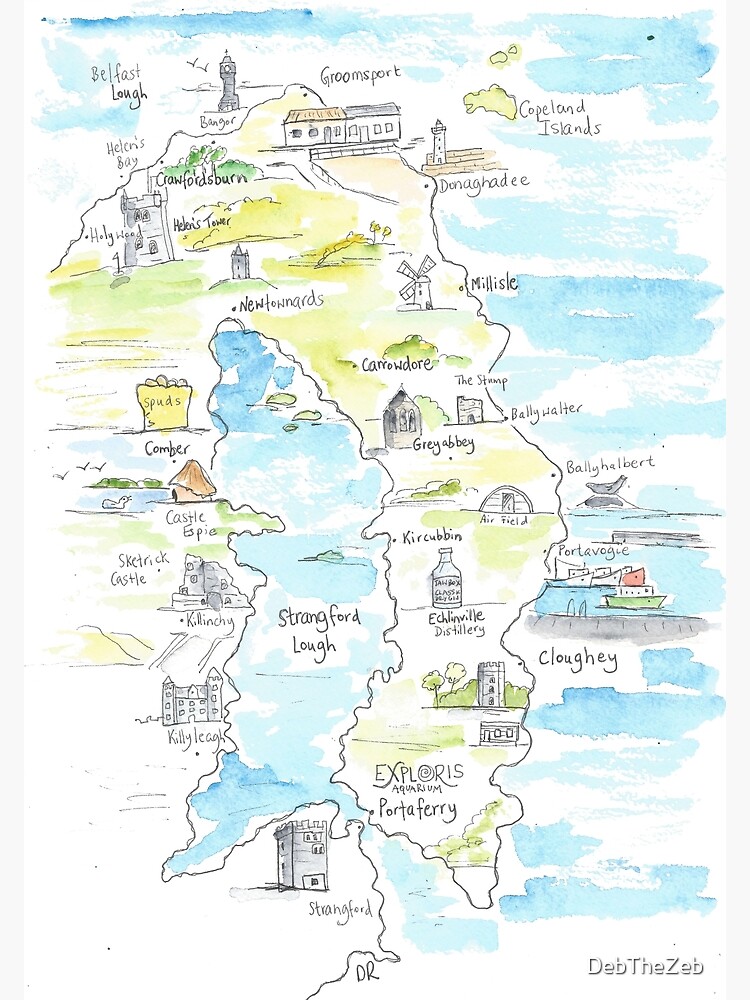
Plan B for Strangford Lough Crossing – Why This Time Can Be Different
For most people around Strangford Lough, talk of a bridge or tunnel has become a bad joke. It has been discussed since the 1950s and yet nothing has ever appeared. All talk, no delivery.
This “Plan B” is about showing why this time can be different – because the numbers have changed, and new funding routes now exist that simply weren’t there before.
1. Why it never happened before
A fixed crossing has been technically possible for over 60 years.
- Government engineers in the 1960s drew up bridge options and confirmed they could be built.
- Each time, officials decided it was “uneconomic”, using old assumptions: very low traffic, ferries staying cheap forever, and almost no value put on your time, jobs or tourism.
- A 1997 study repeated the pattern, still under‑counting growth, tourism, emergency access and wider economic benefits.
- The project never had a clear political “owner” – it fell between departments and councils – so it became “nobody’s baby”, while ferry subsidies quietly climbed into the millions.
Result: for decades, you got the same line – “we’ve already looked at it, it doesn’t stack up” – even though nobody had ever done a modern, honest assessment.
2. What’s changed now
Recent work by Quintin QS has gone back to first principles and done the sums properly for today’s world.
- The latest analysis shows over £3 billion of lifetime benefits from a Strangford Lough Crossing, with a benefit–cost ratio above 6:1 – stronger than many road schemes that already get funding.
- The ferry is now used at roughly one‑third of its theoretical capacity, with cancellations, queues and limited hours – yet over time it still costs millions in subsidy.
- Over a 60‑year period, the combination of ferry subsidy, wasted time and longer detours works out at roughly the same order of cost as building a fixed crossing in the first place.
- Storm damage and rising sea levels are highlighting how fragile the A20 and existing set‑up really are.
So the question is no longer “can we afford a bridge or tunnel?” – it is “why are we still paying for not having one?”
3. The new lever: UK‑wide funding powers
There is also a funding route now that simply did not exist in the 1960s or 1990s.
- The UK Internal Market Act 2020 gives UK ministers a direct power (section 50) to fund roads, bridges and economic‑development projects anywhere in the UK, including Northern Ireland.
- That money can be used alongside NI Executive funds and Irish Government “Shared Island” money – it does not all have to come from Stormont’s overstretched capital budget.
In plain language: London now has a legal way to part‑pay for a Strangford Lough Crossing if local politicians push hard enough, instead of everyone shrugging and saying “no money”.
4. What “Plan B” actually means
Plan B is not “wait another 70 years and hope”. It means:
- Independent, modern feasibility study
- Force the Department for Infrastructure (DfI) to support an independent, time‑limited study that compares three options on a level playing field:
- keep the current ferry,
- improve the ferry,
- build a fixed crossing.
- That study must look at today’s realities: commuting, jobs, tourism, climate targets and emergency access – not just old traffic counts.
- Force the Department for Infrastructure (DfI) to support an independent, time‑limited study that compares three options on a level playing field:
- Use all three cheque books
- NI Executive: a fair share of the capital cost and planning powers.
- UK Government: section‑50 UKIMA funding as a UK‑wide economic‑development and infrastructure project.
- Irish Government: Shared Island support, recognising the wider benefit for tourism and all‑island connectivity.
- Treat it as safety and fairness, not a luxury
- Current arrangements can block or delay access to hospitals, colleges and jobs when the ferry is off or the A20 is disrupted.
- Once those facts are clearly documented, it becomes much harder for any minister to claim there is “no need”.
- Protect Strangford Lough while improving access
- Any crossing must be designed around the Lough’s environmental importance – including careful route choice and, if needed, tunnel options – with strict protections in place.
- It should also include safe walking and cycling connections and fit with climate commitments, not undermine them.
5. What you can do as a local resident
If you are tired of “all talk, no delivery”, Plan B only works if public pressure changes too.
- Ask every candidate one simple question:
“Will you back an independent study that fairly compares a fixed crossing with the current ferry, and will you press London and Dublin to help pay if the case stacks up?” - Challenge outdated excuses:
When you hear “too expensive” or “not enough traffic”, point them to the new numbers showing the bridge has always added up when you count everything properly. - Support cooperation, not point‑scoring:
Tell parties you expect them to work together on funding Strangford Lough Crossing – DUP, Sinn Féin, Alliance, SDLP and others – instead of using it as another argument while nothing gets built.
If we keep doing what we have done since the 1950s, we will keep getting what we have now. Plan B is about using new evidence and new funding powers to finally move Strangford Lough Crossing from “maybe one day” to a real, deliverable project.