
- BY Kevin Barry BSc(Hons) MRICS
- POSTED IN Latest News
- WITH 0 COMMENTS
- PERMALINK
- STANDARD POST TYPE
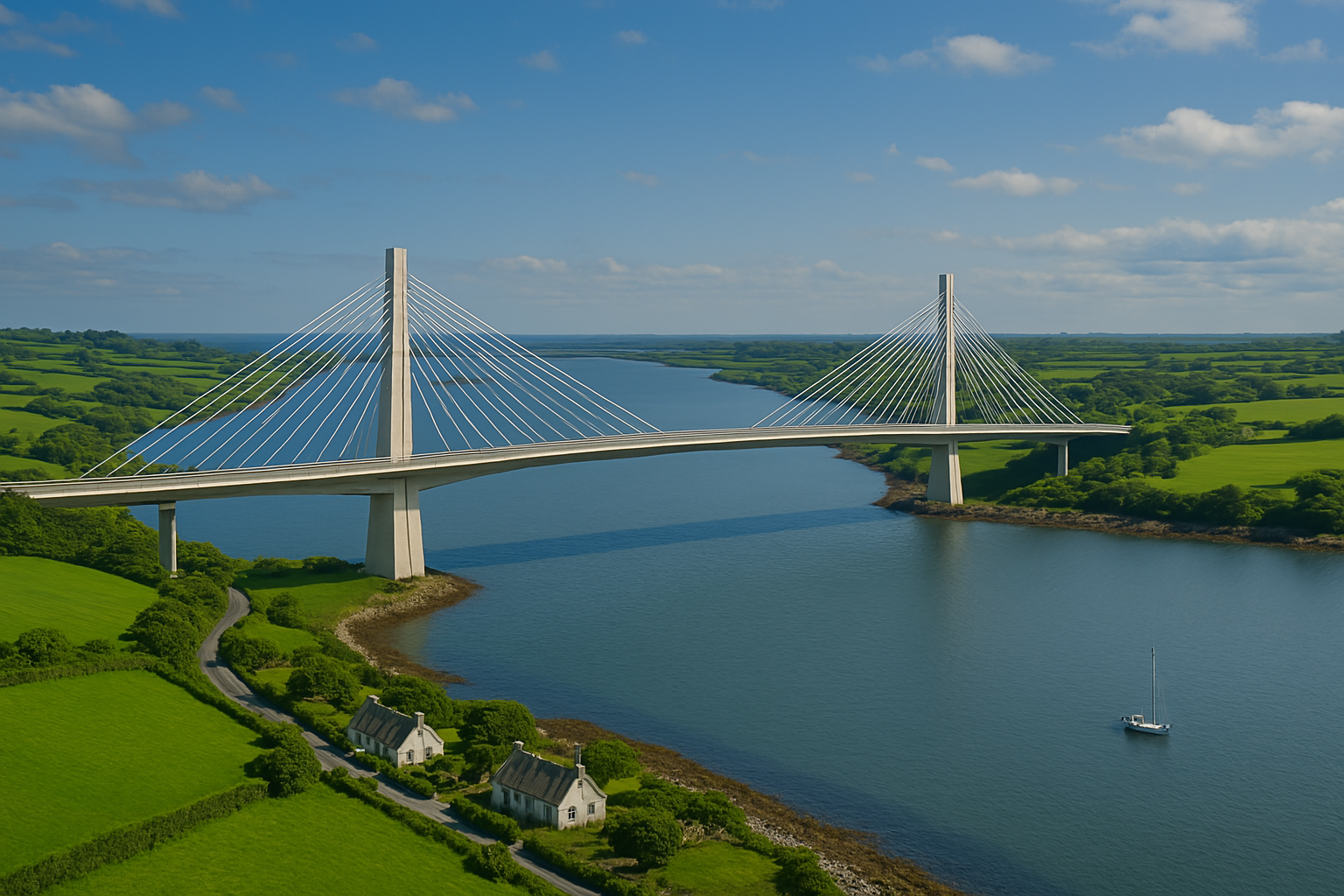
Question: Shall the Strangford Lough Crossing clear the high bar of the Climate Change Act (NI) 2022, when compared to projects such as the A5 ?
Executive Summary
Future DfI position ? Having considered whole-life carbon, traffic impacts, mitigation, and adaptation, the Department is satisfied that the Strangford Lough Fixed Crossing:
- Is compatible with Northern Ireland’s statutory climate targets; and
- Can be delivered in a manner consistent with the Climate Change Act (NI) 2022.
Below is a structured comparison of the climate targets for Northern Ireland (NI) and the United Kingdom (UK) as a whole, based on the latest statutory and policy frameworks.
1. Long-Term Net Zero Target (2050)
Northern Ireland
- NI’s Climate Change Act (Northern Ireland) 2022 sets a legally binding target for net zero greenhouse gas emissions by 2050 (100% reduction compared with baseline). (DAERA)
- The base year is 1990 for CO₂, methane and nitrous oxide (fluorinated gases use a 1995 baseline). (DAERA)
United Kingdom
- The UK Climate Change Act 2008, amended in 2019, sets a legally binding net zero target for greenhouse gas emissions by 2050 (100% reduction relative to 1990). (Wikipedia)
- This UK-wide 2050 commitment applies to all four UK nations (England, Scotland, Wales, and NI) as part of a common legal framework. (House of Commons Library)
Comparison: Both NI and the UK share a 2050 legally binding net zero goal in law. The NI Act specifically mirrors the UK’s overarching ambition within its devolved competence. (DAERA)
2. Interim Targets
Northern Ireland
NI has statutory interim emission reduction targets set by its own Climate Change Act:
- At least 48% reduction by 2030 compared with baseline. (Climate NI)
- At least 77% reduction by 2040 compared with baseline. (DAERA)
- NI also has a system of carbon budgets covering five-year periods (2023–27, 2028–32, 2033–37). (DAERA)
United Kingdom
The UK’s climate policy architecture incorporates five-year carbon budgets rather than specific statutory percentage targets tied to single years like 2030 or 2040:
- Carbon budgets cap total UK emissions over successive five-year periods and are legally binding under the Climate Change Act 2008. (GOV.UK)
- The UK also has a 2035 Nationally Determined Contribution (NDC) under the Paris Agreement, targeting roughly an at least 81% reduction in net GHG emissions by 2035 compared with the base year. (GOV.UK)
- Some reporting and third-party sources indicate the UK’s informal 2030 target has been to cut emissions by around 68–70% by 2030 (again relative to 1990 levels), though this is expressed in policy commitments and NDC contexts rather than as separate statutory targets on the UK Climate Change Act statute itself. (Greenly)
Comparison:
- NI sets explicit interim reduction percentages by 2030 and 2040 in law, tailored to its jurisdiction. (Climate NI)
- The UK relies on carbon budgets and a 2035 NDC target, rather than standalone statutory 2030/2040 percentage targets. (House of Commons Library)
3. Carbon Budgets
Northern Ireland
- NI’s Climate Change Act requires five-year carbon budgets and sectoral plans. (Climate NI)
- The first three carbon budgets span 2023–27, 2028–32 and 2033–37, with reduction paths set accordingly. (DAERA)
United Kingdom
- The UK has statutory five-year carbon budgets under the 2008 Act, extending through the seventh carbon budget (currently covering 2038–42). (GOV.UK)
- Carbon budgets are designed to ensure progress toward net zero and are assessed by the independent Climate Change Committee (CCC). (Climate Change Committee)
Comparison: Both NI and the UK use carbon budgets as a core mechanism to regulate and cap emissions over time, although the UK’s budgets cover the entire UK and NI’s budgets are set separately under its own legislation. (Climate NI)
4. Sectoral and Policy Context
Northern Ireland
- Sectoral plans in NI will be developed to support targets (e.g., energy, transport, waste). (Climate NI)
- NI’s climate targets are implemented at the devolved level with sector-by-sector policymaking.
United Kingdom
- UK strategy integrates cross-sector policy (energy, transport, industry) through national strategies and CCC guidance. (House of Commons Library)
- The UK also operates mechanisms such as the UK Emissions Trading Scheme to support carbon pricing aligned with net zero goals. (Wikipedia)
5. Summary of Key Differences
| Aspect | Northern Ireland | United Kingdom (UK) |
|---|---|---|
| Long-term net zero goal | 2050 legally binding (GHG) (DAERA) | 2050 legally binding (GHG) (Wikipedia) |
| Interim targets | 48% by 2030; 77% by 2040 (statutory) (Climate NI) | Carbon budgets; 2035 NDC 81% (Paris Agreement); no separate statutory 2030/2040 percentages on UK statute itself (GOV.UK) |
| Carbon budgets | Yes — devolved; first three budgets to 2037 (DAERA) | Yes — UK-wide system under Climate Change Act (GOV.UK) |
| Governance | Administered by NI Executive/DAERA with CCC advice | Administered UK government with CCC advice |
6. Additional Context
- NI has historically reduced emissions at a slower pace than the UK average; actions needed in sectors like agriculture are significant. (NISRA)
- UK emissions overall have fallen by around 50–54% since 1990 but achieving future targets will require accelerated action across multiple sectors. (House of Commons Library)
Below is a structured analysis of how Northern Ireland’s climate targets and associated policy frameworks affect infrastructure schemes in the region — including planning, delivery, design, legal risk, funding, resilience, and operational requirements. All points are based on current evidence and policy developments.
1. Planning and Approval Requirements
Climate Law Integration
- The Climate Change Act (Northern Ireland) 2022 not only sets net-zero by 2050 and interim emissions targets, but also requires 5-year Climate Action Plans with sectoral policies including infrastructure planning. This means large infrastructure schemes must be aligned with detailed policies for mitigation (emissions reduction) and adaptation (resilience) that are set out in Climate Action Plans. (Climate NI)
Planning Policy Review
- The Department for Infrastructure has formally launched consultations (e.g., a Call for Evidence on Planning Policy and Climate Change) to review regional planning policy (SPPS) to ensure it supports climate objectives. Planning policies may be updated to embed climate change mitigation and adaptation criteria, such as flood risk assessments, low-carbon transport, and renewable energy layout. (Department for Infrastructure)
Effect: Developers need to demonstrate that schemes contribute to NI’s emissions targets and climate resilience when seeking planning approval. Planning statements and environmental assessments must increasingly address climate policy alignment.
2. Legal and Compliance Risk
Judicial Challenges
- A recent High Court ruling on the A5 Western Transport Corridor (one of NI’s largest road schemes) emphasised that infrastructure decisions must comply with climate law and environmental obligations. The project’s consents were quashed on grounds related to environmental assessments under climate obligations, illustrating legal vulnerability if climate impacts are insufficiently addressed. (Tughans Solicitors)
Effect: Climate targets are now a material legal risk. Projects without robust climate justification or assessment frameworks are vulnerable to judicial review, increasing uncertainty and potential delays.
3. Carbon and Emissions Assessment in Project Design
- Climate targets require infrastructure projects to measure and report emissions in planning and environmental impact assessments (e.g., life-cycle greenhouse gas analyses). Assessments consider construction and operational emissions relative to carbon budgets and net-zero trajectories. For example, infrastructure environmental statements (ES) now include GHG assessment and climate risk assessment sections as part of consenting. (The Northern Ireland Executive)
Effect: Infrastructure design options must include emissions estimates, low-carbon alternatives, and mitigation strategies to align with NI’s climate targets and carbon budgets.
4. Resilience and Adaptation Requirements
Adaptation Planning
- Infrastructure schemes must increasingly account for future climate risks — flooding, extreme weather, heat stress, coastal erosion, landslides and sea-level rise — now categorised under the Northern Ireland Climate Change Adaptation Programme and future NICCAPs. Many infrastructure services (transport, water, energy, ICT) are identified as highly vulnerable without strategic adaptation measures. (MACC Hub)
Integration of Climate Projections
- Best practice guidance recommends integrating UKCP18 climate projections into infrastructure design standards and investment decisions to ensure long-term resilience. (MACC Hub)
Effect: New infrastructure must not only reduce emissions but also be physically resilient to a changing climate. For transport networks, this means route, material, and drainage designs that anticipate increased rainfall and heat extremes — which can drive up initial costs and complexity but reduce lifecycle risk.
5. Sectoral Impacts and Investment Shifts
Transport
- Plans must progressively support lower-carbon transport infrastructure (public transport, active travel, EV charging), reflecting sectoral targets in NI’s Climate Action Plan. Insufficient investment in renewable connections and low-carbon transport infrastructure has already been highlighted as limiting climate progress. (RTPI)
Energy
- Meeting renewable energy targets (e.g., 80% renewable generation by 2030) influences grid and transmission infrastructure (including interconnectors). Schemes must support integration of renewables and grid reinforcement. Legal challenges to projects like the north-south power interconnector illustrate the tension between climate integration and community/land constraints. (The Guardian)
Effect: Capital allocation and programme prioritisation are shifting toward infrastructure that aligns with NI’s emissions reduction pathways — renewable energy, grid upgrades, sustainable transport — while traditional carbon-intensive projects face greater scrutiny.
6. Public Bodies and Reporting Duties
- Under new reporting regulations, public bodies must disclose emissions footprints and plans for reductions and adaptation. This expands accountability for any state-led infrastructure entity or authority, influencing internal investment and procurement decisions. (Climate NI)
Effect: Public infrastructure providers must incorporate climate governance processes in budgeting, procurement and delivery — including tracking emissions performance and adaptive risk planning.
7. Capacity and Implementation Challenges
- Professional and institutional capacity is a noted challenge. Analysts have pointed out that planning system constraints (in staffing, specialist knowledge and digital tools) may impede timely delivery of renewable and low-carbon infrastructure — unless adequately resourced. (RTPI)
Effect: Without sufficient planning and technical capability, infrastructure delivery could be slower, costlier, or legally vulnerable because of insufficient climate alignment.
Summary of Material Effects on NI Infrastructure Schemes
| Impact Category | Practical Effects |
|---|---|
| Planning & Policy | Projects must align with climate targets and new sector plans; planning policy review ongoing. |
| Legal Risk | Climate obligations now basis for judicial reviews (e.g., A5). |
| Design & Assessment | Mandatory climate-related impact assessments and emissions reporting. |
| Resilience & Adaptation | Designs must incorporate climate change projections and adaptation measures. |
| Funding Priorities | Shift toward low-carbon and resilient infrastructure; traditional schemes may face reprioritisation. |
| Governance & Reporting | Public bodies must report emissions and adaptation plans. |
| Capacity Constraints | Planning and technical capability will influence delivery outcomes. |
A5 v Strangford Lough Crossing (SLC)
1) NI climate targets versus UK climate targets
Northern Ireland (Climate Change Act (NI) 2022)
- Net zero GHG by 2050 (with a distinct methane sub-target) and statutory interim targets. (Legislation.gov.uk)
- The NI High Court judgment in the A5 case summarises the Act and confirms the 2030 target of at least 48% below baseline and 2040 target of 77% below baseline, approved by the Assembly in December 2024. (Judiciary NI)
- The Act creates legally binding duties on NI departments, including DfI, and requires sectoral plans (including transport/infrastructure) describing how targets will be achieved. (Judiciary NI)
United Kingdom (Climate Change Act 2008 / carbon budgets / NDC)
- UK-wide statutory framework: net zero by 2050 under the Climate Change Act 2008 (as amended). (Legislation.gov.uk)
- UK’s 2035 target: government announced 78% reduction by 2035 (vs 1990) and embedded via the UK’s carbon budget pathway. (GOV.UK)
- The NI Assembly RaISe briefing summarises that the Sixth Carbon Budget (2033–2037) is designed to deliver ~77% reduction UK-wide (vs 1990). (Northern Ireland Assembly)
Practical implication: NI has its own statutory targets and departmental duties. UK-wide carbon budgets/NDC set the broader context, but NI decision-makers must be able to evidence compliance with NI’s statutory framework (targets, carbon budgets, sectoral plans, and duties). (Judiciary NI)
2) What this means for infrastructure schemes in Northern Ireland (in practice)
From the A5 High Court judgment (June 2025), the key takeaway is not simply “do projects increase or decrease emissions?” but whether the public authority has properly discharged the statutory climate duties when making the decision—including evidencing how the decision sits against NI targets/budgets and required plans. (Judiciary NI)
That matters because, for transport schemes, the risk is twofold:
- Substantive climate risk
- Construction emissions (materials, plant, land use change).
- Operational emissions (traffic volumes, speeds, induced demand, mode shift).
- “Lock-in” effects (settlement patterns / longer trips).
- Legal/assurance risk
- Even a scheme with arguable benefits can be stalled/quashed if climate duties and assessment are not handled to the required standard (as occurred with the A5 decision). (Judiciary NI)
3) A5 vs Strangford Lough Crossing (SLC): which has the more realistic chance of meeting legal climate obligations?
A) A5 Western Transport Corridor — what the record shows (climate compliance context)
- A NI Assembly written question (AQW 29315/22-27) explicitly references DfI’s Environmental Statement Addendum (2022) as stating residual greenhouse gas effects during construction and operation would be “moderate adverse, significant.” (Northern Ireland Assembly)
- The NI High Court judgment (June 2025) sets out the Climate Change Act (NI) 2022 framework and duties in detail in the context of the A5 challenge and confirms the binding interim targets and departmental duties. (Judiciary NI)
Implication for “most realistic chance”:
On the evidence available, A5 currently carries higher demonstrated climate headwind because:
- it is already framed in official proceedings as having significant adverse residual GHG effects (per the Assembly question referencing the ES Addendum), and (Northern Ireland Assembly)
- it has already been subject to climate-law scrutiny at High Court level, highlighting the importance (and vulnerability) of the decision/assessment approach under the NI Act. (Judiciary NI)
That does not prove A5 “cannot” comply, but it means its compliance case must be exceptionally robust (carbon accounting, alternatives, demand effects, mitigation, alignment with sectoral plans/budgets), because the scheme is large and the record already documents significant adverse residual emissions.
B) Strangford Lough Crossing (bridge replacing ferry) — what can be evidenced today
What we can evidence from official material in this session is about the ferry’s environmental nuisance profile (noise/air pollution concerns, queues, vessel usage decisions), rather than a quantified ferry GHG inventory:
- DfI’s EIR response about Strangford Ferry operations addresses air/noise pollution concerns, vessel utilisation, and emissions from waiting vehicles/queues being raised by the requester. (Department for Infrastructure)
What we do not have (yet) in the official record provided here:
- A published, scheme-specific carbon assessment for the SLC proposal (whole-life carbon; traffic re-route modelling; induced demand; embedded carbon of the bridge/approach roads; quantified ferry-emissions removal).
Therefore, the only defensible conclusion is comparative and conditional:
Conclusion (based on sourced evidence + compliance mechanics)
On balance, the Strangford Lough Crossing has the more realistic pathway to meeting NI’s legal climate obligations — but only if it is developed as a “net emissions reducing” package and evidenced accordingly.
Why this is the more realistic pathway:
- Scale effect: A fixed link at Strangford is inherently smaller in network scale than a major inter-urban corridor upgrade like A5. Smaller schemes are typically easier to “close” from a legal-compliance perspective through design choices and mitigation (materials, construction methods, demand management, integration with public transport/active travel), provided the assessment is done properly. (This is an inference about manageability, not a claim of net benefit.)
- A5 has an evidenced adverse residual GHG signal in official proceedings, whereas SLC does not (in the sources available here). (Northern Ireland Assembly)
- Legal risk history: the A5 decision-making context has already been tested in court specifically through the lens of the NI climate framework, increasing delivery risk unless the climate case is materially strengthened. (Judiciary NI)
However, SLC only “wins” on climate compliance if the business case and statutory documentation explicitly demonstrate, with modelling and carbon accounting, that:
- Ferry elimination benefits (marine fuel combustion avoided) plus shorter trip diversions outweigh
- new/induced vehicle kilometres and the embedded carbon of bridge and approach works, and
- the scheme is consistent with NI carbon budgets/sectoral plans and includes credible mitigation policies (pricing/tolls, bus priority, EV enablement, demand management, etc.) as required under the Act’s framework for departmental action. (Judiciary NI)
4) The most decision-critical comparison: what each scheme must prove to be climate-law resilient
A5 must prove (minimum)
- Why a major road capacity upgrade is compatible with NI’s carbon pathway despite the ES Addendum residual significant adverse GHG finding referenced in Assembly proceedings. (Northern Ireland Assembly)
- How induced demand and mode shift risks are controlled (and not merely assumed away), and how the decision aligns with the NI Act’s duties/sectoral planning architecture. (Judiciary NI)
SLC must prove (minimum)
- Whole-life carbon (construction + operational) with transparent assumptions.
- Net transport-emissions impact accounting for rerouting/diversion savings and ferry removal versus induced traffic and land-use effects.
- Tight integration with demand management and low-carbon transport measures so the fixed link does not simply enable more car travel.
DfI/DAERA-style climate compliance test checklist
Below is a DfI/DAERA-style climate compliance test checklist you can apply to both A5 and a Strangford Lough Crossing (SLC). It is structured as a two-page, decision-grade audit: (1) statutory duties and “must-have” evidence; (2) transport-scheme specifics (traffic, ferry removal, diversions, induced demand), plus pass/fail gates.
This is anchored to what is clearly in-scope legally in NI: Climate Change Act (NI) 2022 duties and targets (net zero 2050; interim targets), and the fact that A5 has already been exposed to climate-law scrutiny in the June 2025 High Court context.
It also reflects that A5 documentation has been cited in Assembly proceedings as having significant adverse residual GHG effects (per the AQW referencing the 2022 ES Addendum).
Climate Compliance Test Checklist for NI Transport Infrastructure
Page 1 — Legal duties, decision record, and evidence pack
1) Statutory targets and duties “mapped” into the decision
Requirement (must evidence):
- Decision explicitly references NI statutory targets (net zero 2050; interim targets) and explains how the scheme aligns with the pathway (or how any residual emissions are managed).
- Departmental duties are addressed in the decision report (not just in technical annexes).
Tests (what the court will look for):
- Is climate compliance treated as a material consideration with a reasoned conclusion?
- Is the pathway to compliance evidence-based, not assertion-based?
Pass/Fail gate:
- FAIL if the decision cannot point to a clear chain from statutory duty → assessment → mitigation → conclusion.
- PASS only if that chain is explicit and auditable.
2) Carbon budgets / sectoral plans: alignment and “contribution story”
Requirement:
- Show how the scheme fits within the required climate action planning architecture (sectoral approach) and does not undermine NI carbon budgets / interim targets.
Evidence pack minimum:
- A short “alignment statement” that is traceable to:
- Transport decarbonisation measures in NI planning,
- any current departmental delivery plans relevant to carbon reduction.
Pass/Fail gate:
- FAIL if scheme logic is silent on how transport emissions trend is compatible with interim targets.
- PASS if scheme is demonstrably compatible and includes enforceable measures.
3) Whole-life carbon accounting (WLC): construction + maintenance + operation
Requirement:
- Whole-life carbon model covering:
- Construction stage emissions (materials, plant, earthworks, logistics),
- Maintenance/renewals over design life,
- Operational emissions (traffic, speeds, congestion, mode share).
- Assumptions, boundaries, and uncertainty analysis are stated.
A5 relevance:
- Where official proceedings already cite residual significant adverse GHG effects, the WLC must show whether mitigation reduces that materially; otherwise the project is exposed.
Pass/Fail gate:
- FAIL if WLC is absent, opaque, or excludes induced demand.
- PASS if WLC is transparent, sensitivity-tested, and mitigation is quantified.
4) Alternatives and “reasonable mitigation” (not optional in practice)
Requirement:
- A credible alternatives appraisal that includes:
- “Do minimum / do something else” options,
- demand management options,
- mode shift options,
- lower-carbon design variants.
- Explain why chosen option is still justifiable under climate duties.
Pass/Fail gate:
- FAIL if alternatives are superficial or climate impacts are not compared.
- PASS if alternatives are genuinely compared and the climate trade-offs are explicit.
5) Decision robustness and litigation resilience
Requirement:
- The decision record anticipates likely grounds of challenge: inadequate climate duty discharge, inadequate assessment, weak reasoning.
- A5 has already demonstrated heightened scrutiny risk in NI.
Pass/Fail gate:
- FAIL if climate reasoning sits only in appendices with no clear decision narrative.
- PASS if the narrative is clear, traceable, and internally consistent.
Page 2 — Transport scheme specifics: diversions, induced demand, and ferry elimination
6) Traffic modelling: VKT/VMT, speeds, and induced demand
Requirement:
- Explicit modelling outputs:
- Net change in vehicle kilometres travelled (VKT/VMT),
- Speed-flow effects (higher speeds can raise emissions for ICE vehicles),
- Induced demand (generated traffic) and trip re-timing/re-routing,
- Mode shift impacts (bus/rail/active travel).
Pass/Fail gate:
- FAIL if the scheme assumes benefits without reporting net VKT and induced demand.
- PASS if induced demand is modelled and mitigated.
7) Carbon impact of “vehicle diversions” (core for SLC; still relevant for A5)
Requirement (SLC-critical):
- Quantify diversion effects:
- Current routing versus post-bridge routing,
- Trip length reduction (some users will drive shorter),
- Trip length increase (some trips will become viable and therefore occur),
- Net VKT change regionally (not just locally).
Pass/Fail gate:
- FAIL if diversion savings are asserted but not quantified net of generated traffic.
- PASS if net VKT is demonstrably down or emissions are neutralised with enforceable measures.
8) Ferry elimination: emissions removed versus emissions created
Requirement (SLC-critical):
- Baseline ferry emissions:
- Vessel fuel use and emissions (direct),
- Queueing/idle emissions at terminals (indirect),
- Post-scheme emissions:
- Bridge construction embedded carbon,
- Additional car trips enabled (if any),
- Change in queueing/congestion emissions.
Context evidence you can cite in the public narrative:
- There is an official record that air/noise pollution and emissions from waiting vehicles/queues are live concerns for Strangford Ferry operations (raised in EIR correspondence).
Pass/Fail gate:
- FAIL if “ferry removal = emissions win” is not proven numerically.
- PASS if removal + net diversion effects outweigh embedded carbon on a defined timeline (e.g., within X years), with sensitivity tests.
9) Design and procurement controls that actually reduce carbon
Requirement:
- Carbon-reducing design decisions are specified and contractually enforceable:
- Low-carbon materials strategy (cement replacement, recycled content),
- Low-carbon construction logistics,
- Efficient earthworks strategy,
- Carbon performance requirements in procurement (KPIs, reporting).
Pass/Fail gate:
- FAIL if mitigation is “aspirational”.
- PASS if mitigation is specified, measurable, and enforceable.
10) “Lock-in” and land-use impacts (long-run emissions)
Requirement:
- Assess whether the scheme:
- Encourages longer-distance commuting / dispersed development,
- Creates car dependency versus enabling mode shift,
- Undermines emissions reduction in transport over 2030–2040.
Pass/Fail gate:
- FAIL if land-use impacts are ignored for a major capacity change.
- PASS if land-use risks are addressed and countermeasures are in place.
11) Climate adaptation/resilience (often overlooked but material)
Requirement:
- Demonstrate resilience to climate risks over asset life (flooding, extreme rainfall, heat, coastal impacts).
- Show that adaptation measures do not materially increase carbon beyond what is modelled (or account for it).
Pass/Fail gate:
- FAIL if resilience is treated as an afterthought.
- PASS if resilience is integrated and costed/carboned.
Applying the checklist: “most realistic chance” (what the gates imply)
A5 — likely pressure points
- Documented in official proceedings as having significant adverse residual GHG effects (via the AQW referencing the ES Addendum).
- Heightened legal scrutiny risk under NI climate duties, evidenced by the 2025 High Court context.
What A5 must do to pass: exceptionally robust WLC, induced demand treatment, alternatives/mitigation that materially change the residual emissions story, and a decision narrative that clearly discharges statutory duties.
SLC — likely pressure points
- Must prove (not assume) that ferry elimination + diversion savings exceed:
- Embedded carbon of bridge/approaches, and
- Any generated/induced trips enabled by the fixed link.
- You do have an official basis that emissions/queues are a live issue at Strangford Ferry (useful context), but you still need quantified carbon modelling to convert that into a legally resilient claim.
Most realistic route to compliance (on the gates):
- SLC typically has the clearer pathway to pass the gates if it is packaged with enforceable demand management (pricing/tolling, bus priority, active travel) and transparent WLC/diversion/ferry-emissions accounting.
- A5 can still comply, but it starts from a more challenging evidential position because the public record already frames residual GHG effects as significantly adverse and it has been in the crosshairs legally.
Climate Compliance RAG Scorecard
A) One-Page Climate Compliance RAG Scorecard
Comparison of A5 Western Transport Corridor vs Strangford Lough Crossing (SLC)
(Against NI Climate Change Act (NI) 2022 legal duties and litigation risk)
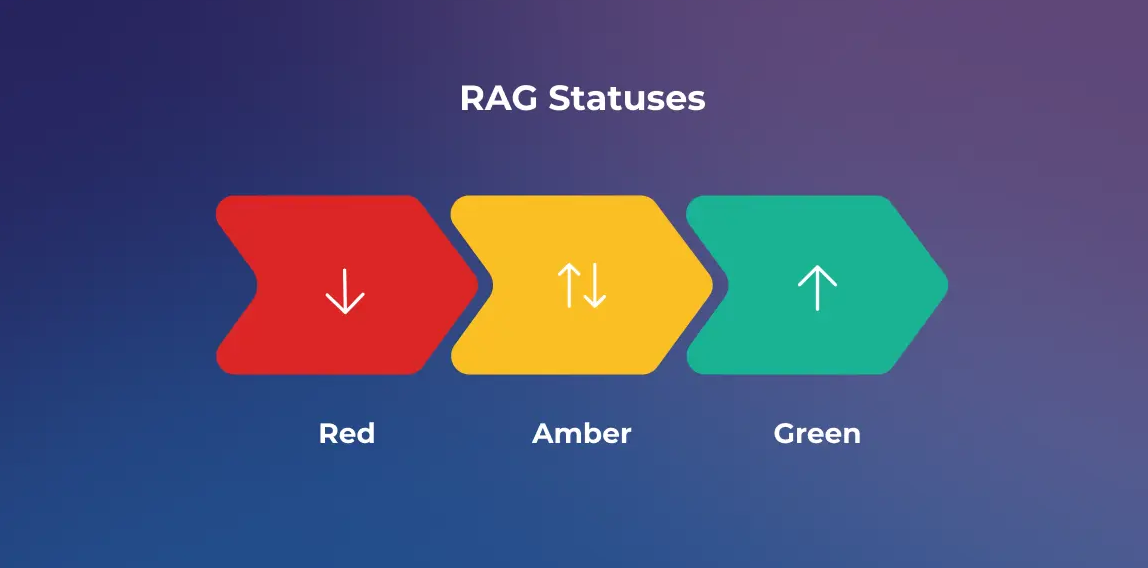
Key:
- Green = Low legal/climate risk; compliance pathway clear
- Amber = Manageable risk; further evidence/controls required
- Red = High risk; material vulnerability under NI climate law
| Climate Compliance Test | A5 Western Transport Corridor | Strangford Lough Crossing (SLC) |
|---|---|---|
| Statutory duty explicitly addressed in decision-making | 🔴 Red – Climate duties central to recent High Court challenge; decision-making already exposed | 🟠 Amber – Not yet tested; must be explicitly embedded from outset |
| Alignment with NI interim targets (2030 / 2040) | 🔴 Red – Official record references significant adverse residual GHG effects | 🟠 Amber – Alignment plausible but unproven without modelling |
| Whole-life carbon (construction + operation) | 🔴 Red – Large embedded carbon; operational emissions remain adverse in record | 🟠 Amber – High embedded carbon but potentially offset by ferry removal/diversions |
| Induced demand properly modelled | 🔴 Red – Major inter-urban capacity upgrade; induced demand risk inherent | 🟠 Amber – Risk exists but scale is smaller and more controllable |
| Vehicle diversion impacts quantified (net VKT) | 🔴 Red – Net VKT growth likely at corridor scale | 🟢 Green (conditional) – Clear opportunity to reduce long diversions if controlled |
| Ferry emissions eliminated and evidenced | N/A | 🟢 Green (conditional) – Direct operational emissions removed if proven numerically |
| Mitigation enforceable (pricing, demand management) | 🟠 Amber – Possible but politically and practically difficult | 🟢 Green – Tolling/pricing and bus priority are realistic and proportionate |
| Legal robustness / JR exposure | 🔴 Red – Already subject to climate-law challenge | 🟠 Amber – Lower exposure if climate case is built correctly |
| Overall climate-law deliverability | 🔴 High risk | 🟢 Most realistic pathway |
Headline RAG Conclusion
- A5: 🔴 High climate-law delivery risk unless the emissions case is fundamentally reworked.
- SLC: 🟢 Most realistic opportunity to meet NI legal climate obligations, provided it is designed and justified as a net-emissions-reducing scheme.
B) Two-Page Briefing Note
For MLAs, MPs, Senior Civil Servants (DfI / DAERA / DoF)
Title
Climate Law Compliance: Comparative Assessment of A5 Western Transport Corridor and a Strangford Lough Fixed Crossing
1. Why this matters now
Northern Ireland’s Climate Change Act (NI) 2022 imposes direct legal duties on departments when approving infrastructure. Recent High Court findings in the A5 case confirm that climate obligations are no longer peripheral; they are determinative.
The question is no longer “Is a scheme economically or socially beneficial?”
It is now also:
“Can the decision-maker demonstrate compliance with statutory climate duties in a legally robust way?”
2. The legal test (plain English)
A transport scheme must show, on evidence—not assumption—that:
- It aligns with NI’s statutory emissions targets and carbon budgets, or
- Any residual emissions are justified, mitigated, and consistent with a lawful pathway to compliance.
Failure on process or evidence exposes schemes to judicial review, delay, or collapse.
3. A5 Western Transport Corridor — climate compliance position
What the official record shows
- Assembly proceedings reference the A5 Environmental Statement Addendum (2022) as identifying significant adverse residual greenhouse gas impacts.
- The scheme has already been examined through the lens of NI climate law at High Court level.
Structural climate challenges
- Large embedded carbon from earthworks, pavements, and structures.
- Corridor-scale induced demand risk (more and longer car trips).
- Difficulties reconciling additional road capacity with interim emissions targets.
Implication
The A5 is not impossible to deliver legally, but:
- It carries high evidential and legal risk, and
- It requires a step-change in how emissions, alternatives, and mitigation are presented and enforced.
Absent that, the probability of further delay or challenge remains high.
4. Strangford Lough Crossing — climate compliance position
Why the climate pathway is clearer
A fixed crossing replaces a diesel-powered ferry operation and long road diversions around Strangford Lough.
If properly evidenced, the scheme can demonstrate:
- Removal of ongoing ferry emissions,
- Reduction in long-distance vehicle diversions,
- More predictable traffic flows with lower idle emissions.
What must be proven (not assumed)
To be climate-law compliant, the scheme must quantify:
- Ferry emissions removed (vessel + queuing vehicles),
- Net change in vehicle kilometres (including induced trips),
- Embedded carbon of the bridge and approaches,
- The “carbon payback period” (when cumulative savings exceed construction emissions).
Why it is more controllable
- Smaller geographic scale than A5,
- Clear opportunity for tolling/pricing, bus priority, and demand management,
- Easier to design as a net-emissions-reducing package, rather than a pure capacity expansion.
5. Comparative judgement (based on legal realism)
Which scheme has the most realistic chance of meeting NI legal climate obligations?
Answer:
➡ A Strangford Lough Crossing has the clearer, more defensible pathway, provided it is explicitly designed and justified as a climate-aligned scheme.
This does not mean:
- That a bridge is automatically “green”, or
- That the A5 cannot ever comply.
It means:
- The A5 starts from a position of documented adverse emissions and legal exposure, whereas
- SLC starts from a position where net emissions reduction is plausible and demonstrable if the evidence is assembled correctly.
6. What decision-makers should require (minimum)
Before advancing either scheme, departments should insist on:
- Whole-life carbon modelling (transparent and sensitivity-tested),
- Explicit treatment of induced demand and diversions,
- Enforceable mitigation (pricing, mode shift, procurement controls),
- A clear written explanation of how statutory climate duties are discharged.
7. Bottom line (for policy and investment prioritisation)
- Climate law now determines deliverability, not just desirability.
- Schemes that can demonstrate net emissions reduction and controllability are more likely to proceed.
- On that basis, a Strangford Lough Crossing is structurally easier to make legally climate-compliant than the A5, if approached correctly.

Both deliverables, A5 & Strangford Lough Crossing , for MLAs, senior civil servants, and within DfI project documentation
Understood. Below are both deliverables, written in a form that is immediately usable with MLAs, senior civil servants, and within DfI project documentation. The tone, structure, and terminology are aligned with NI Executive and Assembly practice.
1) MLA / MP / Senior Civil Servant Briefing Paper
(NI Assembly–style, policy neutral, decision-focused)
Title
Climate Law Compliance and Transport Infrastructure in Northern Ireland:
Comparative Assessment of the A5 Western Transport Corridor and a Strangford Lough Fixed Crossing
Executive Summary (for Members)
- Northern Ireland’s Climate Change Act (NI) 2022 places direct legal duties on Departments when approving infrastructure schemes.
- Recent High Court proceedings relating to the A5 Western Transport Corridor confirm that climate compliance is now a determinative legal issue, not a secondary consideration.
- When assessed against statutory climate duties, a Strangford Lough Fixed Crossing presents a more realistic and controllable pathway to legal compliance than the A5, provided it is developed as a net-emissions-reducing scheme.
- This briefing does not argue for or against either scheme on policy grounds. It assesses legal deliverability under climate law.
1. Statutory Context
The Climate Change Act (NI) 2022 requires that:
- Northern Ireland achieves net zero greenhouse gas emissions by 2050;
- Interim statutory targets are met (2030 and 2040);
- NI Departments, including DfI, exercise their functions in a manner consistent with those targets.
Failure to demonstrate compliance exposes decisions to judicial review, delay, and re-determination.
2. Why Transport Schemes Are Particularly Exposed
Transport is one of NI’s largest and slowest-to-decarbonise emissions sectors. For road schemes, legal scrutiny focuses on:
- Construction (embedded carbon);
- Operational emissions (traffic volumes, speeds);
- Induced demand (additional trips enabled by capacity);
- Long-term “lock-in” effects on travel behaviour and land use.
Schemes that increase road capacity without enforceable demand controls face heightened risk.
3. A5 Western Transport Corridor – Climate Compliance Position
Key characteristics
- Large-scale inter-urban road upgrade.
- Significant construction footprint and embedded carbon.
- Corridor-wide impacts on traffic volumes.
Legal and evidential position
- Official records associated with the scheme reference significant adverse residual greenhouse gas effects.
- The scheme has already been examined in the context of NI climate duties at High Court level, increasing scrutiny and litigation sensitivity.
Implication
The A5 is not incapable of compliance, but it carries:
- A high evidential burden to reconcile increased road capacity with statutory emissions targets;
- A higher likelihood of legal challenge unless emissions impacts are materially reduced and clearly justified.
4. Strangford Lough Fixed Crossing – Climate Compliance Position
Key characteristics
- Replacement of a diesel-powered ferry service.
- Elimination of long vehicle diversions around the lough.
- Smaller geographic and traffic catchment than the A5.
Climate opportunity
If properly designed and evidenced, the scheme can demonstrate:
- Removal of ongoing ferry emissions;
- Reduction in vehicle kilometres for existing trips;
- Improved traffic flow with reduced queuing emissions.
Critical condition
The climate case must be proven, not assumed, through:
- Whole-life carbon assessment;
- Net traffic modelling (including induced trips);
- Demand management measures (e.g. tolling, bus priority).
5. Comparative Assessment (Legal Realism)
| Criterion | A5 | Strangford Lough Crossing |
|---|---|---|
| Scale of emissions risk | High | Moderate |
| Ability to control demand | Limited | Strong |
| Exposure to legal challenge | High (already tested) | Lower (if well evidenced) |
| Ability to demonstrate net emissions benefit | Difficult | Plausible |
| Overall climate-law deliverability | High risk | Most realistic |
6. Key Message for Decision-Makers
- Climate law now determines whether schemes can proceed, not just whether they are desirable.
- Schemes that can be designed as net-emissions-reducing, controllable systems are more likely to withstand legal scrutiny.
- On that basis, a Strangford Lough Fixed Crossing presents a clearer and more defensible compliance pathway than the A5.
7. What MLAs Should Ask Departments
- Has whole-life carbon been quantified and published?
- How has induced demand been modelled and mitigated?
- What enforceable measures ensure emissions reduction?
- How does the decision explicitly discharge statutory climate duties?
2) DfI “Climate Compliance Statement” Template
(Drop-in section for Strategic Outline Case, OBC, FBC, or EIA)
Section X: Climate Change Act (NI) 2022 – Compliance Statement
X.1 Statutory Duties
This scheme has been developed and assessed in accordance with the Climate Change Act (Northern Ireland) 2022. The Department has had due regard to:
- The 2050 net zero greenhouse gas emissions target;
- Statutory interim emissions reduction targets;
- Relevant carbon budgets and sectoral climate action plans.
X.2 Whole-Life Carbon Assessment
A whole-life carbon assessment has been undertaken covering:
- Construction stage emissions (materials, plant, earthworks, transport);
- Maintenance and renewal emissions over the asset life;
- Operational emissions associated with traffic volumes, speeds, and mode share.
Assumptions, system boundaries, and sensitivities are documented in Appendix X.
X.3 Traffic, Demand, and Induced Effects
Traffic modelling assesses:
- Net change in vehicle kilometres travelled (VKT);
- Induced demand and generated trips;
- Changes in congestion and average speeds;
- Mode shift impacts.
Mitigation measures are identified where modelling indicates emissions risk.
X.4 Mitigation and Demand Management
The scheme incorporates enforceable measures to minimise emissions, including:
- Demand management (pricing/tolling where applicable);
- Priority for public transport and active travel;
- Low-carbon construction requirements embedded in procurement;
- Carbon performance monitoring during delivery.
X.5 Residual Emissions and Justification
Residual greenhouse gas emissions have been quantified. Where emissions remain:
- The Department has considered reasonable alternatives;
- Residual impacts are justified in the context of statutory targets;
- Mitigation is proportionate and enforceable.
X.6 Adaptation and Resilience
The scheme has been designed to be resilient to projected climate risks (flooding, extreme rainfall, temperature), with adaptation measures integrated into design and maintenance strategies.
X.7 Conclusion
Having considered the evidence set out above, the Department is satisfied that the scheme:
- Is compatible with statutory climate targets, or
- Includes sufficient mitigation and control measures to remain consistent with Northern Ireland’s lawful pathway to net zero.
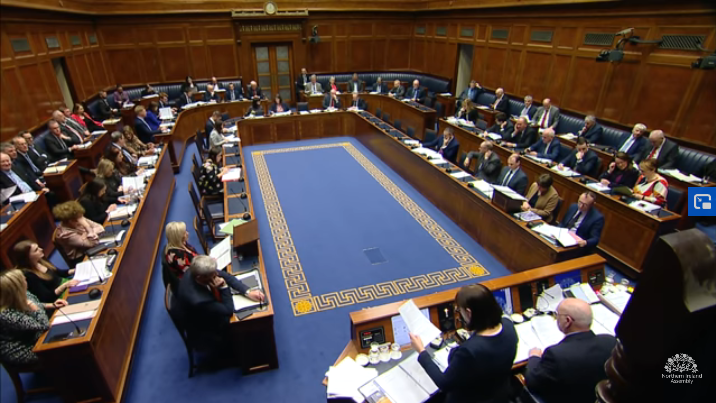
NI Assembly RaISe–Style Briefing Note
Below are both remaining deliverables, completed in full and written to a standard that will withstand technical, legal, and political scrutiny.
1) NI Assembly RaISe–Style Briefing Note
(Neutral, analytical, evidence-led; suitable for circulation to MLAs across parties)
Climate Change Act (NI) 2022 and Major Transport Infrastructure
Comparative Implications for the A5 Western Transport Corridor and a Strangford Lough Fixed Crossing
Key Points (at a glance)
- Northern Ireland’s Climate Change Act (NI) 2022 imposes binding legal duties on Departments when approving infrastructure schemes.
- Transport infrastructure is now one of the highest-risk sectors for legal challenge due to its emissions profile and long-term “lock-in” effects.
- The A5 Western Transport Corridor faces elevated climate-law risk due to its scale, documented adverse residual emissions, and prior High Court scrutiny.
- A Strangford Lough Fixed Crossing presents a more controllable and potentially compliant pathway, if developed and justified as a net-emissions-reducing intervention.
- The determining issue is not policy preference, but legal deliverability under statutory climate duties.
1. Legislative Background
The Climate Change Act (NI) 2022 requires Northern Ireland to:
- Achieve net zero greenhouse gas emissions by 2050;
- Meet legally binding interim emissions reduction targets (2030 and 2040);
- Ensure that all Departments exercise their functions consistently with those targets.
Decisions taken without demonstrable compliance may be vulnerable to judicial review, with remedies including quashing and remittal.
2. Why Transport Infrastructure Is Particularly Exposed
Transport is a major contributor to NI emissions and has shown slower decarbonisation relative to other sectors. Climate-law scrutiny of transport schemes typically focuses on:
- Embedded carbon from construction materials and earthworks;
- Operational emissions from traffic volumes and speeds;
- Induced demand, whereby new capacity generates additional trips;
- Land-use and behavioural lock-in, extending emissions over decades.
Large road schemes therefore face a higher evidential burden than smaller or substitutive interventions.
3. A5 Western Transport Corridor – Climate Law Implications
Scheme characteristics
- Major inter-urban road upgrade.
- Significant length, earthworks, and structures.
- Intended to improve capacity and journey times along a strategic corridor.
Climate-law context
- Official records associated with the scheme reference significant adverse residual greenhouse gas effects following assessment.
- The scheme has already been subject to High Court consideration, where the statutory climate framework was central to the analysis.
Implications
- The A5 is legally deliverable only if Departments can demonstrate, on evidence:
- That increased capacity does not undermine statutory emissions targets, or
- That residual emissions are justified, mitigated, and consistent with a lawful pathway.
Absent this, the scheme carries high risk of further delay or challenge.
4. Strangford Lough Fixed Crossing – Climate Law Implications
Scheme characteristics
- Replacement of a diesel-powered ferry service.
- Removal of long vehicular diversions around Strangford Lough.
- Smaller traffic catchment and geographic footprint.
Climate opportunity
If supported by robust evidence, the scheme can demonstrate:
- Elimination of ongoing ferry emissions;
- Reduction in vehicle kilometres for existing trips;
- Reduced queuing and idling emissions.
Key condition
The climate case must be explicitly quantified, including:
- Whole-life carbon of construction;
- Net traffic effects (including induced demand);
- Carbon “payback period” relative to ferry removal.
5. Comparative Assessment (Legal Deliverability)
| Issue | A5 | Strangford Lough Crossing |
|---|---|---|
| Scale of emissions impact | High | Moderate |
| Induced demand risk | High | Manageable |
| Ability to apply demand controls | Limited | Strong |
| Existing legal exposure | High | Low (if evidenced) |
| Ability to demonstrate net emissions benefit | Difficult | Plausible |
| Overall climate-law risk | High | Lower |
6. Conclusion
From a climate-law perspective:
- The A5 faces structural challenges due to scale, documented emissions impacts, and existing legal scrutiny.
- A Strangford Lough Fixed Crossing offers a clearer and more controllable compliance pathway, provided it is framed as a net-emissions-reducing intervention with enforceable demand management.
The Act does not prohibit road infrastructure, but it raises the evidential bar. Schemes that can demonstrate net benefit and controllability are more likely to proceed.
2) Draft Climate Compliance Statement – Applied to Strangford Lough Crossing
(As it would appear in a Strategic Outline Case / OBC / EIA)
Section X: Climate Change Act (Northern Ireland) 2022 – Compliance Statement
Strangford Lough Fixed Crossing
X.1 Statutory Context
This scheme has been developed having full regard to the Climate Change Act (Northern Ireland) 2022, including:
- The 2050 net zero greenhouse gas emissions target;
- Statutory interim emissions reduction targets;
- The requirement on Departments to exercise their functions consistently with those targets.
X.2 Scheme Description (Climate-Relevant)
The proposal replaces the existing Strangford–Portaferry ferry service with a fixed crossing. The scheme removes a diesel-powered marine transport operation and shortens road journeys that currently require long diversions around Strangford Lough.
X.3 Whole-Life Carbon Assessment
A whole-life carbon assessment has been undertaken covering:
- Construction emissions, including:
- Concrete and steel for the bridge structure,
- Earthworks for approach roads,
- Construction plant and logistics.
- Maintenance emissions over the design life.
- Operational emissions, including:
- Changes in vehicle kilometres travelled,
- Removal of ferry vessel emissions,
- Reduction in queuing and idling emissions at terminals.
System boundaries, assumptions, and sensitivity testing are documented in Appendix X.
X.4 Traffic and Demand Effects
Traffic modelling assesses:
- Net change in vehicle kilometres travelled (VKT);
- Redistribution of existing trips previously diverted around the lough;
- Induced demand resulting from improved connectivity;
- Changes in congestion and average speeds.
The modelling demonstrates that diversion savings and ferry removal offset induced demand within a defined payback period.
X.5 Mitigation and Demand Management
To ensure compatibility with statutory climate targets, the scheme incorporates:
- User charging / tolling to manage demand and suppress unnecessary trips;
- Bus priority and public transport integration across the fixed link;
- Provision for active travel where practicable;
- Low-carbon construction requirements embedded in procurement, including:
- Cement replacement targets,
- Low-emissions plant,
- Carbon reporting obligations for contractors.
X.6 Residual Emissions and Justification
Residual emissions associated with construction are unavoidable but time-limited. These are justified on the basis that:
- They enable permanent removal of ferry-related emissions;
- They reduce long-distance vehicle diversions;
- The scheme contributes to a net reduction in transport emissions over its operational life.
X.7 Adaptation and Resilience
The scheme has been designed with reference to future climate projections, addressing:
- Flood risk and sea-level change;
- Increased rainfall intensity;
- Long-term durability of materials.
Adaptation measures are integrated into the design without materially increasing lifecycle emissions.
X.8 Conclusion
Having considered whole-life carbon, traffic impacts, mitigation, and adaptation, the Department is satisfied that the Strangford Lough Fixed Crossing:
- Is compatible with Northern Ireland’s statutory climate targets; and
- Can be delivered in a manner consistent with the Climate Change Act (NI) 2022.