
- BY Kevin Barry BSc(Hons) MRICS
- POSTED IN Latest News
- WITH 0 COMMENTS
- PERMALINK
- STANDARD POST TYPE
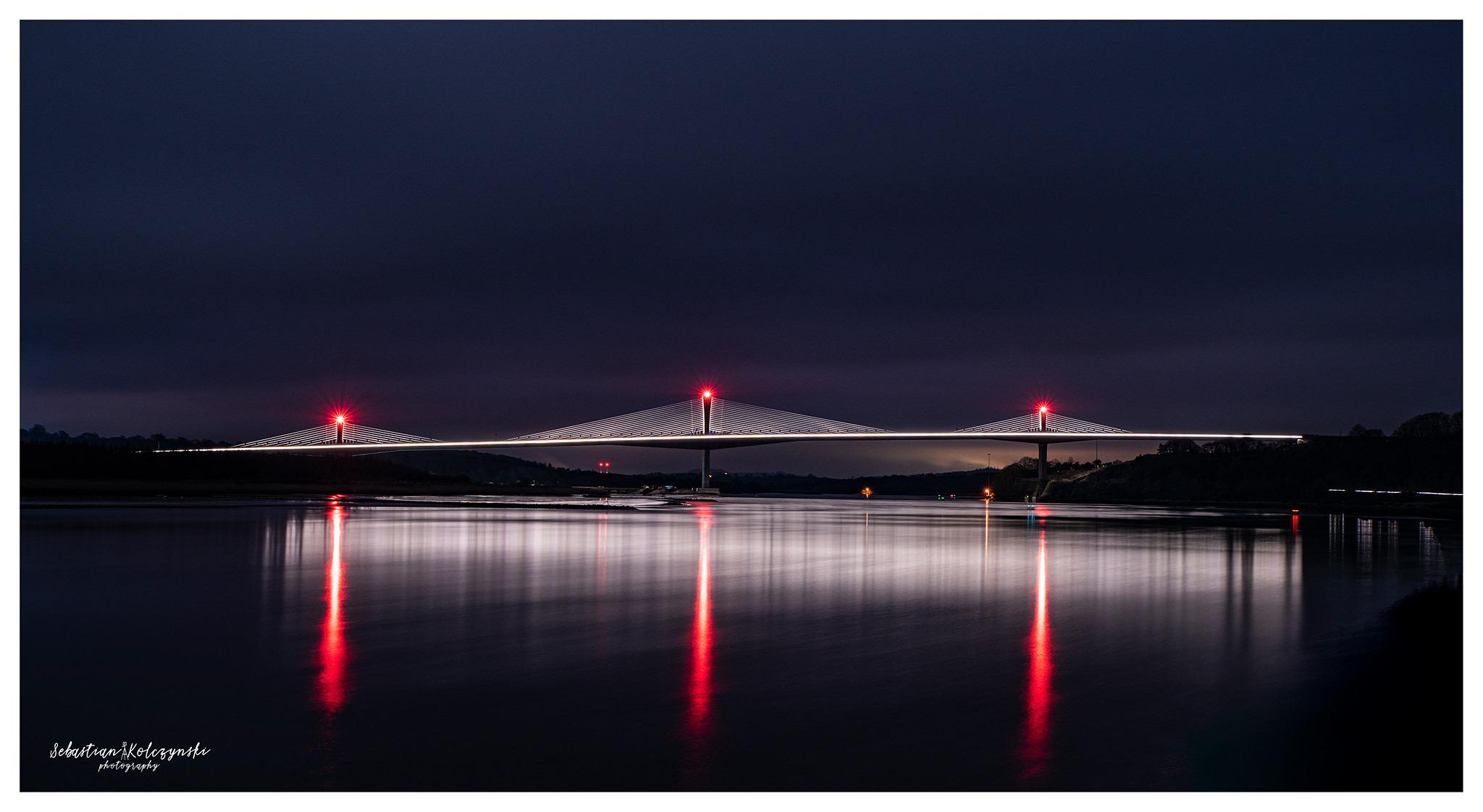
A New Year, A New Opportunity: The Strangford Lough Crossing Campaign Enters 2026
January 2026
As we enter 2026, the Strangford Lough Crossing campaign stands at a pivotal moment. Behind the statistics and technical documents lies a simple human story: communities divided by water that should be connected by infrastructure, families facing daily choices between healthcare access and time with loved ones, and businesses constrained not by ambition but by a ferry timetable.
The Evidence Is Clear
The past year has brought remarkable clarity to our campaign. Through Freedom of Information requests, we obtained internal departmental documentation showing that the Department for Infrastructure’s £650 million cost estimate for a crossing was built on what they themselves described as “guesstimates” rather than professional engineering analysis (Reference: DFI/2024-0412). When compared against the Rose Fitzgerald Kennedy Bridge in Ireland, which cost £106 million (inflation-adjusted to October 2025) for an 887-metre crossing over similar tidal waters, DfI’s estimate appears 8.6 times more expensive per metre.
The same FOI disclosures (Reference: DFI/2024-0366) revealed that the current ferry service costs taxpayers £2.09 million annually in subsidies (operating costs of £3.52 million against income of just £1.43 million in 2023/24), operates at only 34% capacity, yet forces a 75-kilometre detour when unavailable.
Community Voices Were Heard
Our community survey, concluded on 6th November 2024, captured 458 responses that painted a stark picture of daily impact. Among the findings: 94% of respondents indicated the current service is not fit for purpose. But beyond percentages lie real experiences. Parents described missing children’s medical appointments because ferry capacity filled too quickly. Business owners detailed contracts lost because reliable delivery schedules couldn’t be guaranteed. Healthcare workers explained missing critical hospital shifts because evening ferry operations ended too early.
These aren’t abstract policy debates. They’re lived realities for thousands of people across the Ards Peninsula.
Political Unity Across Division
In a political landscape often defined by division, the Strangford Lough Crossing has achieved something remarkable: genuine cross-party consensus. Jim Shannon MP (DUP) has publicly confirmed he would “welcome funding from any source” for the project. Chris Hazzard MP (Sinn Féin) has provided public endorsement. Michelle McIlveen MLA (DUP) secured an Adjournment Debate in the Northern Ireland Assembly on 25th November 2025 (Reference: Hansard, Official Report, Tuesday 25 November 2025, Volume 185, No 2, Pages 59-66), raising the broader infrastructure challenges facing Newtownards and the peninsula. Alliance and SDLP representatives have expressed support.
This is infrastructure that transcends traditional political boundaries because it addresses fundamental human needs: access to healthcare, economic opportunity, and community connection.
The Narrow Water Precedent
As we enter 2026, construction of the Narrow Water Bridge continues on schedule. The Irish Government’s National Development Plan Sectoral Investment Plan (Reference: Annex I, NDP Sectoral Plan Shared Island) confirms that this €102 million project, funded through the Shared Island Fund, is due for completion by late 2027 with final handover in early 2028. Built by BAM Ireland, the same contractor who successfully delivered the Rose Fitzgerald Kennedy Bridge, Narrow Water will provide crucial empirical evidence for realistic construction costs and traffic growth patterns.
This is not speculation. This is a live case study unfolding in real-time that will either validate or expose the extraordinary cost inflation in DfI’s Strangford estimates.
The Human Cost of Delay
Every year without proper connectivity costs the Ards Peninsula dearly. The Department for Economy has identified a target of creating 7,500 new jobs in the Ards and North Down area, yet how can businesses commit to expansion when their workforce faces such fundamental access constraints? Census data from 2021 shows the region already experiencing demographic and economic pressures that strategic infrastructure could address.
Healthcare access remains particularly acute. The ongoing pressures on Northern Ireland’s health service, documented extensively by bodies including the Royal College of Nursing, are compounded for peninsula residents by geographic isolation. Emergency response times, routine appointment attendance, and healthcare worker recruitment all suffer from infrastructure deficiency.
Momentum Building
Recent developments demonstrate growing external interest. In October 2025, correspondence was directed to Secretary of State Hilary Benn MP requesting intervention on governance grounds (Reference: Email dated 25 October 2025). In July 2025, an approach was made to An Taoiseach Micheál Martin TD regarding Shared Island Fund opportunities (Reference: Letter dated 23 July 2025, DOTTM25-11858-2025). Minister Kimmins has received detailed ministerial correspondence outlining the FOI-revealed evidence (Reference: Email dated 4 October 2025).
These are not routine lobbying exercises. They represent escalation driven by evidence that demands response.
The Economic Reality
The London Assembly’s Budget and Performance Committee, examining infrastructure delivery costs, found that UK underground systems are six times more expensive per mile than projects in Spain and that the UK consistently pays substantially more than European comparables for transport infrastructure (Reference: “Euston we have a problem: Mind the funding gap,” Capital funding and delivery report, December 2025). This broader context validates concerns that DfI’s cost estimates reflect systemic UK infrastructure cost inflation rather than engineering reality.
But here’s the critical point: even accepting higher UK costs, the Rose Fitzgerald Kennedy Bridge precedent suggests realistic costs would be £106-358 million, not £650 million. Over 30 years, the current ferry approach will cost taxpayers £70 million in subsidies alone, delivering no permanent asset, no induced economic growth, and perpetual capacity constraints.
Looking Forward
As 2026 unfolds, several opportunities emerge:
Narrow Water Completion (2027-2028): Empirical evidence on construction costs and traffic growth will become available, providing data to challenge inflated estimates.
Eastern Transport Plan 2035 Consultation: The development of strategic transport policy provides a window to secure proper classification of the A2 coastal route as strategic infrastructure rather than “local transport movements.”
May 2027 Assembly Elections: With cross-party support already established, candidates across the political spectrum will face questions about infrastructure delivery.
Shared Island Fund: Ireland’s €2 billion commitment to North-South cooperation remains available for projects demonstrating strategic value and cross-community benefit.
The Simple Truth
Infrastructure transforms lives. Not someday. Not in the abstract. Right now, in practical ways that affect real families making daily decisions.
The evidence supporting the Strangford Lough Crossing is comprehensive. The political support is unprecedented. The community need is documented. The funding pathways exist. The only barrier is institutional resistance based on cost estimates that the department’s own documentation shows lack engineering foundation.
In 2026, we’re not asking for the impossible. We’re asking for what should be standard practice: a proper TAG feasibility study using accurate comparable project costs, conducted by independent engineering consultants, examining realistic design options, and producing evidence-based analysis that decision-makers can trust.
If the evidence shows the project isn’t viable, we’ll accept that conclusion. But we won’t accept predetermined dismissal based on inflated estimates designed to justify a decision already made.
Infrastructure either serves people or it doesn’t. The Strangford Lough Crossing would serve thousands of people every single day for generations. That’s worth fighting for.
Kevin Barry BSc(Hons) MRICS
Campaign Lead, Strangford Lough Crossing
www.strangfordloughcrossing.org
All claims in this blog post are referenced to documentation obtained through Freedom of Information requests, official government publications, Hansard records, and publicly available sources. Full documentation is available at www.strangfordloughcrossing.org