
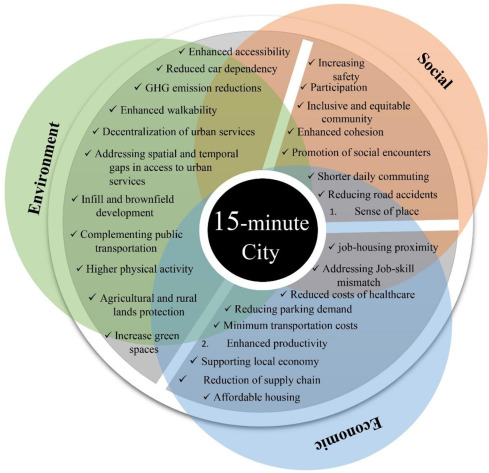
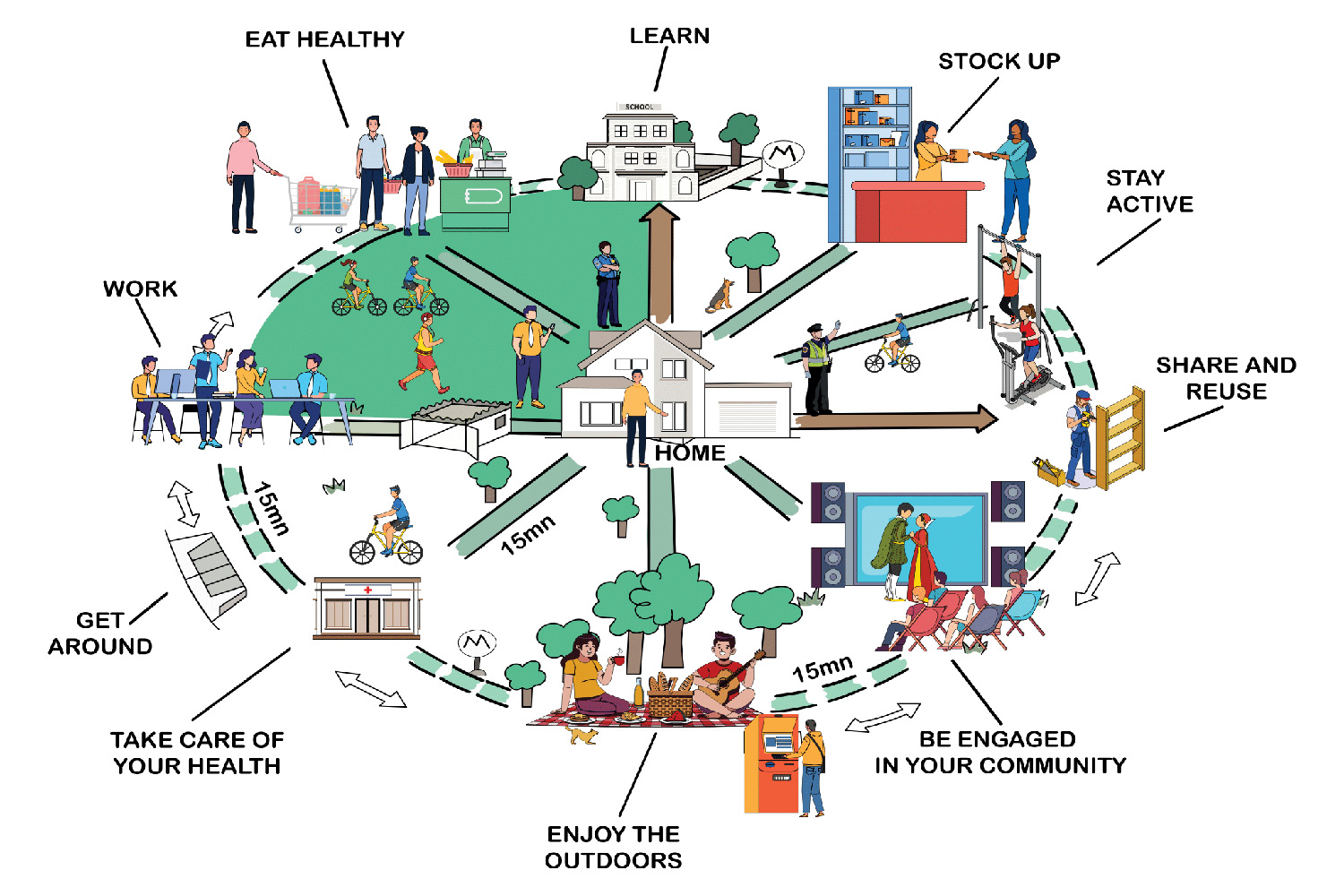
The Strangford Lough Crossing would support 15-minute city principles in several specific ways, with particular emphasis on the short-distance effect between Portaferry and Strangford villages.
Critical Short-Distance Effect
The HITRANS Corran Fixed Link Study identifies that “Crossings that mainly serve short distance trips usually provide a larger percentage step-change improvement and therefore generate the largest uplifts in demand.“
The Strangford Lough context demonstrates this principle precisely. According to the DFI 20240412 Attachment – Strangford Lough Ferry Service Strategic Review Report (March 2013):
- Ferry crossing distance: 0.6 nautical miles with typical crossing time of 8 minutes
- Road alternative: approximately 75 kilometres taking about an hour and a half by car (alternatively stated as 70 minutes to drive 46 miles)
This represents a factor of 11.25 times longer journey distance and 11.25 times longer journey time when using the road alternative, creating exactly the conditions identified in transport research for maximum demand uplift when replaced with a permanent crossing.
Skye Bridge Precedent – Local Trips Driver
The HITRANS study provides directly relevant empirical evidence: “Research found that the large uplift in demand from the removal of the Skye Bridge tolls was primarily driven by local trips between two settlements quite close to the bridge (Kyle of Lochalsh and Broadford).” Please note Kellie Armstrong MLA
This precedent demonstrates that short-distance trips between proximate settlements generate the primary traffic growth following fixed link construction, even though the bridge also stimulated broader tourism and economic development.
Portaferry and Strangford Village Connectivity
The two villages currently experience severe accessibility barriers despite their geographic proximity. The DFI Strategic Review (March 2013) confirms that “The Strangford to Portaferry route is an important transport link in the local economy” and that “the route carries an average of about 1,570 passengers per day, including many schoolchildren to and from school.“
However, DFI’s own August 2024 analysis notes “The ferry mainly facilities the local community, particularly those from the Ards Peninsula” while simultaneously dismissing the need for improved connectivity.
15-Minute City Principles – Short Distance Application
For the two villages specifically, a permanent crossing would enable:
Daily Services Access
- School children crossing between villages (already documented as significant ferry users)
- Access to local shops, post offices, and community facilities in the opposite village
- Medical appointments at GP surgeries and pharmacies
- Social and recreational activities
Employment Connectivity
- Workers commuting between the villages for local employment
- Business owners serving customers on both sides
- Service providers (tradespeople, delivery drivers, carers) operating across both communities
Emergency Services
- 24/7 access to Downpatrick Hospital (currently impossible due to ferry operating hours of 07.30-23.00 weekdays)
- Fire and ambulance services responding without ferry delay
- Police and community support services
Transformation from Barrier to Integration
The current ferry service creates a psychological and practical barrier between two communities that are geographically neighbours. The 8-minute crossing time becomes irrelevant when:
- Ferry doesn’t operate before 07.30 or after 23.00 weekdays
- Ferry doesn’t operate until 08.00 on Saturdays or 09.30 on Sundays
- Ferry doesn’t operate on Christmas Day
- Ferry capacity creates queuing delays during busy periods
- Ferry suffers breakdowns requiring backup vessel (MV Portaferry II, built 2001) Primary ferry (MV Strangford II, Built 2017) has suffered many faults and the rotational use of both ferries rarely happened and put significant pressure on the older MV Strangford II to maintain regular service, rather than remain as backup.
A permanent crossing would fundamentally integrate Portaferry and Strangford as a single functional community rather than two separated settlements, consistent with 15-minute city objectives of barrier removal and seamless accessibility.
Quality Factors Supporting Demand Uplift
The HITRANS study identifies three factors determining demand uplift magnitude:
- Quality of previous ferry service – Strangford ferry operates restricted hours, limited capacity (34% utilisation), and aging vessels
- Proximity to population centres – The two villages are immediate neighbours separated only by 0.6 nautical miles
- Availability of services – Limited on-Peninsula services increase propensity to travel once barrier removed
All three factors predict substantial demand uplift, particularly for local trips between Portaferry and Strangford.
DFI’s Contradictory Position
DFI’s March 2013 Strategic Review acknowledges the importance of the link to local economy and community, carrying 1,570 passengers daily including schoolchildren. Yet DFI’s August 2024 internal briefing concludes “The traffic volumes currently using the Strangford Ferry Service would be insufficient to justify the major investment to construct a permanent crossing.“
This position ignores established transport economics showing that infrastructure transformation generates demand rather than merely serving existing demand – particularly for short-distance trips where percentage improvement is greatest. And of course, suppressed demand.
Distinction from Traditional Urban 15-Minute City
While traditional 15-minute city concepts focus on walking/cycling distances within dense urban areas, the Strangford Lough context represents a rural short-distance accessibility problem. The villages are geographically proximate but functionally separated by a water barrier with inadequate bridging infrastructure.
The crossing would not create 15-minute walking access to all services, but would:
- Transform an 8-minute journey (when ferry available) with significant constraints into a reliable 8-minute journey available 24/7
- Replace a 75km/90-minute road detour with direct connectivity
- Enable the two villages to function as an integrated community
- Support local economic viability through improved business catchments
- Facilitate social cohesion and community integration
This represents an adapted application of 15-minute city principles appropriate to small rural settlements separated by geographic barriers, focusing on barrier removal and accessibility transformation rather than urban density and walkability metrics.